
Home › Forums › Digital UV Printing Hub › Why TPU + UV Flatbed Printing Is Disrupting the Industry
- This topic is empty.
-
AuthorPosts
-
10 April 2026 at 6:24 pm #1072
Dowinsss
Keymaster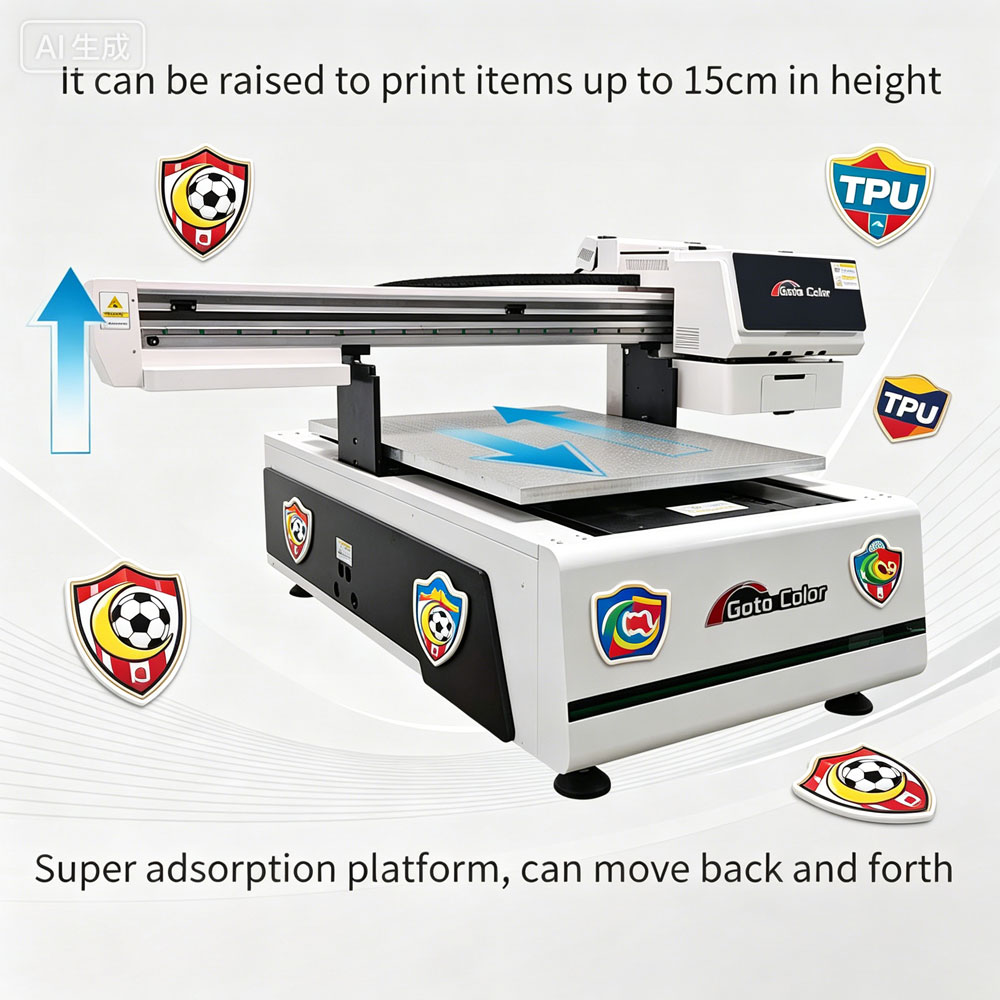
The Shift No One Talks About—But Everyone Feels
The textile printing industry is undergoing a silent transformation. While traditional methods like screen printing and heat transfer vinyl still dominate in volume, their limitations are becoming increasingly obvious in a world driven by personalization, speed, and sustainability.
Enter TPU (Thermoplastic Polyurethane) combined with UV flatbed printing—a hybrid solution that doesn’t just improve the process, but fundamentally reshapes it.
Global data shows that the custom apparel market is growing at over 9% annually, fueled by e-commerce, influencer culture, and micro-branding. Yet, traditional workflows struggle to keep up with small-batch, high-frequency design changes. This is where TPU + UV printing steps in—not as an alternative, but as a necessary evolution.
What Makes TPU + UV Printing Different?
At its core, this solution merges material flexibility with printing precision:
- TPU Film: Soft, stretchable, durable, and compatible with fabrics
- UV Flatbed Printing: Direct, high-resolution printing with instant curing
Unlike conventional methods, there’s no need for plate-making, multi-step layering, or excessive manual intervention. The result is a streamlined workflow:
- Print directly onto TPU film
- Cure instantly using UV light
- Heat transfer onto fabric
This simplicity hides a deeper advantage: process compression. What used to take multiple machines and skilled labor can now be executed in a single integrated system.
The Real Advantages (Beyond the Obvious)
1. Ultra-Short Production Cycles
In traditional textile printing, setup time often outweighs actual production time—especially for small orders. TPU + UV printing eliminates setup bottlenecks.
- No screens
- No color separation
- No drying delays
This enables on-demand manufacturing, aligning perfectly with the “zero inventory” model many brands are chasing.
2. Design Freedom Without Penalty
Complex gradients, fine details, and photographic prints are no longer “expensive exceptions.”
With UV precision:
- High DPI output remains consistent
- Color transitions are seamless
- No increase in cost for complexity
This flips the traditional pricing logic—complexity becomes free.
3. Material Versatility Expands Application Boundaries
TPU isn’t limited to apparel. Its elasticity and durability open doors to:
- Sportswear
- Footwear uppers
- Bags and accessories
- Industrial textiles
This turns a printing solution into a cross-industry production tool, increasing ROI significantly.
4. Environmental Impact Is Structurally Lower
Sustainability is often treated as a marketing add-on. Here, it’s built into the process:
- No water consumption
- Minimal chemical waste
- Reduced energy usage due to instant curing
Compared to water-based dyeing or solvent-heavy processes, this method aligns better with tightening environmental regulations worldwide.
The Hidden Bottleneck: It’s Not the Technology—It’s Mindset
Despite its advantages, adoption is not universal. Why?
Because most manufacturers are optimizing for yesterday’s scale, not tomorrow’s demand.
They ask:
- “Can this replace my current system?”
Instead of:
- “Can this unlock new business models?”
TPU + UV printing isn’t just a tool—it’s an enabler of mass customization, localized production, and faster market response cycles.
Where This Technology Wins—And Where It Doesn’t
Best-fit scenarios:
- Small to medium batch production
- High customization demand
- Rapid prototyping
- E-commerce-driven brands
Less ideal for:
- Ultra-high-volume, single-design production (where screen printing still dominates in cost efficiency)
A New Production Logic Is Emerging
The future of textile printing is not about replacing old methods entirely—it’s about hybridization.
Factories that combine:
- Traditional high-volume methods
- Digital flexible systems like TPU + UV
…will outperform those that rely on a single approach.
Final Thought: This Is Not an Upgrade—It’s a Reset
Most people see TPU + UV printing as a technical improvement.
That’s a mistake.
It’s a structural shift—from mass production to mass customization, from inventory risk to on-demand agility, from process complexity to operational simplicity.
And like all real shifts, it doesn’t announce itself loudly.
It simply makes everything else start to feel outdated. -
AuthorPosts
- You must be logged in to reply to this topic.