
Home › Forums › DTF Printer Hub › The Truth About Choosing a DTF Printer: What Actually Matters
- This topic is empty.
-
AuthorPosts
-
7 April 2026 at 5:35 pm #1059
Dowinsss
Keymaster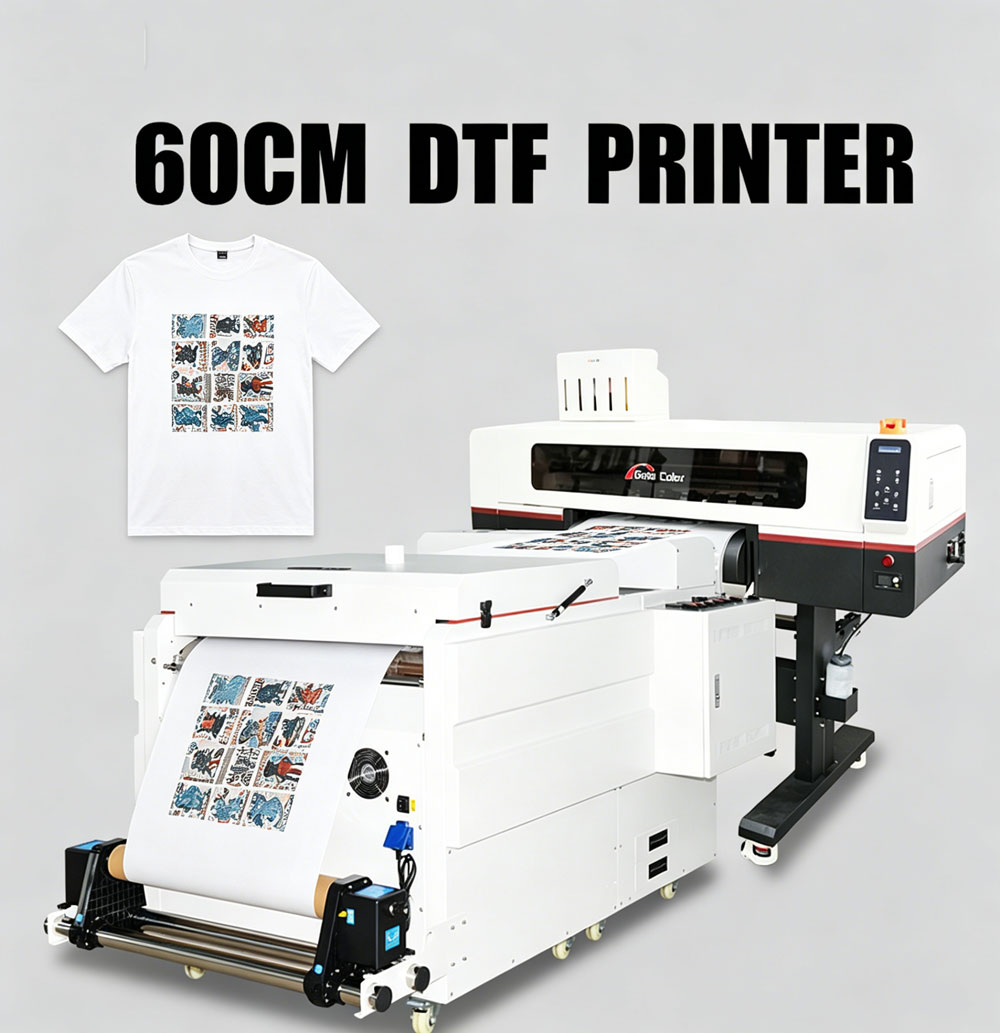
The New Gold Rush: Why Everyone Is Jumping Into DTF
Direct-to-Film (DTF) printing is no longer a niche—it is a fast-scaling production model reshaping the custom apparel industry. From small studios to large-scale fulfillment operations, DTF enables vibrant, durable prints across cotton, polyester, blends, and even difficult fabrics.
But here is the uncomfortable truth:
Most buyers don’t fail because DTF is hard. They fail because they choose the wrong machine.
This is not a hardware purchase. It is a system decision.
1. DTF Is Not a Printer—It’s an Ecosystem
Unlike traditional inkjet systems, DTF relies on a tightly connected workflow:
- Printer
- PET transfer film
- Adhesive powder
- RIP software
- Heat press and curing system
If one element fails, the entire process collapses.
Critical Insight:
Buying a “good printer” without matching materials and workflow is the fastest way to waste money.
2. Print Quality Is More Than DPI (Much More)
Most sellers push DPI numbers. That’s misleading.
Real DTF quality depends on:
- White ink opacity and stability
- Ink density and layering
- Registration accuracy
- Film adhesion performance
Even a high-resolution machine can fail if white ink circulation is unstable—leading to faded colors and uneven prints.
Reality Check:
If your white layer is weak, your entire design collapses on dark fabrics.
3. White Ink: The Hidden Battlefield
White ink is the single most important—and problematic—component in DTF printing.
Key requirements:
- Continuous circulation system
- Anti-settling design
- Automatic cleaning functions
Without these, expect:
- Clogged printheads
- Banding issues
- Frequent downtime
Industry testing shows that poor white ink management directly leads to inconsistent output and production instability.
Contrarian View:
Do not choose a printer based on speed or price. Choose based on how it handles white ink.
4. Reliability Beats Speed (Every Time)
Fast machines look impressive in demos. But production reality is different.
What actually matters:
- Mechanical stability
- Consistent output over long runs
- Low failure rate under continuous operation
Choosing a high-speed but unstable machine leads to:
- Film waste
- Reprints
- Missed deadlines
And ultimately, lost customers.
Data Insight:
In small businesses, downtime costs more than slow production.
5. “DTF-Compatible” vs Real DTF Machines
The market is flooded with modified inkjet printers labeled as DTF solutions.
This is dangerous.
A true DTF printer must include:
- Film-specific ink chemistry
- Precision film feeding system
- Dedicated firmware for white ink and layering
Without these, results will degrade rapidly.
Hard Truth:
If a machine is “adapted” rather than designed for DTF, it will eventually fail under real production pressure.
6. Cost Is Not What You Think
Most beginners focus on the purchase price.
That is the wrong metric.
Real cost includes:
- Ink consumption
- Film waste
- Maintenance frequency
- Replacement parts
- Downtime
A cheap machine with poor reliability often becomes the most expensive choice over time.
Industry Pattern:
Low-cost entry machines frequently lead to higher long-term operational expenses.
7. Materials and Process Control Decide Your Success
Even the best printer cannot compensate for poor materials or process control.
Key variables:
- Film quality
- Adhesive powder consistency
- Heat press temperature (typically ~160–180°C)
- Pressure and curing time
Failure in any of these leads to:
- Peeling prints
- Cracking after washing
- Color degradation
Important Insight:
DTF is a process discipline, not just a machine purchase.
8. Market Reality: Why DTF Is Exploding
DTF growth is driven by three structural forces:
- Mass customization – small batch, high variation products
- Fabric versatility – works across multiple materials
- Low entry barrier – faster startup compared to traditional methods
The market is projected to grow rapidly, with increasing adoption across textile businesses worldwide.
9. What Experienced Users Actually Say (Real-World Insight)
From practitioner discussions:
“Your printer is only as good as the support behind it.”
“Cheap materials lead to weak adhesion and fading.”
These are not theoretical concerns—they are daily operational realities.
Final Strategy: How to Choose the Right DTF Printer
Forget marketing. Focus on this hierarchy:
1. Ink system stability (especially white ink)
2. Mechanical reliability under continuous use
3. True DTF design (not modified inkjet)
4. Workflow compatibility (film, powder, software)
5. After-sales support and service
Closing Perspective
DTF printing is often sold as “easy money.”
It isn’t.
It is a precision-driven production system where small mistakes compound into big losses.
But for those who understand the system—not just the machine—it becomes one of the most powerful tools in modern apparel customization.
The real advantage is not owning a DTF printer.
It is mastering the logic behind it. -
AuthorPosts
- You must be logged in to reply to this topic.