
Home › Forums › DTF Printer Hub › Powder-Free DTF Machines: The End of a Messy Era in T-Shirt Printing
- This topic is empty.
-
AuthorPosts
-
9 April 2026 at 5:14 pm #1065
Dowinsss
Keymaster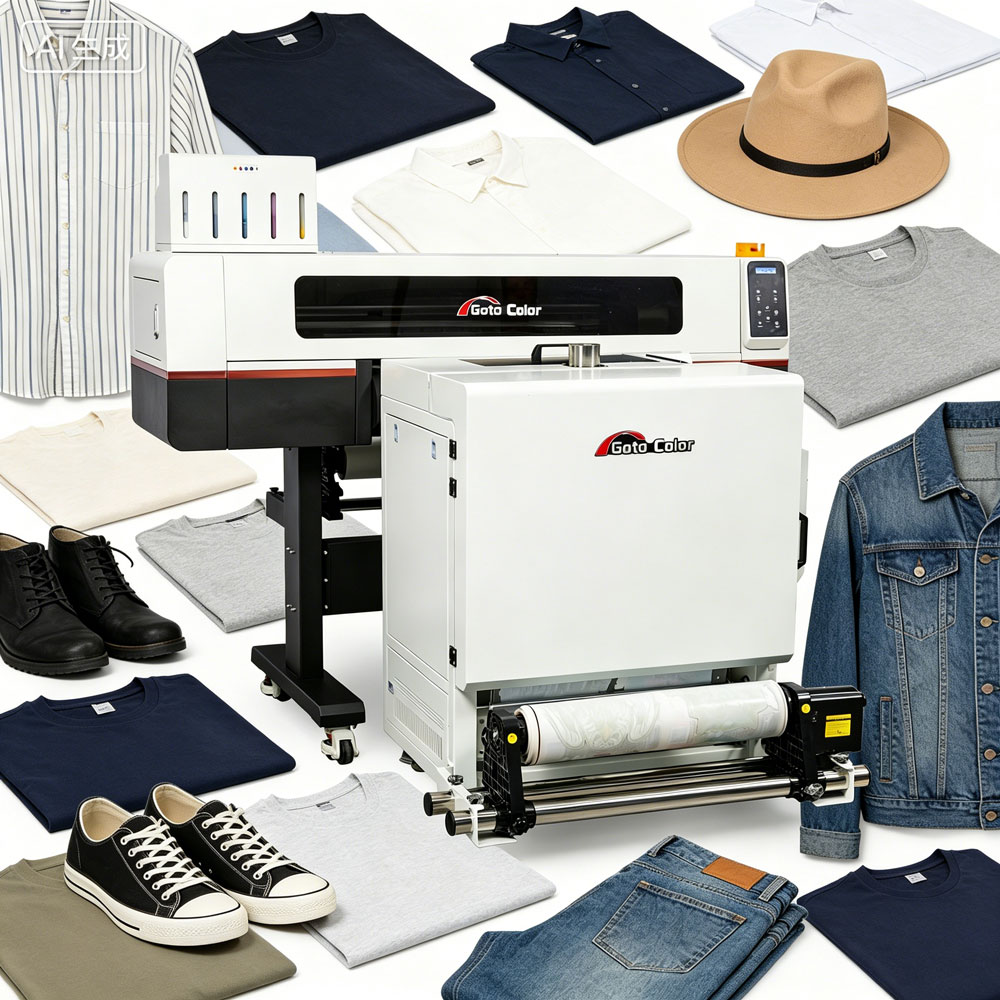
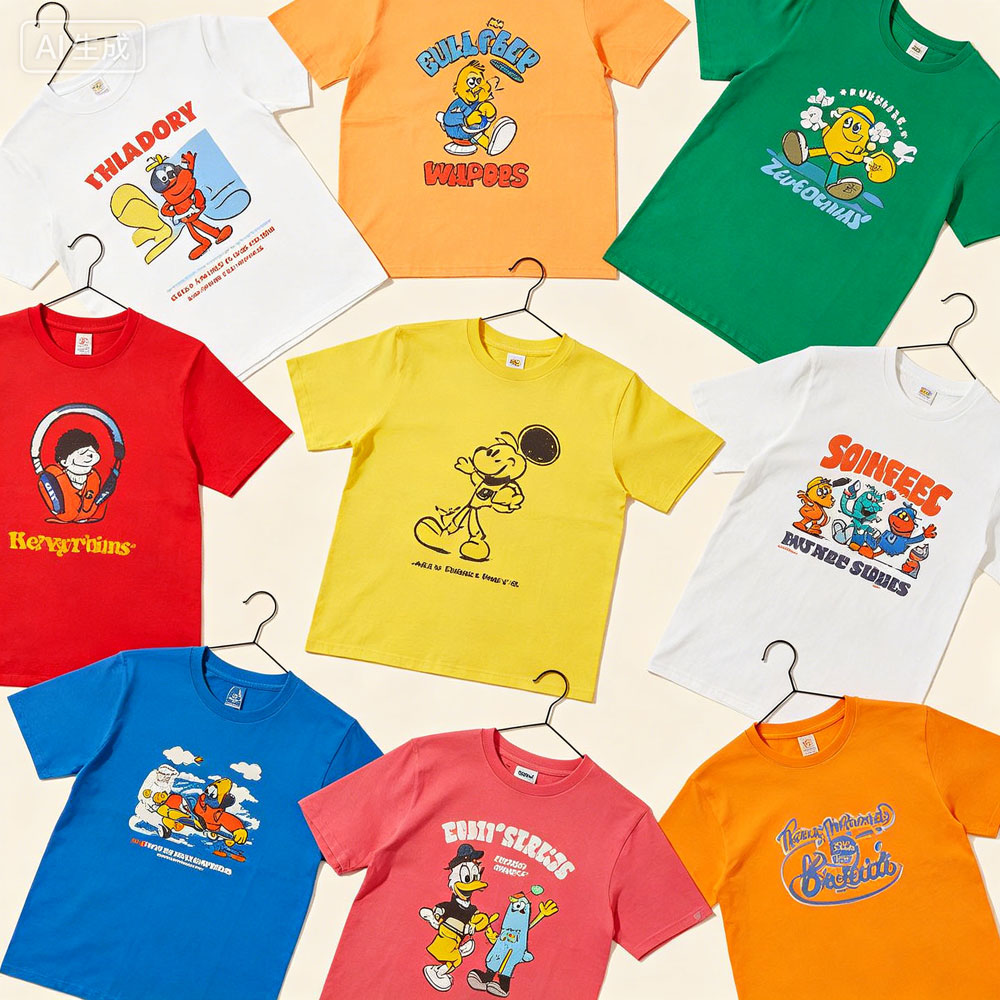
The custom apparel industry is undergoing a structural shift. Driven by e-commerce, fast fashion cycles, and micro-brand entrepreneurship, global demand for personalized garments is accelerating. But behind the growth lies a bottleneck that few openly address:
Traditional DTF printing is efficient—but operationally flawed.
The emergence of powder-free DTF machines is not just an incremental improvement. It is a process-level disruption that challenges how T-shirt printing should work at its core.
The Hidden Inefficiency of Traditional DTF
Conventional DTF printing relies on a critical step: hot melt powder application.
The workflow typically includes:
- Printing design on PET film
- Applying adhesive powder
- Shaking and distributing powder
- Heating and curing
- Heat transfer onto fabric
This system works—but it introduces systemic inefficiencies:
- Dust pollution and safety risks
- Uneven coating leading to inconsistent quality
- Extra labor and equipment (powder shaker, curing unit)
- Rigid, less breathable prints
Even industry practitioners acknowledge that powder handling adds complexity and variability to production, especially in scaling environments.
Powder-Free DTF: Removing the Weakest Link
Powder-free DTF technology eliminates the powder stage entirely and replaces it with a liquid adhesive (glue-based bonding system).
This single change restructures the entire workflow:
Design → Print → Dry → Transfer
No powder. No shaking. No contamination.
Why This Is a True Innovation (Not Just Optimization)
1. Process Simplification = Productivity Explosion
By removing powder application, the process becomes shorter and more controllable:
- Up to 20% faster production speeds
- Fewer manual steps → lower labor dependency
- Reduced failure points → higher consistency
This is not convenience—it is throughput engineering.
2. Environmental Shift: From Dust to Clean Production
Traditional DTF introduces airborne particles and waste from excess powder.
Powder-free systems:
- Eliminate powder waste entirely
- Reduce harmful emissions
- Align with tightening environmental regulations
This positions powder-free DTF as a future-proof technology, not just a cleaner alternative.
3. Print Quality: Softer, Clearer, More Wearable
Without powder layers interfering:
- Ink transfer becomes sharper and more vivid
- Print layers are thinner and more flexible
- Fabric retains breathability and comfort
This directly addresses one of DTF’s biggest criticisms: the “plastic feel” on garments.
4. Cost Structure Reinvented
Traditional thinking assumes new technology increases cost.
But powder-free DTF flips the equation:
- No powder consumption
- No powder shaker equipment
- Lower maintenance complexity
- Reduced rework rates
Result: lower total production cost, despite higher perceived tech value.
5. Scalability Without Chaos
In traditional setups, scaling production increases:
- Dust accumulation
- Equipment synchronization issues
- Operator dependency
Powder-free systems remove these constraints, enabling:
- Cleaner production lines
- Easier automation integration
- More predictable output quality
This is critical in a market shifting toward mass customization at scale.
The Bigger Picture: Industry-Level Transformation
DTF printing already disrupted screen printing by removing plate-making and enabling short runs.
Now, powder-free DTF is disrupting DTF itself.
This is a classic pattern in industrial evolution:
- First innovation → replaces old system (DTF vs screen printing)
- Second innovation → optimizes and simplifies (powder-free DTF vs traditional DTF)
The second wave is often more transformative—because it removes friction, not just adds capability.
Breaking Conventional Thinking
Most businesses still evaluate printing technology like this:
- What’s the output quality?
- What’s the machine cost?
- How fast is it?
These are outdated metrics.
The real metric is:
How many variables does this system eliminate?
Because every variable—powder thickness, shaking consistency, curing accuracy—is a source of error, cost, and inefficiency.
Powder-free DTF wins not because it adds features—
but because it removes uncertainty.
A Necessary Reality Check
Not every business needs powder-free DTF immediately.
- Small-scale startups may still rely on traditional systems due to lower entry cost
- Experienced operators can manage powder workflows effectively
But the trajectory is clear:
As production scales and quality expectations rise, complexity becomes the enemy.
And powder-based systems are inherently complex.
Future Outlook: Toward Fully Digital Textile Production
Powder-free DTF is a step toward a broader transformation:
- Fully enclosed, automated printing lines
- AI-controlled drying and transfer processes
- Integration with on-demand e-commerce fulfillment
In this future, T-shirt printing becomes:
Cleaner, faster, and almost entirely software-driven.
Final Insight
Powder-free DTF machines are not just improving T-shirt printing—they are redefining its logic.
They challenge a long-standing assumption:
That adhesion requires material layering (powder).
Instead, they prove:
Precision chemistry can replace mechanical excess.
And once that shift is understood, the conclusion becomes unavoidable:
The future of garment printing is not about adding more steps—
but about eliminating them entirely.
-
AuthorPosts
- You must be logged in to reply to this topic.