
Home › Forums › DTF Printer Hub › Expanding DTF Printing: Beyond Apparel to Multi-Surface Customization
- This topic is empty.
-
AuthorPosts
-
30 March 2026 at 5:23 pm #1035
Dowinsss
Keymaster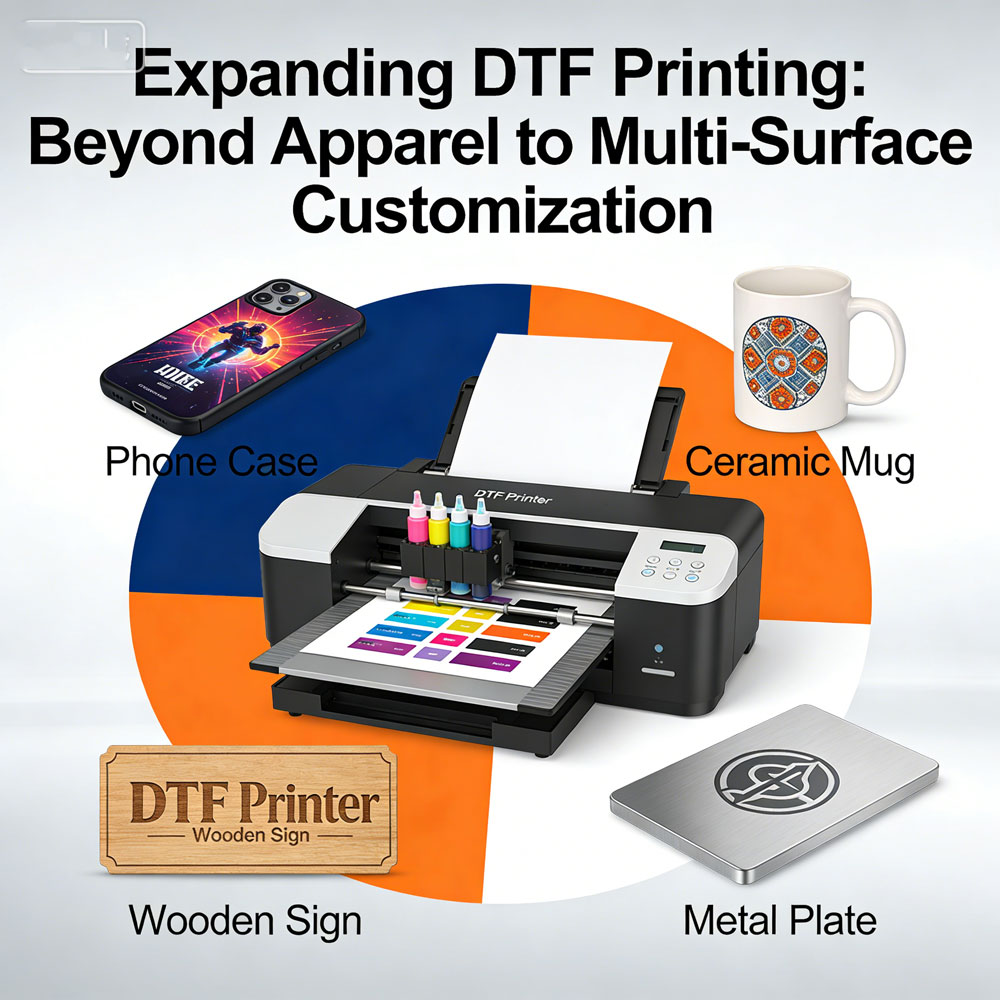
Expanding the Horizons of DTF Printing: Beyond Apparel to Universal Surface Decoration
1. DTF Printing Is Not Just for T-Shirts Anymore
Direct‑to‑Film (DTF) printing started as a popular choice for garment decoration, but it has rapidly evolved into a versatile surface printing solution across multiple industries. In the past decade, digital and on‑demand manufacturing trends have created demand for flexible, high‑quality decoration methods that traditional screen printing and direct‑to‑garment printing can’t fully satisfy.
Industry insights show:
- E‑commerce customization is surging
- Small batch and limited edition runs are becoming market norms
- Cross‑material printing versatility is highly valued
DTF has emerged not just as a printing technology, but as a platform enabling creative and commercial expansion.
2. Apparel Still Dominates—but in New Ways
Custom clothing remains the largest DTF application:
- T‑shirts
- Hoodies
- Sports jerseys
- Fashion streetwear
DTF produces high‑resolution prints with strong wash resistance across cotton, polyester blends, and dark fabrics. However, new clothing trends—such as fully personalized runs and seasonal micro‑collections—mean that DTF is now a core production method, not a fallback option.
What’s notable: apparel printing has become a way to build brand identity, not just decorate fabric.
3. Home Textile and Soft Goods: A Growing Market
DTF’s ability to transfer vivid designs onto textiles has opened opportunities in the home décor sector:
- Pillow covers
- Curtains
- Table linens
- Upholstery fabrics
As consumers increasingly seek personalized interiors and micro‑brand home furnishings, DTF enables small‑batch customization with fast turnaround—something traditional textile printing struggles to deliver efficiently.
This reflects a broader industry trend: personalization is no longer niche—it is mainstream.
4. Bags, Accessories, and Lifestyle Goods
Beyond clothing and home textiles, DTF has found a foothold in accessory markets:
- Tote bags
- Backpacks
- Hats
- Phone pouches
These items require clear, durable graphics that withstand wear and environmental exposure. Because DTF transfers bond cleanly with a variety of fibers and blends, manufacturers can diversify product lines without adding specialized printing equipment for each substrate.
This versatility reduces capital expenditure while expanding product offerings.
5. Hard Surfaces and Non‑Fabric Materials
One of the most exciting shifts is the application of DTF printing to rigid and semi‑rigid surfaces, challenging conventional wisdom about what heat‑transfer processes can achieve.
With tailored transfer films and pressing techniques, DTF can decorate:
- Wood panels
- Ceramic tiles
- Metal accessories
- Certain plastics
This evolution blurs the lines between textile printing and industrial surface decoration.
6. Promotional Products and Corporate Branding
Corporate merchandise and promotional goods are another rapidly expanding segment.
DTF allows companies to produce:
- Brand‑specific giveaways
- Event merchandise
- Custom uniforms
- Seasonal promotional items
Because DTF requires minimal setup and no screens or plates, businesses can respond quickly to marketing campaigns and supply chain demands, reducing lead times dramatically.
This agility is invaluable in fast‑moving retail and brand experiences.
7. The Real Advantage: Flexibility and Speed
What truly distinguishes DTF printing is not just its material compatibility—but its workflow efficiency:
- No pretreatment required for most fabrics
- High color vibrancy without complex color profiles
- Strong adhesion and wash durability
- Suitable for short and medium production runs
Compared to direct‑to‑garment (DTG) and screen printing, DTF can handle multi‑color, small‑batch jobs economically, making it ideal for customization and micro‑production.
This aligns perfectly with the modern manufacturing landscape: fast, flexible, and digitally driven.
8. Creative Expression Meets Commercial Strategy
DTF printing is more than a tool—it enables a new form of expression. Independent designers and brands can:
- Create limited‑edition products
- Test design concepts with minimal risk
- Offer personalized merchandise at scale
This “creative commercialization” model has reshaped several markets, effectively lowering barriers to entry and democratizing product design.
9. Breaking the Old Paradigm
Traditional printing models are based on mass production:
Produce once, sell many.
DTF challenges that with a new logic:
Produce what’s ordered, when it’s ordered, in any quantity.
This model reduces inventory risk, cuts waste, and directly supports demand‑driven manufacturing.
It also shifts the value proposition—products become unique experiences, not just commodities.
10. Final Insight
The expanding applications of DTF printing demonstrate a broader industrial truth:
Versatility and responsiveness define future manufacturing winners.
DTF’s ability to print across materials—and to adapt quickly to market demands—makes it a core technology in the age of customization.
Looking forward, the real question is not where DTF will be used—but how far it can be pushed in redefining how products are created, customized, and delivered.
The next frontier in printing is not bigger machines—it’s smarter production tailored to individual demand.
-
AuthorPosts
- You must be logged in to reply to this topic.