
Home › Forums › DTF Printer Hub › Eco-Solvent Printing Reimagined: Smart Choice for Visual Business
- This topic is empty.
-
AuthorPosts
-
3 April 2026 at 6:47 pm #1055
Dowinsss
KeymasterThe Shift: From Toxic Output to Intelligent Printing
The printing industry is undergoing a quiet revolution. What was once dominated by harsh chemicals and heavy industrial systems is now evolving toward cleaner, smarter, and more adaptable technologies. At the center of this shift sits the eco-solvent printer—a tool that is not just replacing traditional solvent printing, but redefining how visual communication is produced.
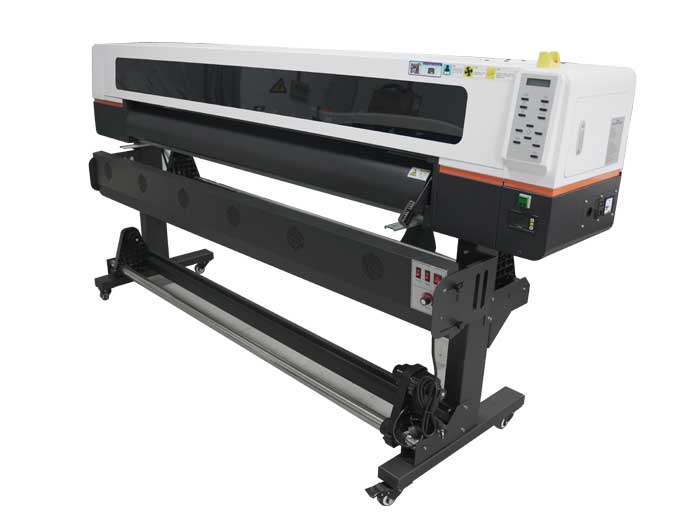
An eco-solvent printer is essentially a large-format inkjet system designed to print on flexible media like vinyl, canvas, and film, using inks formulated with low volatile organic compounds (VOCs). These inks maintain strong adhesion while significantly reducing environmental and health impact.
But reducing toxicity is only the beginning of the story.
What Makes Eco-Solvent Printing Different?
Traditional solvent inks “bite” aggressively into materials, ensuring durability—but at the cost of fumes, toxicity, and operational constraints. Eco-solvent inks take a more refined approach:
- Use milder chemical carriers with lower emissions
- Deliver high-quality pigment bonding without aggressive corrosion
- Maintain durability while improving workplace safety
The result is a system that balances performance, safety, and flexibility—a combination that aligns with modern production demands.
How It Works: Precision Meets Chemistry
The process behind eco-solvent printing mirrors advanced inkjet systems but adds chemical intelligence:
- Digital design is processed via RIP software
- Printheads eject microscopic ink droplets with high precision
- Solvent components evaporate upon contact
- Pigments remain bonded to the material surface
- Drying systems stabilize the final output
This controlled evaporation-and-bonding mechanism enables high-resolution, durable prints without aggressive material damage.
Core Advantages: Why the Market Is Moving Fast
1. Outdoor Durability That Competes With Industrial Systems
Eco-solvent prints resist UV exposure, moisture, and abrasion, maintaining color vibrancy even in harsh outdoor environments.
Industry Insight:
Outdoor advertising increasingly demands 3–5 year durability cycles, making eco-solvent a cost-effective alternative to more expensive UV systems.
2. Material Freedom = Business Flexibility
Eco-solvent printers support a wide range of substrates:
- Vinyl and adhesive films
- Canvas and art media
- Mesh banners and lightbox films
- Decorative interior materials
Contrarian View:
This versatility is not just a feature—it is a business model multiplier. One machine can serve signage, décor, branding, and retail applications simultaneously.
3. Environmental Compliance Is Becoming Non-Negotiable
Low-VOC emissions reduce odor and health risks, making eco-solvent systems suitable for indoor production environments.
Big Data Trend:
Global regulations and ESG standards are pushing print businesses toward greener technologies. Eco-solvent sits in the “compliance-ready” category without the cost burden of UV systems.
4. High-Quality Output Without Overengineering
Modern eco-solvent printers achieve high resolution and strong color reproduction, meeting the visual standards of advertising and branding industries.
Reality Check:
For most commercial applications, the perceived difference between eco-solvent and higher-end systems is minimal—yet the cost gap remains significant.
5. Cost Efficiency That Scales
Compared with UV printing:
- Lower ink cost
- Lower equipment investment
- Manageable maintenance
This makes eco-solvent systems especially attractive for small and mid-sized businesses.
Applications: Where Eco-Solvent Truly Dominates
Eco-solvent printing is not niche—it is everywhere.
Outdoor Advertising
- Billboards
- Banners
- Storefront signage
- Transit ads
Commercial Graphics
- Posters and promotional displays
- Exhibition visuals
- Retail branding
Vehicle Graphics
- Car wraps
- Fleet branding
- Custom decals
Interior Decoration
- Wallpapers and murals
- Glass films
- Floor graphics
Key Insight:
These applications represent over 70% of daily output in many sign shops, making eco-solvent one of the most commercially relevant technologies today.
The Hidden Trade-Off (Most People Ignore)
Eco-solvent is not perfect.
- It is less versatile than UV printing for rigid materials
- Drying time, while improved, is not always instant
- Certain textile applications require alternative technologies
However, this is where strategic thinking matters:
Eco-solvent is not trying to do everything—it is optimized to dominate high-volume, flexible media production.
And that is exactly where most real-world demand exists.
A Strategic Perspective: Why Eco-Solvent Is Winning
The success of eco-solvent printing is not just technological—it is structural.
Three forces are driving its growth:
- Customization economy – Brands need short-run, high-quality visuals
- Decentralized production – Small studios and local print shops are rising
- Sustainability pressure – Cleaner processes are becoming mandatory
Eco-solvent sits at the intersection of all three.
Final Thought: It’s Not a Printer—It’s a Positioning Tool
Most people evaluate eco-solvent printers based on specs.
That’s the wrong approach.
The real value lies in what it enables:
- Faster entry into signage and advertising markets
- Lower operational risk
- Scalable service offerings
In short:
Eco-solvent printing is not just a technology upgrade—it is a strategic shortcut into modern visual business.And in a market driven by speed, customization, and sustainability, that shortcut is becoming the main road.
-
AuthorPosts
- You must be logged in to reply to this topic.