
Home › Forums › Digital UV Printing Hub › Acrylic UV Printing Reimagined: Beyond the Machine, Into the Market
- This topic is empty.
-
AuthorPosts
-
14 April 2026 at 11:58 am #1079
Dowinsss
KeymasterAcrylic UV Printing Reimagined: Beyond the Machine, Into the Market
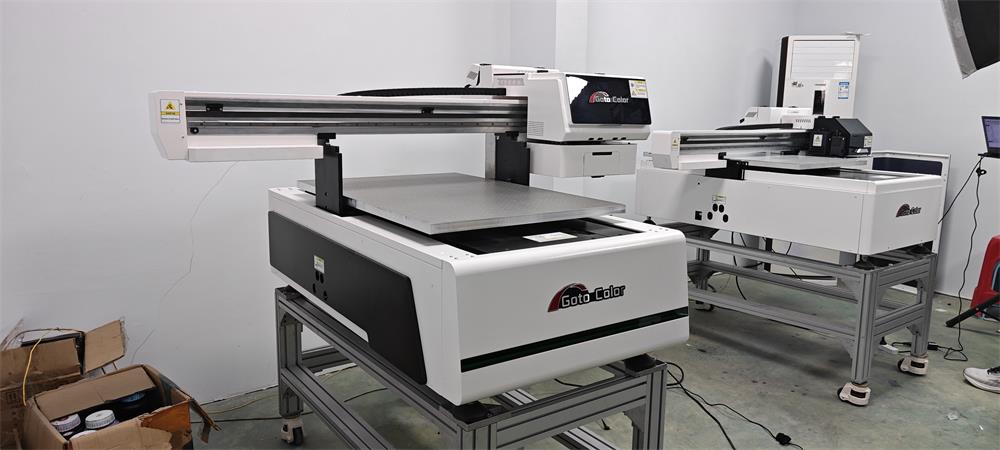
In the era of mass customization and visual consumption, acrylic is no longer just a material—it is a medium of value. Transparent, durable, and visually striking, acrylic has quietly become a backbone for industries ranging from retail displays to personalized consumer goods. But what truly unlocked its commercial potential is not the material itself—it is UV printing technology.
This is not just about machines. It is about how manufacturing is being redefined.
What Is an Acrylic UV Printer—Really?
An acrylic UV printer is essentially a flatbed digital printing system that applies UV-curable ink directly onto rigid materials like acrylic sheets. Instead of relying on traditional drying methods, the ink is instantly hardened using ultraviolet light, creating a permanent bond with the surface.
At a surface level, this sounds like a technical upgrade. But at a deeper level, it represents a shift:
Printing is no longer a process—it becomes an instant manufacturing act.
Acrylic, known chemically as PMMA, provides a smooth, non-absorbent surface with high optical clarity. When UV ink hits this surface and is cured immediately, it produces sharp, vibrant, and high-contrast visuals that traditional methods struggle to match.
How the Process Works (Simplified but Honest)
The workflow is deceptively simple:
- Design creation using graphic software
- Material preparation (clean, dust-free acrylic surface)
- Parameter setup (ink density, resolution, speed)
- Direct printing with simultaneous UV curing
- Optional varnish or layering for durability
This streamlined process eliminates intermediate steps like plate-making or film transfer.
But here is the critical insight most articles miss:
The simplicity is not accidental—it is engineered to remove friction from production.
In traditional printing, time accumulates between steps. In UV printing, time collapses into a single moment.
Why Acrylic + UV Printing Became Inevitable
From a macro perspective, the rise of acrylic UV printing aligns with three global shifts:
1. Demand for Instant Customization
Consumers no longer want standardized products. They want identity embedded into objects. UV printing enables one-piece production without cost penalties, making personalization scalable.
2. Decline of Inventory-Based Manufacturing
UV printing supports “produce-on-demand” models. No inventory, no overproduction—just data-driven manufacturing.
3. Visual Economy Expansion
In a world dominated by social media and visual branding, surfaces matter more than ever. Acrylic enhances depth and gloss, while UV printing amplifies color intensity—creating high-impact visual assets.
Core Advantages (Reinterpreted)
Precision Is Not Just Quality—It’s Positioning
Modern UV systems can produce ultra-fine details and smooth gradients, enabling premium-grade outputs suitable for luxury branding and high-end décor.
Durability Means Lifecycle Value
UV-cured ink forms a chemically stable layer resistant to scratches, weather, and fading, extending product lifespan significantly.
Speed Equals Competitive Edge
Instant curing eliminates waiting time, allowing same-day production cycles—a critical factor in fast-moving markets.
Sustainability Is Becoming Non-Negotiable
Without solvents, plates, or excessive waste, UV printing aligns with green manufacturing trends and regulatory pressures.
Cost Structure Is Fundamentally Different
No setup costs mean small batches are profitable. This disrupts traditional economies of scale.
Where Acrylic UV Printing Actually Wins
Advertising & Retail
High-transparency acrylic combined with vivid UV prints creates premium signage, display panels, and lightboxes that command attention.
Personalized Consumer Products
From keychains to phone accessories, UV printing enables low-cost customization with high perceived value.
Interior Design & Art
Printed acrylic panels offer a glass-like aesthetic with enhanced color depth, widely used in modern décor.
Industrial Labeling
Durable, weather-resistant prints make UV technology suitable for equipment labels, control panels, and automotive components.
The Unspoken Truth: It’s Not Just Technology, It’s Strategy
Most discussions stop at features. That misses the bigger picture.
UV printing on acrylic is not disruptive because it prints better—it is disruptive because it:
- Removes barriers to entry in manufacturing
- Compresses production timelines
- Enables infinite SKU variation
- Bridges digital design directly to physical output
This is manufacturing without inertia.
Limitations (That Actually Matter)
To be precise:
- Acrylic is sensitive to dust and static, affecting print quality if not handled correctly
- Adhesion depends on surface condition and ink compatibility
- Not all UV printers are equal—hardware precision directly impacts output
These are not flaws—they are process dependencies.
Final Perspective
Acrylic UV printing is often marketed as a “machine solution.” That framing is outdated.
It is better understood as:
A convergence of material science + digital printing + on-demand economics
The companies that benefit most are not those who simply buy the equipment—but those who rethink their production logic around it.
Because the real shift is this:
You are no longer printing on acrylic.
You are manufacturing value, directly from data. -
AuthorPosts
- You must be logged in to reply to this topic.