
Home › Forums › DTF Printer Hub › A1 vs A2 vs A3 DTF Printers: Stop Choosing Size—Strategy
- This topic is empty.
-
AuthorPosts
-
9 April 2026 at 3:56 pm #1062
Dowinsss
Keymaster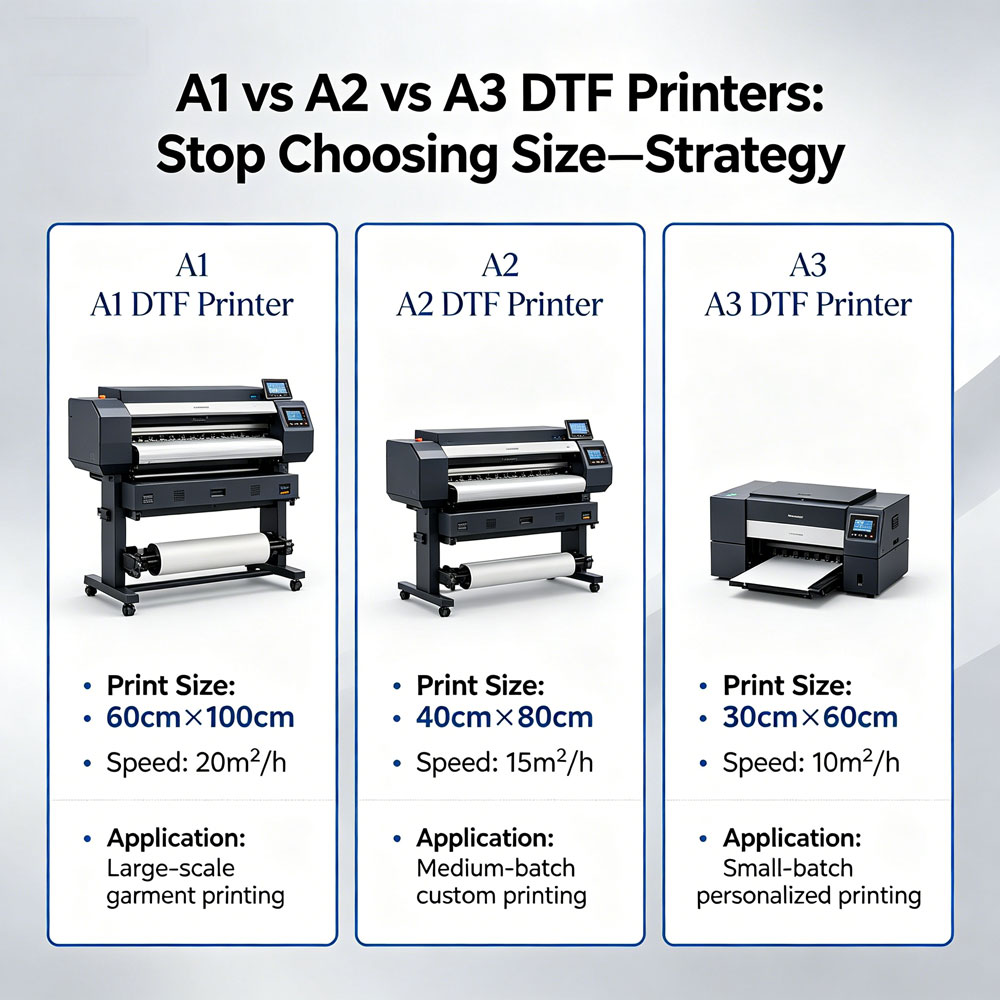
The DTF (Direct-to-Film) printing boom is not accidental. It sits at the intersection of three explosive trends: on-demand manufacturing, short-run customization, and e-commerce-driven apparel. What used to be a niche process has now become a core production method for thousands of print businesses worldwide.
But here’s the problem most buyers still misunderstand:
Choosing between A1, A2, and A3 is not about size.
It is about business stage, throughput logic, and profit architecture.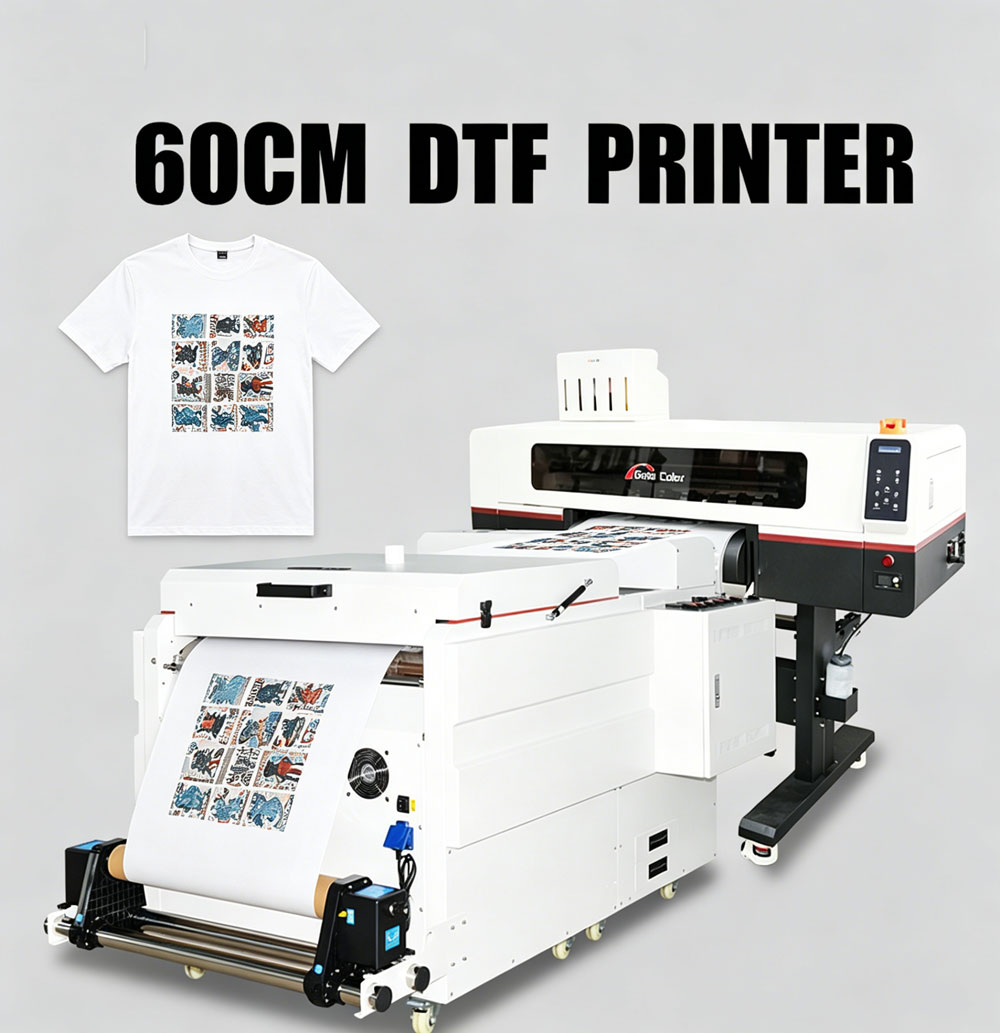
The Illusion of “Size”: What A1, A2, A3 Really Mean
At a basic level, A1, A2, and A3 refer to the maximum print width and film size a DTF printer can handle.
- A1 (~60 cm width) → Industrial-scale output
- A2 (~42 cm width) → Mid-level commercial production
- A3 (~30–33 cm width) → Entry-level or small-batch production
The larger the format, the more designs you can print simultaneously, directly impacting productivity.
But this is where most guides stop—and where they go wrong.
Because size is not the decision. Workflow is.
A3: The Startup Trap Disguised as Opportunity
A3 DTF printers are often marketed as “beginner-friendly,” and that is technically correct.
- Low initial investment
- Compact footprint
- Simple operation
They are ideal for small studios, home businesses, and low-volume customization.
However, data from small apparel sellers reveals a hidden constraint:
- Over 70% of custom T-shirt designs fit within A3 dimensions, making it highly versatile
- But once order volume increases, A3 becomes a bottleneck—not a solution
The reality:
A3 is not a growth tool. It is a validation tool.If your business model works, A3 will quickly become your biggest limitation.
A2: The Transitional Machine Most People Underestimate
A2 printers occupy a strange middle ground—and that is precisely their strength.
- Moderate investment
- Balanced speed and flexibility
- Suitable for growing e-commerce brands and local print shops
They allow businesses to scale without immediately committing to industrial infrastructure.
Here is the overlooked advantage:
A2 is not a compromise—it is a strategic buffer between experimentation and scale.
Most profitable mid-sized print businesses operate in this zone longer than expected, because it offers the best balance between cost and output.
A1: Industrial Power—But Only If You Deserve It
A1 DTF printers are built for one thing: throughput dominance.
- Large-format printing (up to ~60 cm width)
- High-speed batch production
- Continuous operation capability
They are ideal for:
- Factories
- Large print farms
- High-volume e-commerce fulfillment
But here is the uncomfortable truth:
Buying an A1 printer too early is one of the fastest ways to kill a business.
Why?
- Higher operational complexity
- Increased maintenance requirements
- Greater dependency on consistent order flow
A1 does not create demand—it amplifies existing demand.
The Real Decision Framework (Not What Most Sellers Tell You)
Forget size. Ask these three questions instead:
1. Daily Order Volume
- < 30 pieces → A3
- 30–100 pieces → A2
- 100+ pieces → A1
2. Business Model
- Custom, one-off designs → A3
- Mixed custom + batch → A2
- Bulk production / wholesale → A1
3. Growth Horizon
- Testing market → A3
- Scaling phase → A2
- Established production → A1
This is the logic that actually aligns machine capability with revenue generation.
Industry Shift: Why This Decision Matters More Than Ever
The global custom apparel market is shifting toward:
- Shorter production cycles
- Higher SKU diversity
- Faster delivery expectations
DTF printing thrives in this environment because it eliminates plate-making and supports flexible production.
But the wrong machine size creates friction:
- Too small → missed orders
- Too large → underutilized capacity
- Wrong fit → profit erosion
Breaking the Conventional Thinking
Most buyers think like this:
“What’s the biggest machine I can afford?”
This is the wrong question.
The right question is:
“What machine maximizes my profit per hour at my current stage?”
Because in DTF printing:
- Speed without orders is waste
- Capacity without workflow is chaos
- Scale without strategy is loss
Final Insight
A1, A2, and A3 are not just machine sizes—they represent three different business realities:
- A3 = Entry point
- A2 = Growth engine
- A1 = Scale amplifier
The mistake is choosing based on ambition.
The advantage comes from choosing based on timing.
Because in the DTF industry, the winners are not those with the biggest machines—
but those who upgrade at the exact moment their business demands it.
-
AuthorPosts
- You must be logged in to reply to this topic.