
Home › Forums › Digital UV Printing Hub › 3D Embroidery UV DTF Stickers: Reinventing Textile Decoration
- This topic is empty.
-
AuthorPosts
-
14 April 2026 at 3:49 pm #1082
Dowinsss
KeymasterThe customization industry is no longer competing on price—it is competing on texture, speed, and emotional impact. In this context, 3D embroidery UV DTF stickers are not just a technical upgrade; they represent a structural shift in how textiles are designed, produced, and monetized.
What Are 3D Embroidery UV DTF Stickers—At Their Core?
3D embroidery UV DTF stickers are a hybrid manufacturing solution that merges UV digital printing with embroidery-like texture simulation. Instead of stitching threads into fabric, the process builds a raised structure using layered UV-curable ink and transfers it onto textiles through heat and pressure.
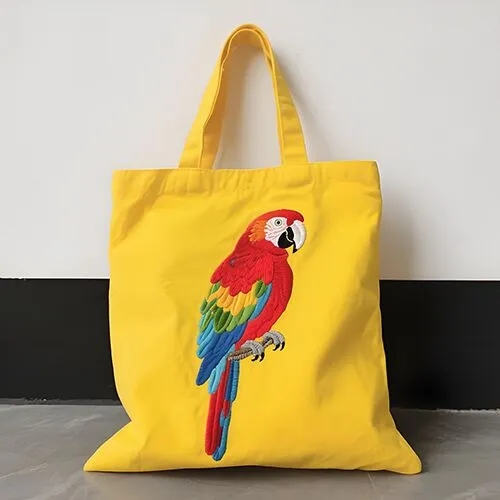
The result is a surface that visually and tactically mimics embroidery—without needles, threads, or long production cycles.
This is not embroidery.
It is data-driven texture manufacturing.
Why Traditional Methods Hit a Wall
Before understanding the innovation, it is necessary to confront the limitations of older systems:
- Embroidery: High labor cost, slow production, limited pattern flexibility
- Standard DTF (for fabric): Good color, but flat and lacking texture
- UV DTF (for hard surfaces): Durable, but historically unsuitable for textiles due to adhesion and flexibility issues
On fabrics specifically, three core problems persist:
- Weak bonding due to fiber structure
- Lack of dimensionality
- Poor durability after washing
These constraints created a gap in the market—one that demanded both texture and efficiency.
The Breakthrough: How 3D Texture Is Engineered
The innovation lies in process integration rather than a single invention.
1. Layered Ink Architecture
Instead of flat printing, UV ink is stacked in multiple passes to build height, simulating embroidery ridges and depth.
2. AB Film Transfer System
A dual-film structure ensures precision during printing and stability during transfer, allowing complex designs to maintain integrity.
3. Double Heat-Press Fusion
Two-stage heat pressing locks the structure into fabric fibers, balancing adhesion and flexibility.
4. Instant UV Curing
Ultraviolet light solidifies the ink immediately, forming a stable 3D structure before transfer.
The key insight:
Texture is no longer stitched—it is printed, cured, and transferred.
Production Workflow (Compressed Reality)
The process is streamlined but technologically dense:
- Design a layered, embroidery-style pattern
- Print onto transfer film using UV-curable inks
- Laminate protective and adhesive layers
- Perform first heat press to bond design
- Apply secondary press to enhance durability and 3D structure
- Final peel to reveal textured result
This replaces multiple traditional steps (digitizing, threading, stitching, finishing) with a single digital pipeline.
Why This Technology Is Scaling Fast
1. Customization Without Cost Penalty
Traditional embroidery struggles with small batches. UV DTF operates with zero plate-making and minimal setup, making one-piece orders viable.
2. Speed as a Competitive Weapon
Production cycles shrink from hours to minutes. This aligns perfectly with fast fashion and e-commerce fulfillment models.
3. Unlimited Design Complexity
Gradients, micro-details, and multi-color patterns—previously difficult or expensive in embroidery—are now trivial.
4. Cross-Industry Expansion
Applications extend across:
- Apparel (T-shirts, hoodies, denim)
- Accessories (caps, bags, shoes)
- Home textiles (pillows, decorative fabrics)
The Deeper Shift: From Craft to Algorithm
Traditional embroidery is craft-based.
3D UV DTF is algorithm-driven.This distinction matters.
- Craft scales slowly
- Algorithms scale infinitely
What used to depend on skilled labor is now encoded into print parameters, layer logic, and heat profiles.
The machine is not replacing embroidery.
It is redefining what “embroidery” even means.
Limitations (Often Ignored, But Critical)
This technology is powerful—but not universal:
- Wash durability may still lag behind premium embroidery in heavy-use garments
- Adhesion depends heavily on fabric type and process control
- Texture realism, while impressive, is still a simulation—not true stitching
These are not weaknesses—they define where the technology should be applied strategically.
Final Perspective: A New Manufacturing Logic
3D embroidery UV DTF stickers are not just a tool for decoration. They represent a new production philosophy:
- No inventory
- No minimum order
- No physical constraints on design
This is on-demand texture manufacturing, where ideas move directly from software to fabric.
The companies that win will not be those who “use” this technology—
but those who rebuild their business models around it. -
AuthorPosts
- You must be logged in to reply to this topic.