The landscape of printing is shifting rapidly. Customers expect faster turnaround, customizable products, and high-quality results on materials beyond traditional paper. Small UV flatbed printers are emerging as an accessible technology for studios, shops, and startups that want to compete with larger operators — without outsized cost or complexity.
Contents
The Challenge Facing Print Shops
Modern print businesses face several pressures:
- Faster expectations: Orders often require quick turnaround and frequent design changes.
- Diverse materials: Clients want products on acrylic, metal, wood, plastics, leather, and flexible media, which traditional printers struggle to handle.
- Cost and competitiveness: Outsourcing or using outdated machines drives up costs and slows delivery, squeezing margins.
If your equipment can’t support these demands, you risk losing work to competitors who can.
What Small UV Flatbed Printers Are
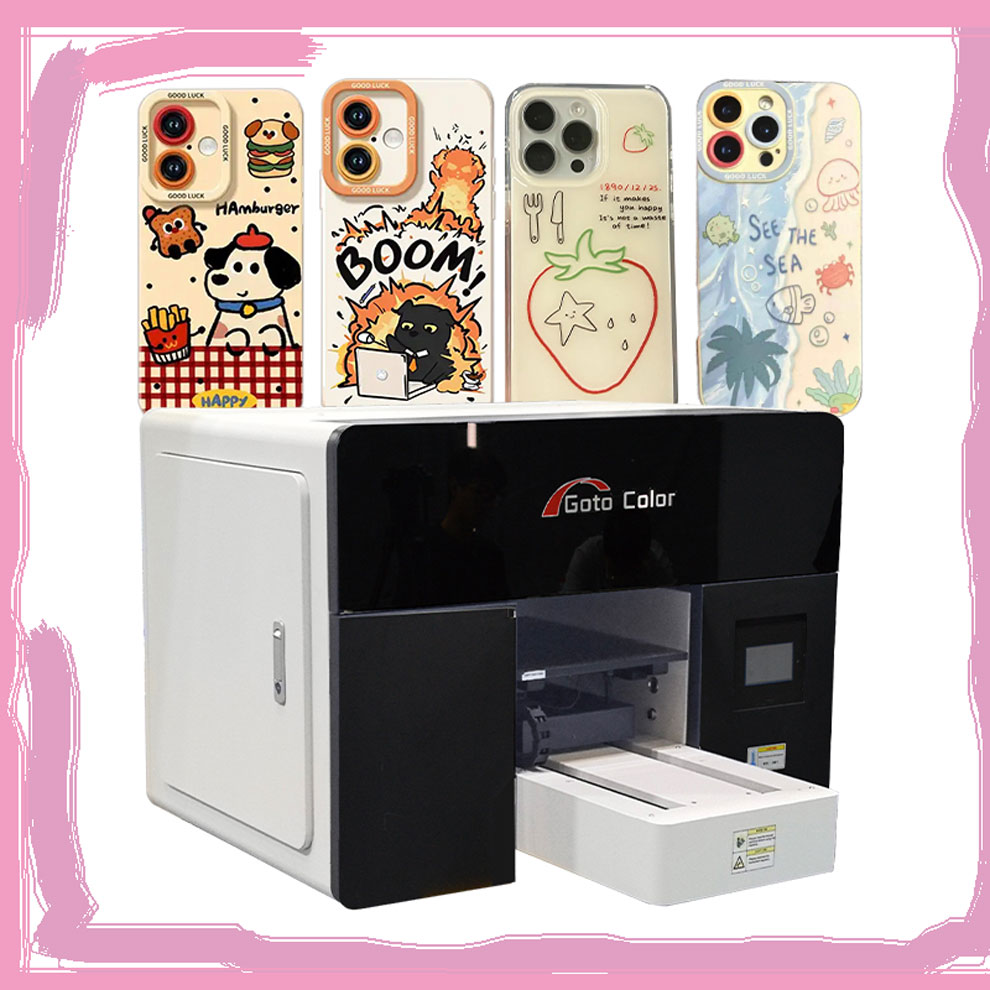
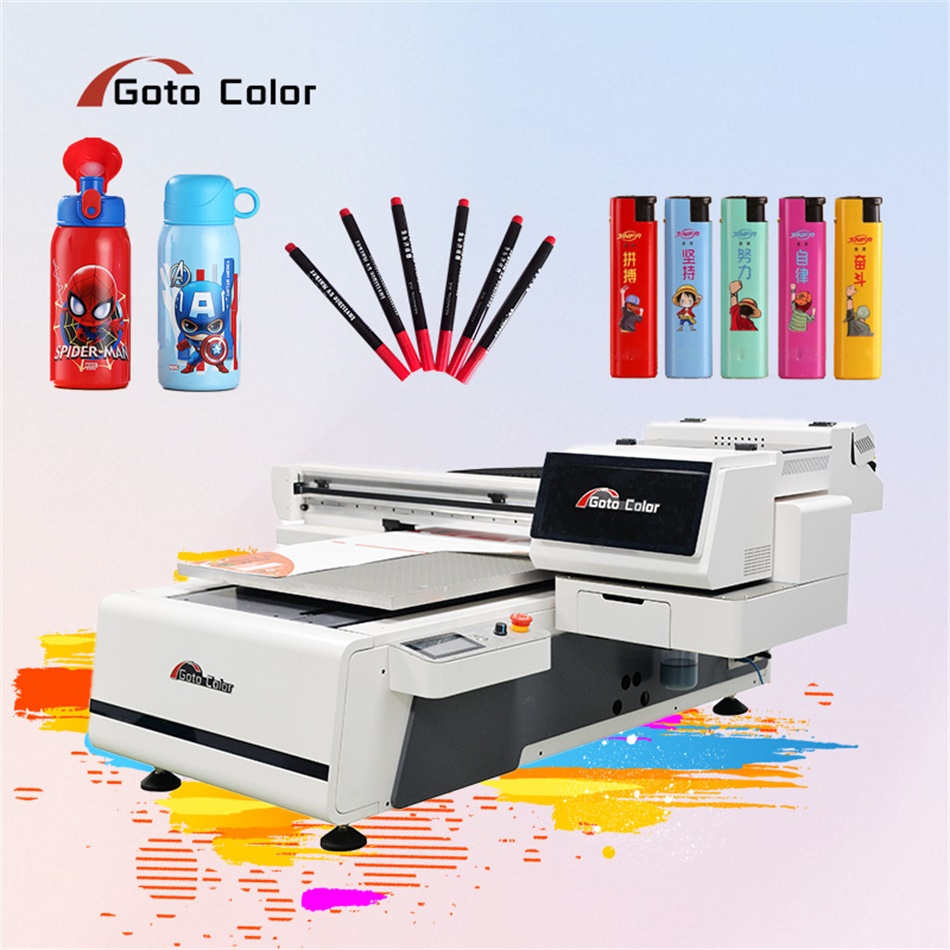
A small UV flatbed printer is a compact digital device that uses UV-curable ink and UV LED lights to instantly dry and bond ink to surfaces. Unlike older solvent printers, UV technology works on both rigid and flexible materials and produces prints that are ready to handle immediately after printing.
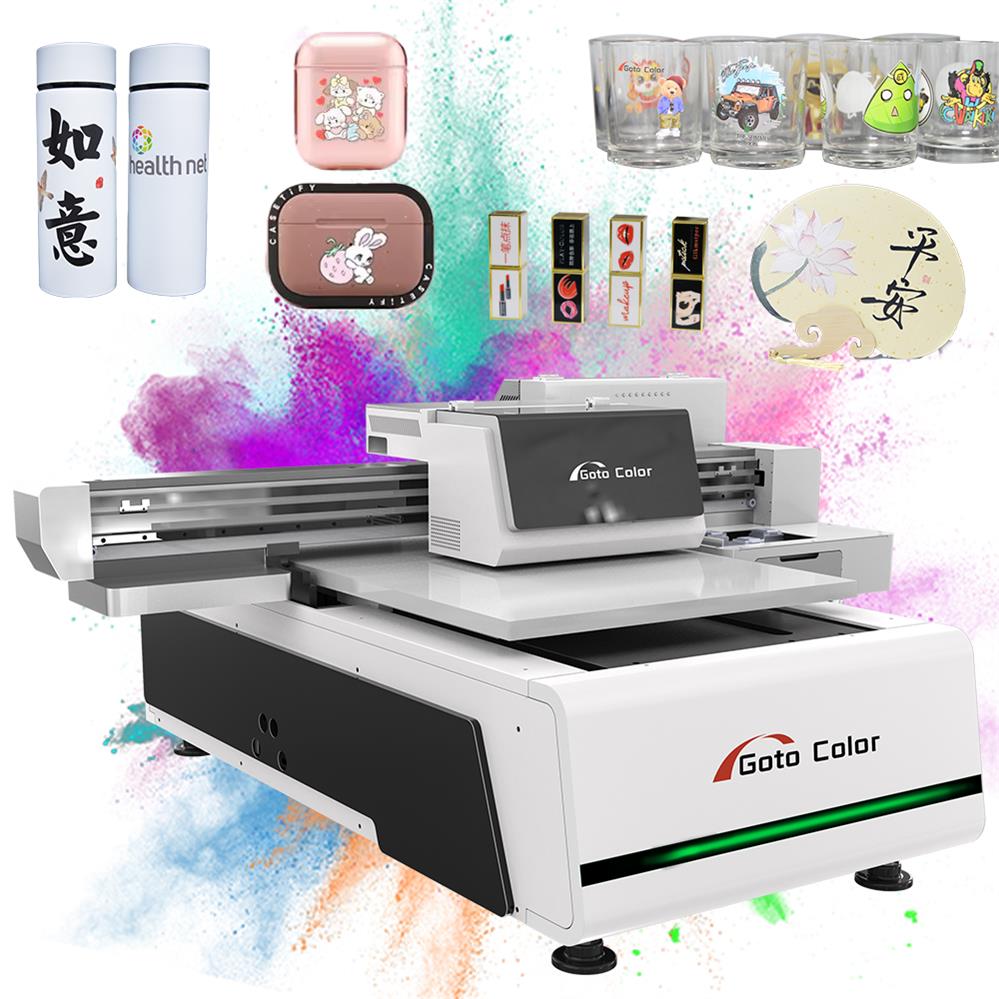
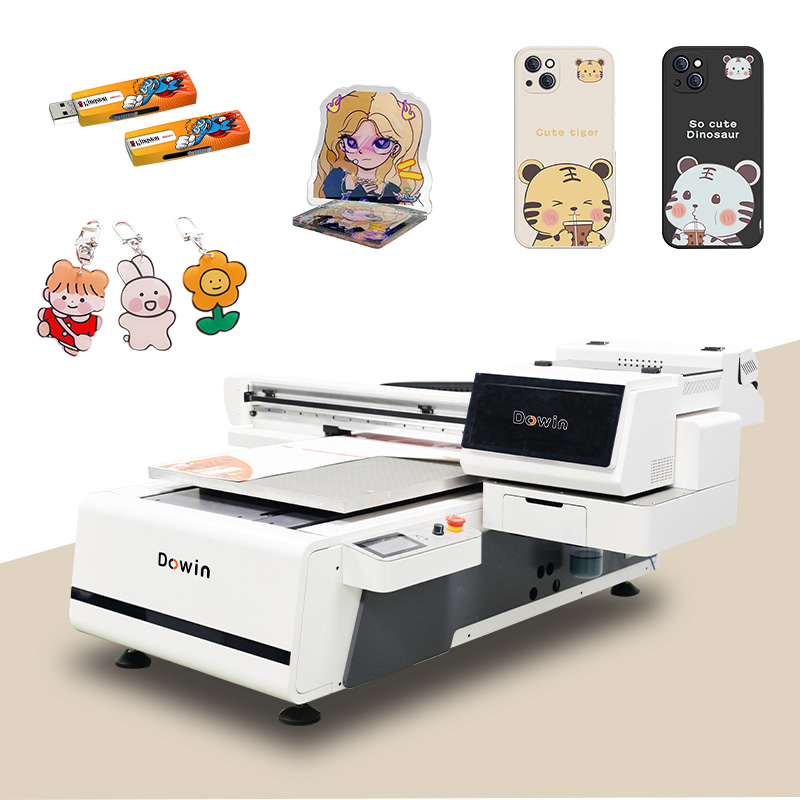
These printers fit in studios, offices, or small production areas and are capable of printing directly on items such as phone cases, keychains, signage panels, office supplies, and packaging materials.
Key Advantages for Modern Businesses
1. Material Flexibility
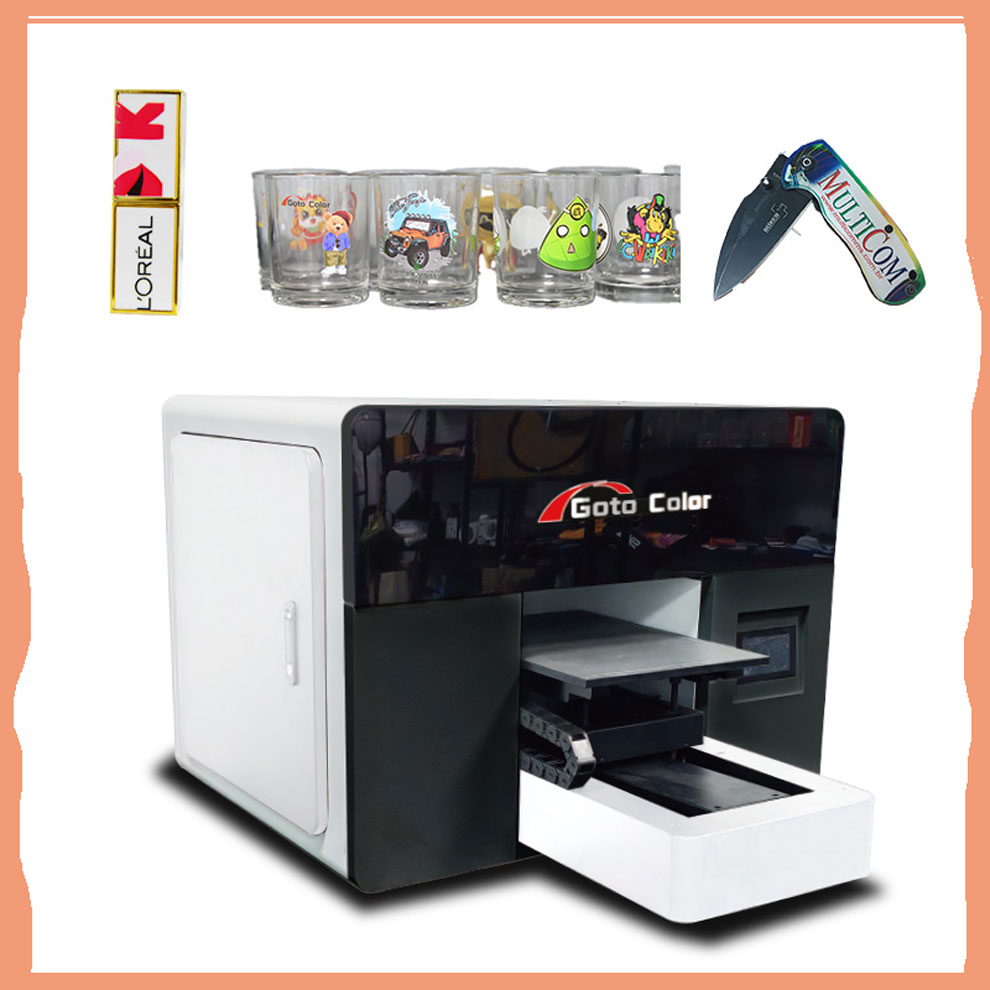
Small UV flatbed printers support a wide array of surfaces — from plastics and metals to glass, wood, and flexible media like labels or leather. This versatility lets businesses expand into new product categories without investing in separate machines for each material.
2. Instant Curing and Fast Turnarounds
Because UV inks dry instantly under UV LEDs, prints require no additional drying time. This reduces bottlenecks and allows businesses to offer faster delivery without sacrificing quality.
In practice, this means a job can go from design file to finished piece in minutes rather than hours, a real advantage for custom orders or tight deadlines. (This immediate curing also minimizes volatile organic compound emissions, a plus for indoor workspace sustainability.)
3. Space and Cost Efficiency
Small UV flatbed printers take up relatively little floor space and are simpler to maintain than large industrial printers. They typically require lower ink consumption and have lower daily operating costs — an important factor for small and medium businesses with limited capital.
From a practical standpoint, the lower entry cost and compact footprint make these printers one of the most scalable additions a small business can make when moving into high-value custom printing.
4. Simpler Operation
Modern small UV flatbed printers are designed with user-friendly software and controls. This reduces the learning curve for operators, making it feasible for businesses without dedicated print engineers to produce professional prints.
5. Improved ROI and Business Growth
By internalizing printing capabilities, businesses can eliminate outsourcing costs and control quality directly. Many small operators see a quicker return on investment when these devices are used to produce high-margin custom products such as promotional items, awards, or branded merchandise.
In real experience, break-even times are often shorter than with traditional printing technologies — sometimes within a few months when the printer is actively used for multiple product lines.
Practical Considerations Before Adoption
While small UV flatbed printers offer many advantages, several practical points should guide your decision:
- Workflow Integration: Evaluate how the new equipment will fit into existing production processes. Frequent design changes or high customization should align with printer capabilities.
- Maintenance and Skill: UV printheads and ink systems require routine cleaning and occasional technical understanding to maintain consistent output. Even though operation is simplified, neglect can lead to clogging and downtime. (Community discussions warn that cheap units with poor support often clog easily and require significant maintenance.)
- Material Handling: Not all substrates behave identically with UV inks. Some flexible materials or coated surfaces may need pre-treatment or post-processing for optimal adhesion.
My Perspective: A Strategic Asset, With Conditions
Small UV flatbed printers are not just another gadget — they are transformational tools for businesses that depend on fast, flexible, and high-quality custom printing. When integrated into a thoughtful workflow, these machines can open new product lines, reduce lead times, and improve margins.
However, success depends on consistent use, adequate training, and appropriate maintenance. For sporadic projects or occasional printing needs, outsourcing might still be more cost-effective than owning and operating your own UV printer. This is especially true if upfront cost, consumables, and technical support are not carefully considered.
Conclusion
Small UV flatbed printers deliver:
- Broad material compatibility
- Instant curing and reduced turnaround times
- Compact size and scalable cost
- Enhanced customization and competitive differentiation
- Potential for quick ROI in the right business model
These advantages make them a compelling choice for modern businesses that want to offer premium, personalized products without excessive overhead or reliance on external suppliers.