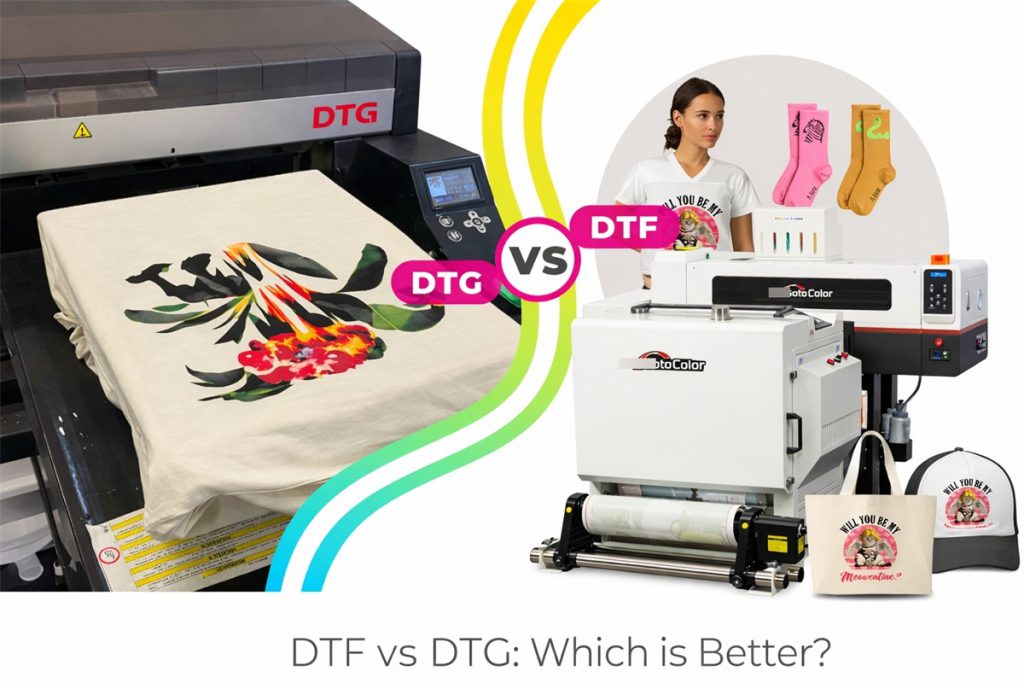
When you’re exploring ways to put your artwork onto apparel or fabric items, two modern digital printing methods often come up: DTF (Direct-to-Film) and DTG (Direct-to-Garment). Both are capable of producing vibrant, full-color results, but they work very differently and each has its ideal use cases. Understanding the differences can help you decide which method best suits your project, materials, and business goals.
Contents
What is DTF Printing?
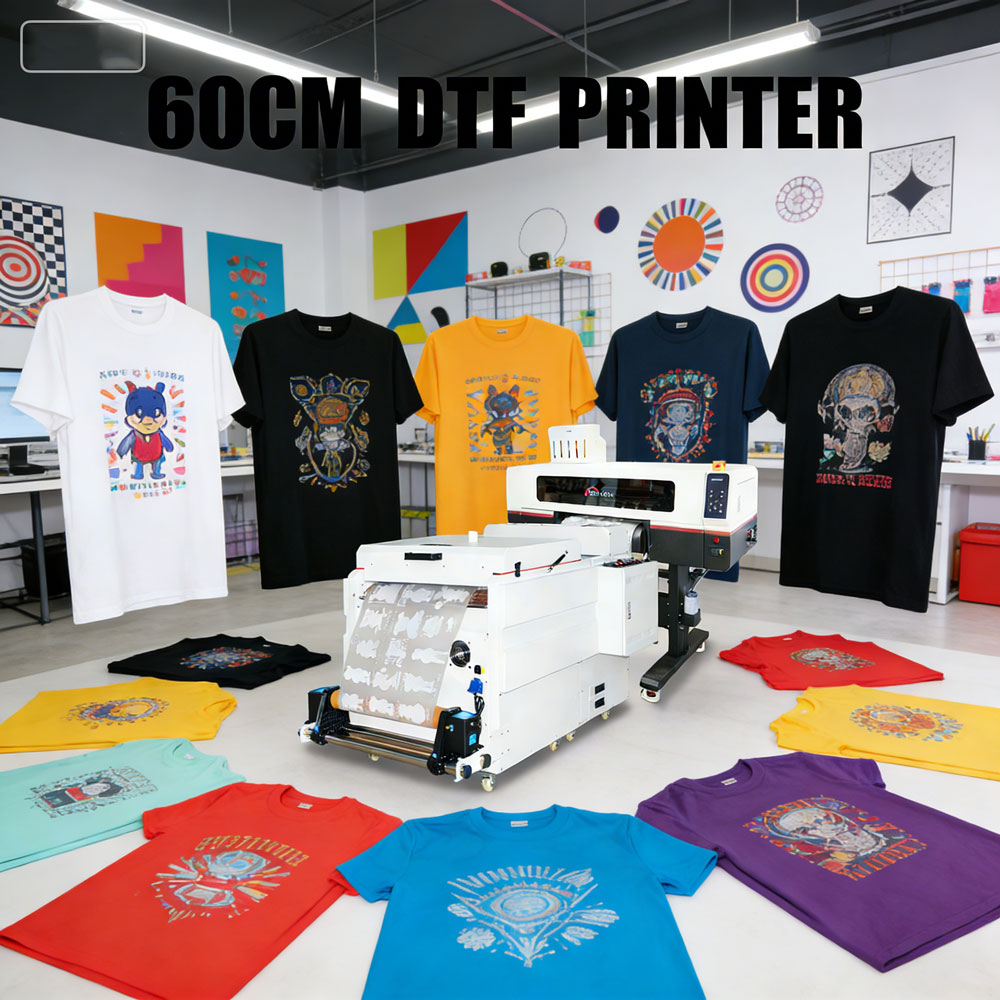
Direct-to-Film (DTF) is a transfer-based process. Instead of printing directly on the garment, the design is printed on a special film using textile inks. After printing:
- A heat-activated adhesive powder is applied to the printed film,
- The film is cured so the powder sticks to the ink,
- The design is placed on the fabric and transferred using heat and pressure,
- Once cooled, the carrier film is peeled away, leaving the design on the material.
The result is a durable, vibrant print that adheres well to a wide variety of fabrics including cotton, polyester, blends, fleece, and more.
What is DTG Printing?
Direct-to-Garment (DTG) is more akin to a high-end inkjet printer for fabric. The garment is loaded directly into a printer platen, and water-based inks are sprayed straight onto the fibers in the pattern of your design.
Before printing, garments — especially darker ones — may be pre-treated so the ink bonds properly. After printing, the ink is cured with heat to ensure durability.
This method produces soft, integrated prints where the ink becomes part of the fabric rather than sitting on top of it.
Key Differences Between DTF and DTG
| Feature | DTF Printing | DTG Printing |
|---|---|---|
| Print Method | Design printed on film, then heat-transferred | Ink printed directly onto garment |
| Fabric Compatibility | Works on many fabrics including synthetics, blends, cotton | Best for natural fabrics like cotton and linen |
| Feel of Print | Slightly raised texture from transfer layer | Soft, absorbed into fibers |
| Color Vibrancy | Very bright and vivid on dark and light fabrics | Very rich on light fabrics, less so on dark without pretreatment |
| Durability | High resistance to cracking and fading | Durable but may fade with frequent washing |
| Setup | Multi-step process (film, powder, heat press) | Direct print and cure process |
| Best Orders | Bulk runs; versatile substrate choices | Small runs; custom cotton garments |
Compiled from multiple technical comparisons of printing workflows.
Pros and Cons at a Glance
DTF Advantages
- Works on almost any fabric type, including polyester and blends.
- Highly vibrant colors, even on dark materials.
- More forgiving production flow; you can batch prints on film before application.
- Prints hold up well through many washes when properly applied.
DTF Disadvantages
- Print feels slightly raised compared to DTG.
- The process has more steps and requires consumables like film and adhesive powder.
- The initial learning curve for proper heat pressing and curing can be steeper.
DTG Advantages
- Produces very soft prints that feel integrated into the garment.
- Excellent for photo-quality prints and fine gradients on cotton.
- Simple workflow for on-demand printing.
DTG Disadvantages
- Limited fabric compatibility — especially challenging on synthetics.
- Pretreatment adds time and cost, particularly for dark garments.
- Ink and machine maintenance requirements are higher.
Which One Should You Choose?
The best choice depends on what you’re printing, how many items you need, and what materials you’re using:
Choose DTF When:
- You want versatility across fabrics like polyester, blends, or nylon.
- Vibrant, bold designs on dark garments are a priority.
- You’re handling larger batches where efficiency matters.
Choose DTG When:
- You mainly print on cotton or natural fibres.
- Soft hand-feel and photo-like detail are crucial.
- You do small runs or one-off custom items.
A Personal Take
In my experience, neither method is inherently “better” — they are tools optimized for different jobs. If you’re building a business that sells a wide variety of garments and needs reliable performance across materials, DTF’s adaptability makes it a smart backbone. If your brand identity relies on a soft, natural feel and hyper-detailed imagery on cotton, DTG still shines. For many creators, using both — choosing the process per job — is the most strategic long-term approach.
Final Thoughts
DTF and DTG represent the evolution of digital textile printing. By understanding how they differ and what each does best, you can match your creative vision to the right technology and deliver prints that meet both quality and production expectations.