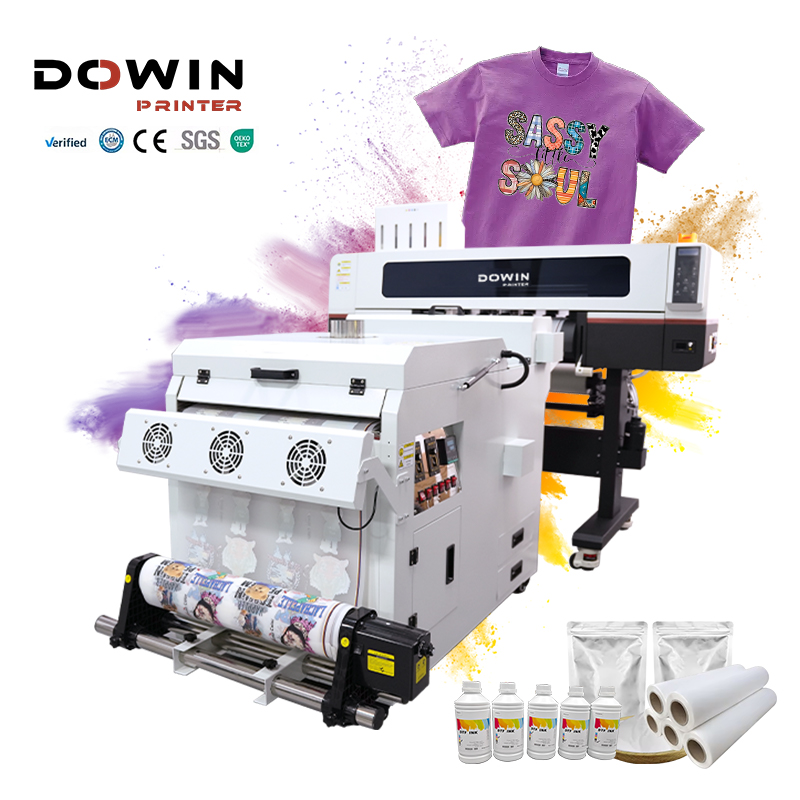
Direct-to-Film (DTF) printing is often associated with cotton and cotton-blend shirts, but with the right approach, DTF can produce bright, durable transfers on polyester fabrics too — including 100 % polyester performance wear and athletic apparel. Polyester offers strengths like good durability and a smooth surface that accepts detail well, although it also introduces some challenges not found with natural fabrics.
This guide walks through how to print DTF onto polyester successfully, what to watch out for, and tips to get the most consistent results.
Contents
Why Polyester Is Different
Polyester behaves differently than cotton because it’s more sensitive to heat and prone to dye migration — a phenomenon where the garment’s own dye reactivates under heat and seeps into the transfer, causing blurred or discolored edges. The smoother fiber surface and lower heat tolerance mean you need to adjust typical DTF workflows.
Step-by-Step: How to Print DTF on Polyester
1. Choose Quality Film and Ink
Start by selecting transfer film and inks designed for textile use. Because polyester colors — especially darker tones — can impact how vibrant your print appears, transfers should include a strong white underbase layer. Use adhesive powders that melt cleanly onto the film without clumping or leaving excess residue.
2. Pre-Press the Polyester
Before applying the transfer, pre-press the garment for about 3–5 seconds. This initial press removes wrinkles and moisture and stabilizes the fabric, which helps reduce dye migration later during the main transfer stage. Typical starting temperatures for polyester pre-press are around 275 °F (135 °C).
3. Set Appropriate Heat Press Parameters
Correct temperature, time, and pressure are critical for polyester:
- Start with a heat press at around 275 °F (135 °C) for about 10 seconds with medium pressure.
- Avoid going above 280 °F because polyester fibers can soften or scorch at higher temperatures.
Always test these settings with scrap fabric first, as different polyester blends or finishes may respond differently.
4. Peel and Post-Press
After the main heat press cycle, peel off the film according to the type you’re using (cold or warm peel). Some films perform better when peeled while warm; others require cooling first. Once peeled, a brief secondary press (about 2–5 seconds under a protective sheet e.g., parchment paper) can help smooth the print and improve wash durability.
5. Cure and Wash Test
Let the finished print rest for at least 24 hours before washing. Then launder the garment inside-out on a gentle cycle with mild detergent. This helps confirm whether your pressing settings delivered good adhesion and colour stability without edge lifting, cracking, or fading.
Managing Dye Migration
Dye migration on polyester — particularly with bright reds and dark tones — is a common issue. To reduce its impact:
- Press at the lowest temperature that still achieves good adhesion.
- Use film and adhesives tested specifically for polyester.
- Consider adding a barrier layer or pre-press to lock down fibers before the main transfer.
- Always run small tests with each new fabric batch.
Frequently Asked Questions
Can DTF be applied on 100% polyester?
Yes — DTF works on pure polyester as long as you control press settings, choose proper film and adhesive, and manage fabric heat sensitivity and dye movement.
Does DTF adhere well to polyester?
DTF adheres strongly if the adhesive powder melts properly and the temperature/time/pressure work for that specific fabric. Most adhesion issues on polyester come from overheating or not enough heat — not an inherent inability of the process.
What press time and temperature should I use?
A standard starting point is around 275 °F (135 °C) for 10 seconds with medium pressure, followed by a secondary press if needed. Adjust after tests based on how the garment responds.
Tips for Better Printing on Polyester
- Test pressure first. Uneven pressure can cause edges to lift, especially on smooth polyester.
- Lower temperatures if you see scorching. Any sign of shine or melting means dial back heat.
- Use protective barrier sheets (like parchment or Teflon) during pressing to prevent transfer damage.
- Track your results. Document temperature, time, and pressure per fabric type so you get repeatable success.
- Know whether your film is cold peel or warm peel — peeling technique influences final adhesion and feel.
Final Thoughts
Printing DTF on polyester is certainly possible and often yields excellent results once you adapt your workflow to polyester’s characteristics. With careful material selection, proper heat press settings, and diligent testing, you can produce vibrant, long-lasting transfers even on heat-sensitive poly garments. Polyester’s strength and performance make it a great canvas for custom DTF apparel when approached with the right technique.