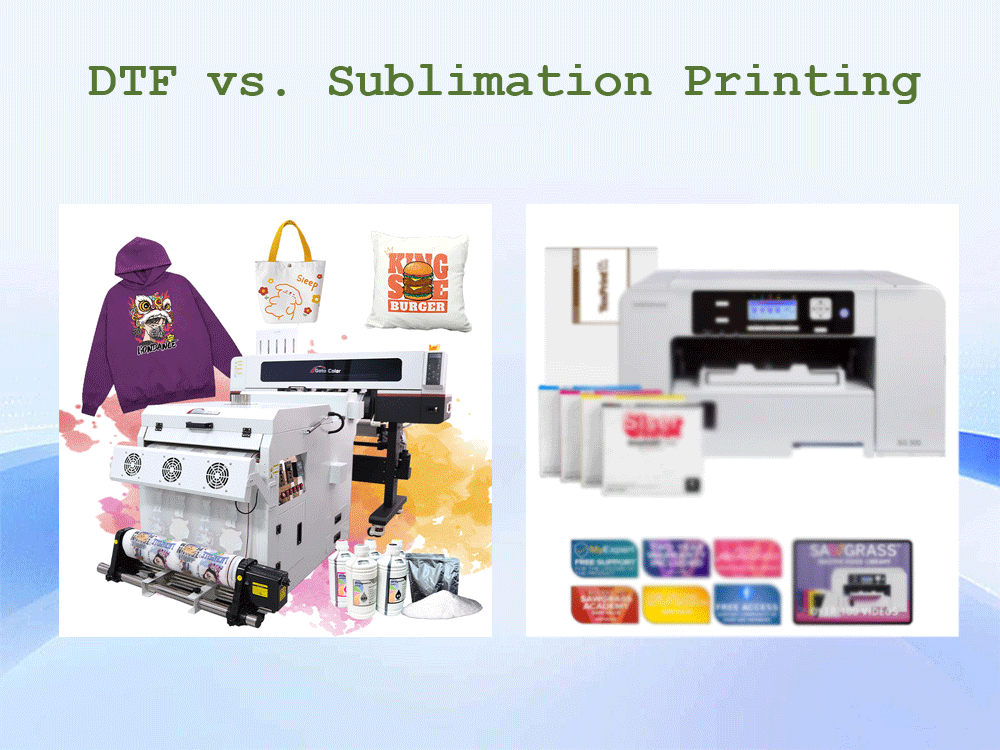
When it comes to decorating garments, the choice between Direct-to-Film (DTF) and sublimation printing comes up all the time — especially if you’re trying to decide which method suits your products, materials, and business model best. Both methods can produce vibrant, detailed visuals, but they work very differently and have distinct strengths and limitations.
Contents
What Is DTF Printing?
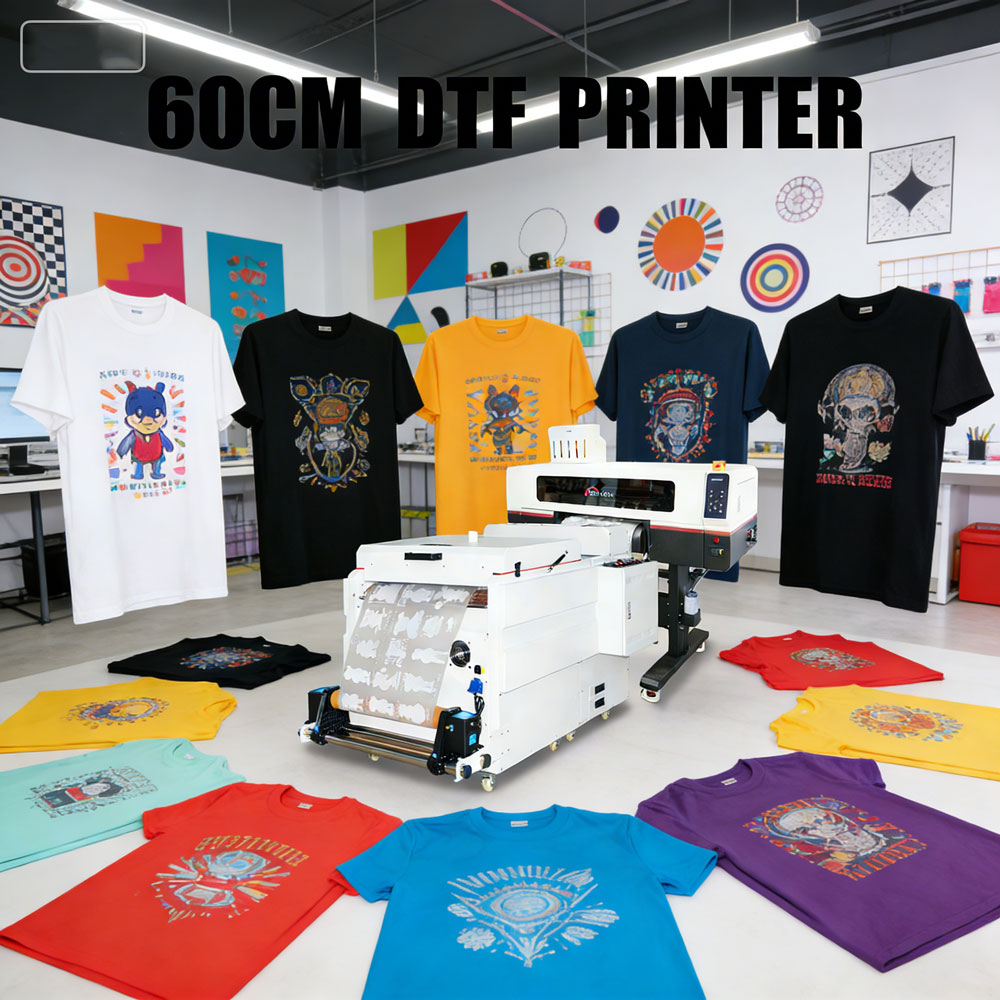
DTF printing involves first printing your design onto a special film using ink. After the print hits the film, an adhesive powder is applied and then cured so the ink and adhesive form a stable layer ready for transfer. You then place the prepared film onto a garment and use a heat press to transfer the design onto the fabric. Once pressed, the film is peeled away, leaving the ink and adhesive bonded to the garment’s surface.
Because DTF prints sit on top of the fabric rather than fusing into it, the design has a slightly raised feel, often called the “hand.” With proper technique and pressing, this feel can soften over time, but it’s still noticeable compared with methods that embed ink within fibers.
An important advantage of DTF is its wide compatibility — it works well on cotton, polyester, blends, nylon, fleece, and more, without needing special pre-treatment.
What Is Sublimation Printing?
Sublimation — also known as dye-sublimation — works on a totally different principle. Instead of printing onto film, you print the design onto special sublimation paper using sublimation inks. During heat pressing, the ink turns into a gas and penetrates the polyester fibers or polymer-coated surface of the material. As it cools, the ink becomes solid again, effectively becoming part of the fabric itself.
This means sublimation prints have no raised texture — the garment feels the same as if it never had anything printed on it. However, the process only works well on polyester fabrics or items with a suitable polymer coating, and it generally performs best on light-colored surfaces because the inks are transparent and depend on the background color.
Key Comparisons Between DTF and Sublimation
1. Fabric Compatibility
One of the biggest differences between these methods is what materials they can print on:
- DTF printing is versatile and works on almost any fabric, including cotton, blends, and polyester.
- Sublimation is limited mostly to polyester or polymer-coated surfaces and does not work well on cotton or dark fabrics because the dyes won’t show up.
2. Print Quality and Durability
Both methods can deliver bright, detailed prints and smooth gradients. Sublimation has an advantage in long-term durability because the dye becomes part of the fibers, so the colors resist fading, cracking, and peeling over time. DTF prints, bonded with adhesive on the surface, may show wear after many washes if pressing or materials are of lower quality — but when done correctly, they still hold up well.
3. Feel and Comfort
Because sublimation dye merges with the fibers, the garment retains its original softness and breathability. There’s no layer on top to feel. DTF prints, on the other hand, sit atop the fabric and create a slight texture — noticeable on large prints or heavy coverage.
4. Print Area and Use Cases
Sublimation can be used for all-over prints, covering entire garments with seamless designs, because the ink becomes part of the fabric. DTF is generally used for placement printing (logos, chest graphics, sleeves) rather than full coverage, as large DTF prints can make a garment feel stiffer and less breathable.
5. Workflow and Cost
Sublimation tends to have a simpler workflow for compatible fabrics — print the design, place the paper, and press. DTF involves extra steps: printing to film, applying and curing adhesive powder, and then pressing. This makes DTF setups generally more complex and potentially more costly in materials, though it offers greater flexibility in what you can print on.
Making the Choice: What Fits Your Needs?
- For Cotton or Mixed Fabric Apparel:
DTF is usually the better option because it works on many fabric types without pre-treatment or special coatings. - For Polyester Sportswear and All-Over Prints:
Sublimation shines on polyester and coated goods, producing prints with no hand feel and strong durability. - When Flexibility Is Key:
If your product lineup includes a wide range of fabric types, DTF gives you broader compatibility and the ability to serve diverse markets. - For Maximum Comfort and Seamless Integration:
Sublimation delivers prints that feel like part of the garment, making it ideal when wearer comfort and softness matter most.
Final Thoughts
Both DTF and sublimation printing are capable and popular methods in apparel customization, but they’re built for different applications. DTF’s biggest strength is its versatility, while sublimation’s strength is its smooth, embedded, durable finish — provided the substrate is compatible. Understanding your material choices and the look and feel you want to achieve will guide you toward the right printing method for your projects.