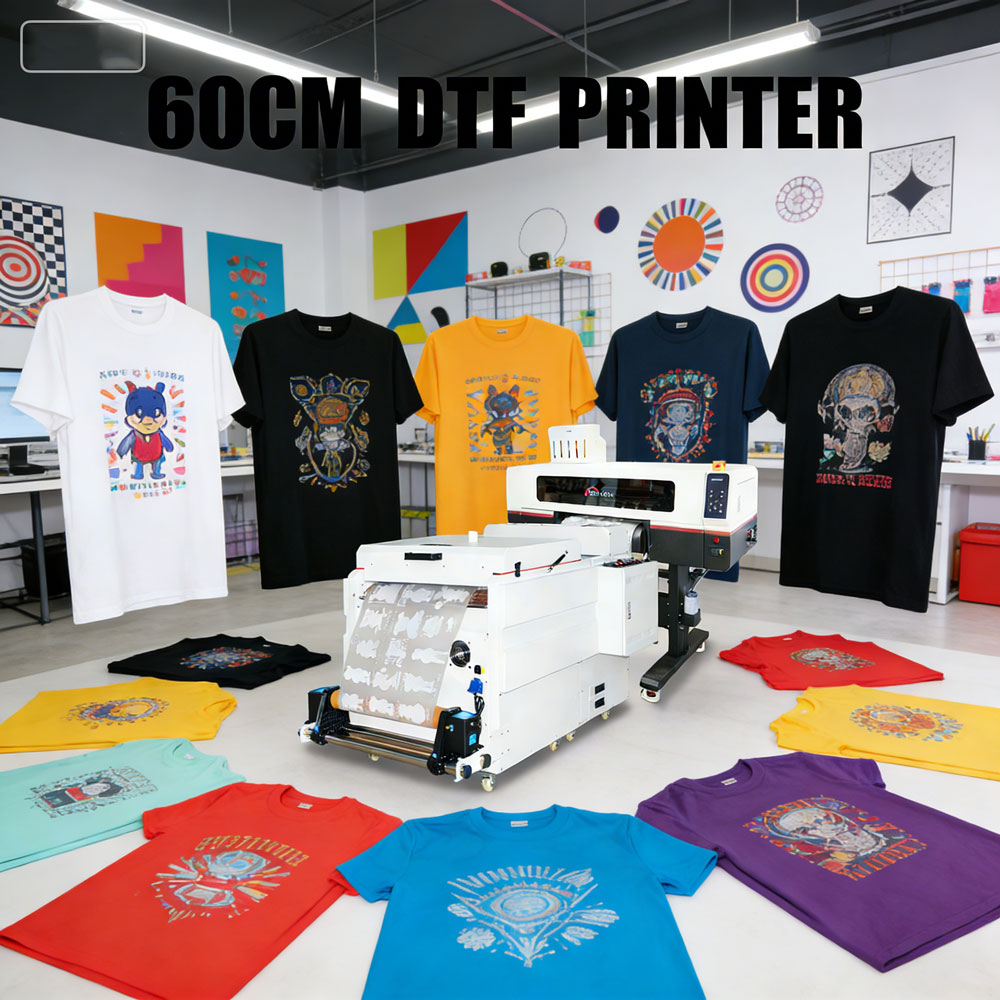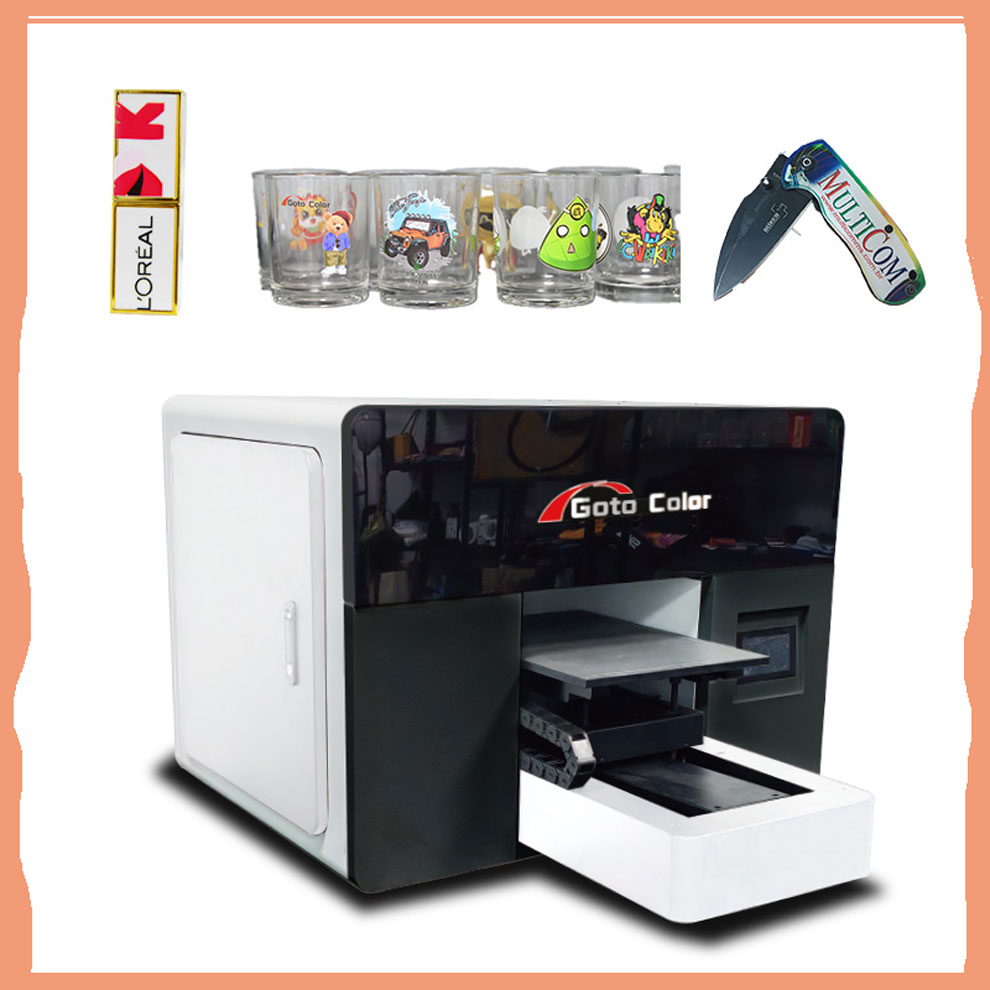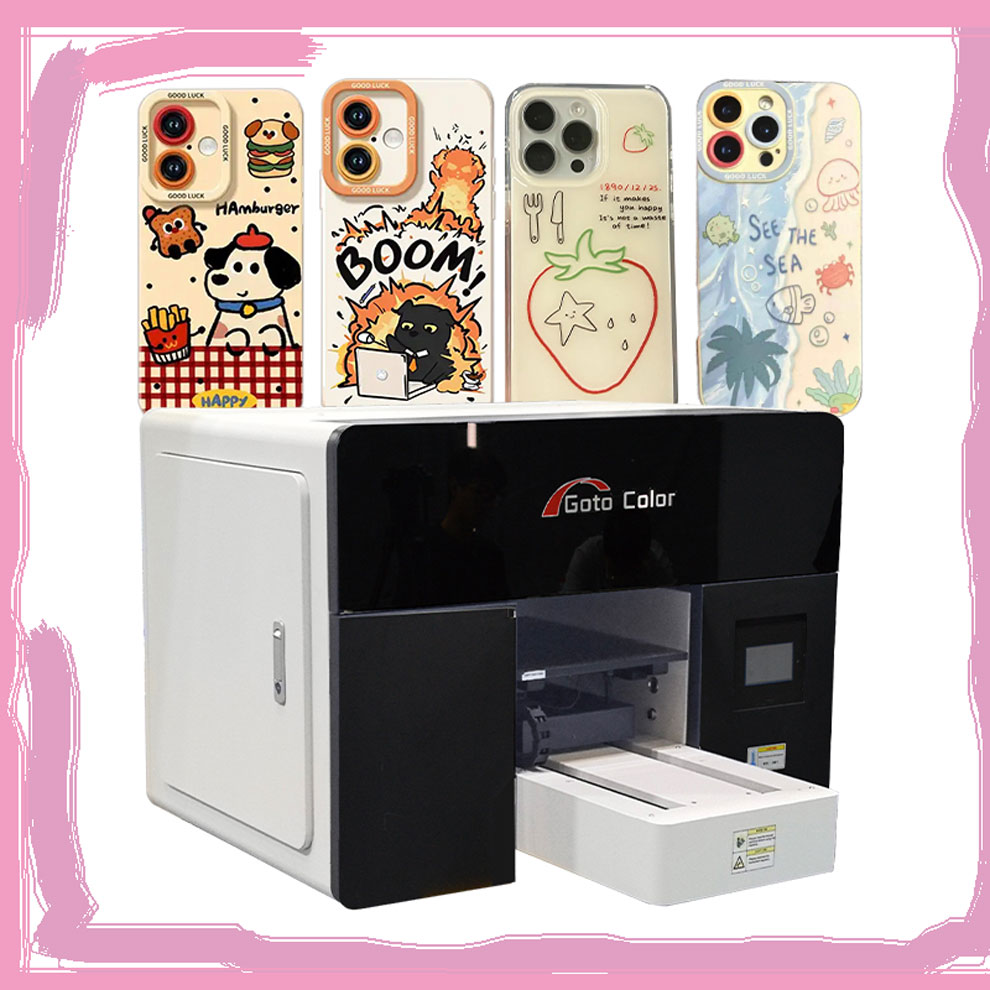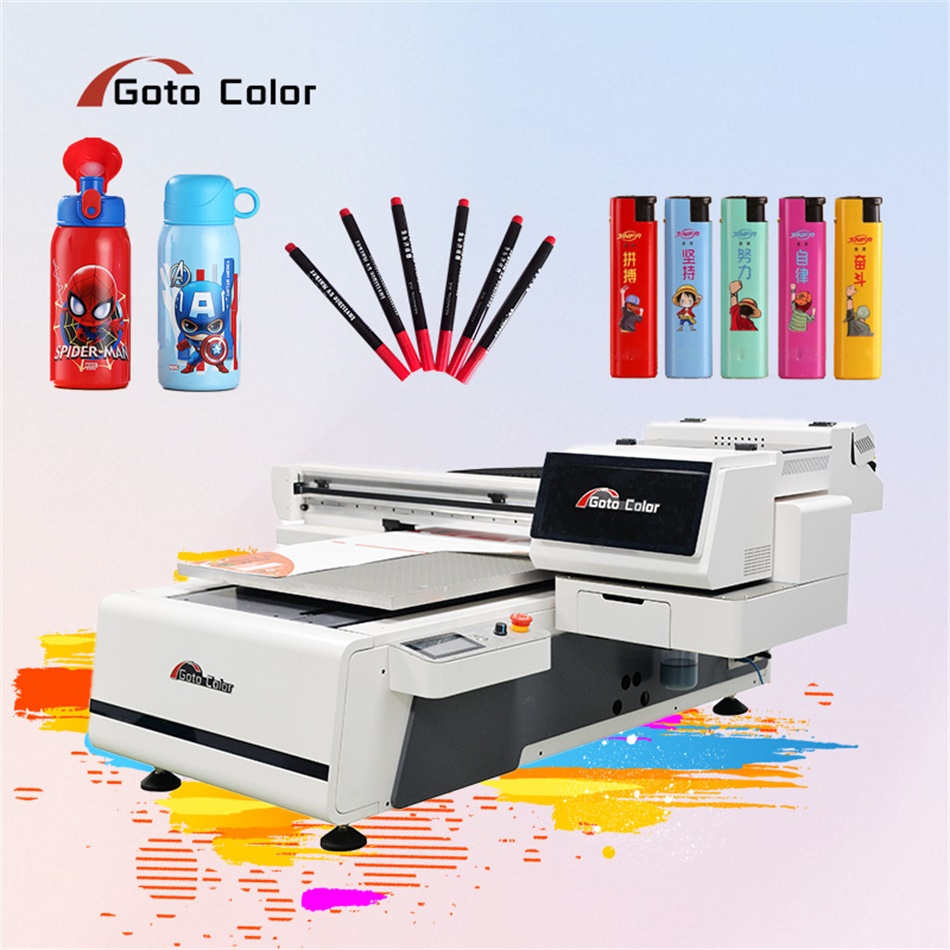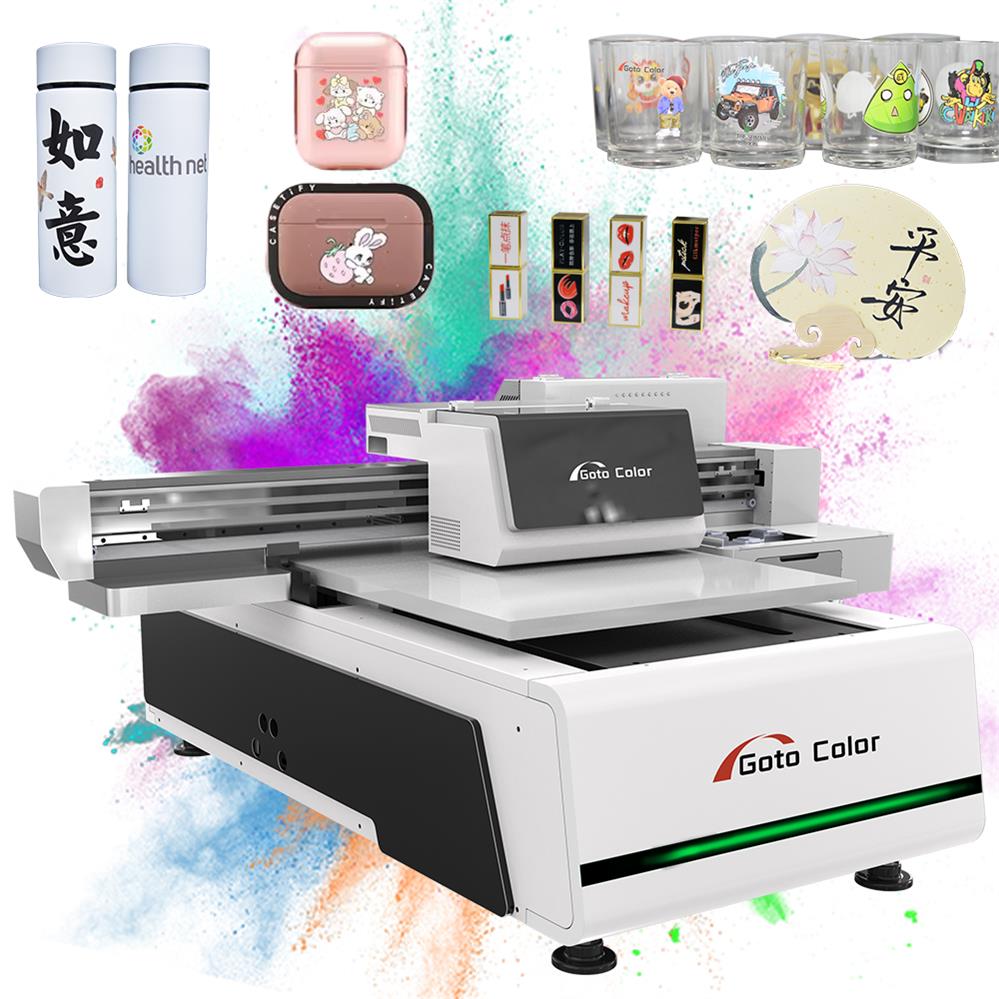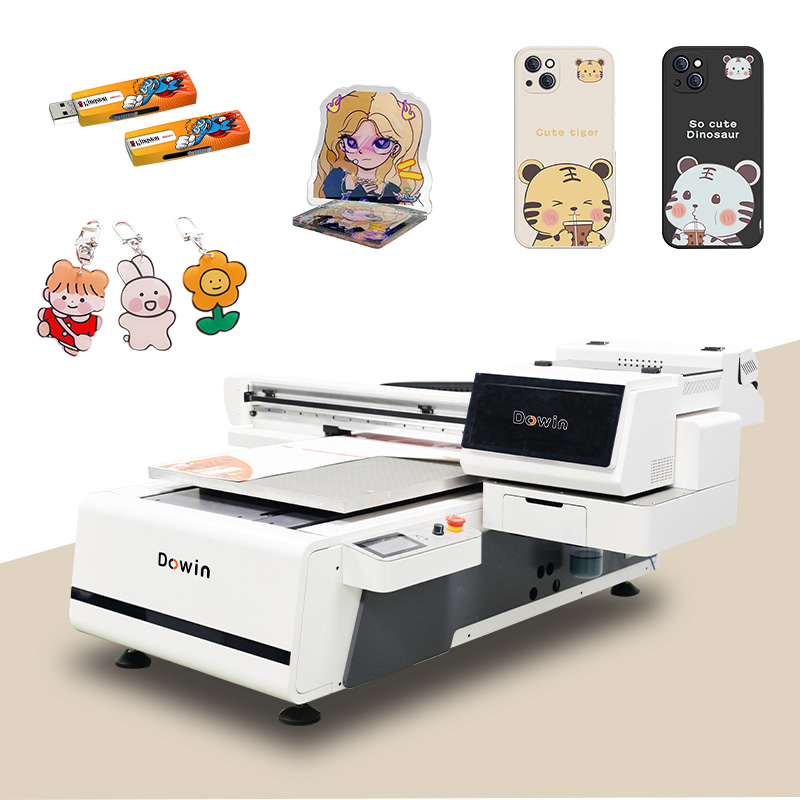
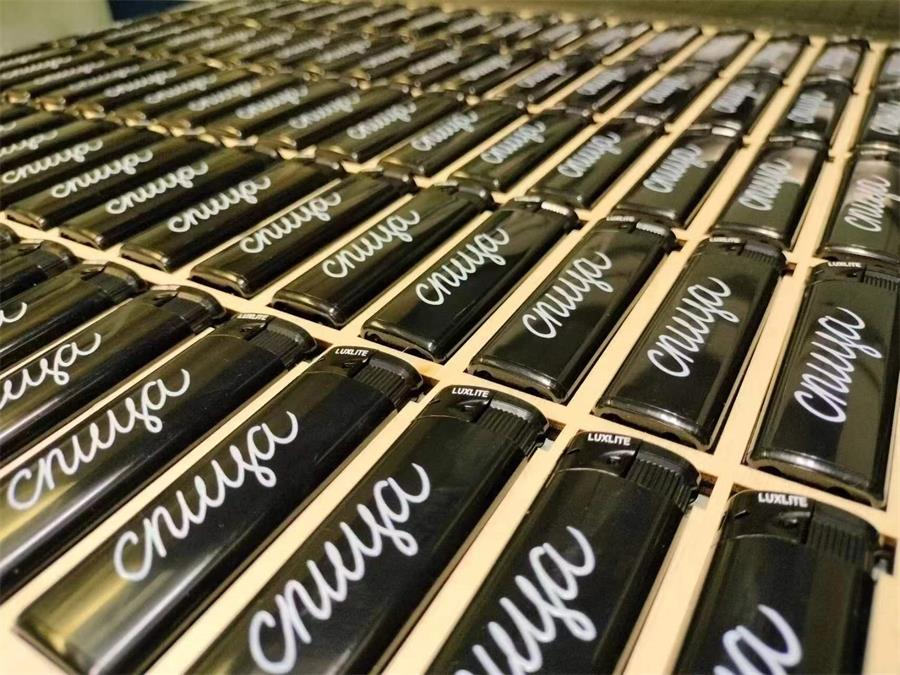
UV DTF (Direct-to-Film) is a hybrid printing technology that combines the versatility of UV-curable inks with the transfer flexibility of DTF films. It represents one of the most significant and accessible print innovations for small to medium businesses in 2025, as it requires minimal startup cost and space compared to a full flatbed UV printer.
Contents
The Core Concept: A Simple Analogy
Think of it as creating a high-quality, durable sticker or decal. You print a design in reverse onto a special clear PET film, coat it with a hot-melt adhesive powder, cure it with UV light, and then can heat-press that finished graphic onto almost any material.
How UV DTF Works: The 5-Step Process
| Step | Process | Equipment Needed | Key Detail |
|---|---|---|---|
| 1. Printing | Design is printed in reverse (mirror image) onto a special, clear PET transfer film using UV DTF printer. | UV DTF Printer (or modified UV flatbed), RIP Software. | Uses standard CMYK + White UV-curable inks. The white ink layer provides opacity. |
| 2. Powdering | Hot-melt adhesive powder is evenly applied over the wet, printed image. | Manual or Automatic Powder Shaker, Powder Sieve. | Powder only sticks to the wet ink, not the clear parts of the film. Excess powder is tapped off. |
| 3. Curing/Melting | The powdered film passes under a UV curing lamp and often a heating element. | UV Curing Unit (with optional heater). | UV light instantly cures/hardens the ink. Heat melts the adhesive powder into a smooth, glossy layer. |
| 4. Weeding & Cutting | Once cooled, the excess, unprinted film around the design is removed (“weeded”). | Weeding Tools, Plotter/Cutter (optional). | Creates a clean, individual decal or transfer. Can be cut into shapes using a plotter. |
| 5. Transferring | The decal is placed on the substrate and pressed with a heat press. | Heat Press (flat or cap press). | Typically requires medium heat (150-160°C / 300-320°F) and light pressure for 10-15 seconds. |
UV DTF vs. Other Technologies: Key Differences
| Feature | UV DTF | Traditional DTF (Direct-to-Film) | DTG (Direct-to-Garment) | Heat Transfer Vinyl (HTV) |
|---|---|---|---|---|
| Ink Type | UV-Curable | Water-Based Pigment | Water-Based Pigment | Plastic/Polymer (Pre-made vinyl) |
| Process | Print > Powder > Cure > Heat Press | Print > Powder > Cure (with oven) > Heat Press | Pre-treat > Print > Cure (with heat press/oven) | Cut > Weed > Heat Press |
| Primary Use | Everything: Hard surfaces, textiles, leather, glass, plastic, metal. | Primarily Textiles (cotton/polyester blends). | Only Textiles (primarily cotton). | Textiles & some hard surfaces. |
| Feel on Fabric | Slight, flexible layer. | Soft, flexible layer. | Ink soaks in; softest “hand feel”. | Distinct plastic-like layer. |
| Durability | Excellent. Scratch, water, and chemical resistant due to UV curing. | Good. Wash-resistant on proper fabrics. | Good. Wash-resistant if cured properly. | Good, but can crack over time. |
| Startup Cost & Space | Low-Moderate. Printer + powder unit + heat press. | Low-Moderate. | High. Requires specialized DTG printer & pretreatment. | Low. Requires cutter/plotter & heat press. |
Why UV DTF is a Game-Changer for Businesses
✅ Major Advantages:
- Unmatched Material Versatility: The single biggest advantage. Transfer the same print onto a cotton t-shirt, a ceramic mug, a stainless steel water bottle, a leather wallet, or an acrylic sign with one process.
- Low Barrier to Entry: You can start with a modified desktop UV printer (like a small flatbed) for under $5,000, unlike industrial flatbeds costing $10,000+.
- Simplified Production: No pre-treatment of garments is needed. The adhesive is in the powder.
- Durability & Quality: UV inks are vibrant and very durable against scratching, water, and fading.
- On-Demand & No Minimums: Print one unique decal at a time with no waste, perfect for customization.
⚠️ Limitations & Considerations:
- Hand Feel: While thinner than traditional HTV, it still adds a slight, flexible layer to fabrics. It’s not as soft as DTG.
- Process Steps: It’s a multi-step, mostly manual process that requires careful powder application. Not ideal for ultra-high-volume, single-item production.
- White Base: All designs print with a white ink underbase by default, which is perfect for dark materials but can make colors appear slightly less vibrant on pure white fabrics compared to DTG.
- Heat-Sensitive Materials: Cannot be used on materials that cannot withstand the heat press temperatures (~150°C / 300°F).
Is a UV DTF Printer Right for Your Business?
Consider UV DTF if your business model is:
- A startup or home-based business looking for an affordable entry into custom printing.
- A promotional product shop that needs to print on dozens of different item types without buying multiple specialized machines.
- An existing print shop (DTG, screen printing) wanting to expand services to hard goods (mugs, phone cases, signs) with minimal new equipment.
- Focused on low-volume, high-mix customization (e.g., Etsy store, event personalization).
Stick with DTG, Screen Printing, or a Flatbed UV if:
- Your volume is exclusively high-quantity apparel and the softest hand-feel is critical (choose DTG or screen printing).
- You need direct, industrial-grade printing on large, rigid boards (choose a flatbed UV printer).
- You require the absolute highest production speed for a single product type.
The Bottom Line
UV DTF is not a replacement for DTG or industrial flatbed printing, but a powerful complement. It is the most versatile and accessible “all-in-one” transfer method on the market in 2025. For a business seeking to offer a wide catalog of personalized products—from shirts to tumblers to keychains—without a massive capital investment, it presents an incredibly compelling opportunity.
Your next step: Request a physical sample from a UV DTF supplier. Test its adhesion on your target materials (try the scratch test and wash test on fabric) to judge the quality and hand-feel for yourself before investing.