Direct-to-Film (DTF) printing has become a highly flexible method for creating custom apparel and textile products. It combines a film-based transfer process with specialized inks and adhesive powders to produce vivid, durable graphics that can be applied to many fabrics. This guide breaks down the fundamentals and explains how to apply DTF transfers successfully, with practical advice that goes beyond surface-level explanations.
Contents
What DTF Printing Actually Is
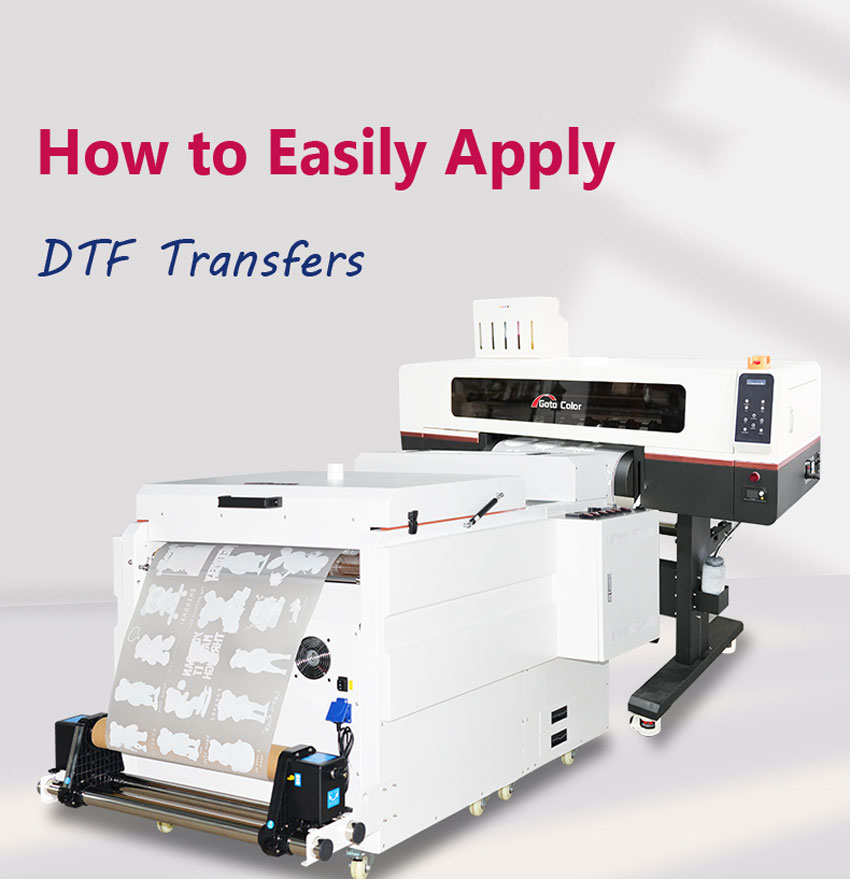
Unlike Direct-to-Garment (DTG) or screen printing that puts ink directly onto fabric, DTF prints the design onto a special PET film first. Once printed, a layer of adhesive powder is added and cured so the design becomes ready to transfer. With a heat press, the image is then bonded permanently onto fabric.
In my experience, the biggest advantage of this approach is versatility. You don’t need pretreatment for many fabrics, and you can handle detailed, multicolor graphics reliably without investing in expensive setups.
Step-by-Step: Applying DTF Transfers
Here is a refined step-by-step process adapted from standard industry practice, with emphasis on real technique rather than theory:
1. Prepare Your Workspace and Materials
- Clean your heat press and workspace to prevent dirt or lint from interfering.
- Pre-washing and ironing your garments removes oils and creases that weaken adhesion.
Personal tip: Always pre-press the garment for a few seconds before transfer. It eliminates hidden moisture and ensures the fabric surface is perfectly flat — this is a small step many beginners skip, but it makes a huge difference.
2. Position the Transfer
- Place your film printed side down exactly where you want the design.
- Ensure alignment is precise before heat is applied.
3. Set the Heat Press
Exact settings depend on fabric and equipment, but in general:
- Temperature: Medium-high heat (usually about 140–160 °C / 285–320 °F for many fabrics)
- Pressure: Even medium to firm pressure
- Time: Roughly 8–15 seconds
Practical observation: Using consistent time, temperature, and pressure is far more important than chasing “precise numbers.” If your press fluctuates a few degrees each cycle, print quality suffers. This is where many people unknowingly fail — not because the method is flawed, but because their press isn’t calibrated.
4. Peel the Film
- Allow the printed area to cool before peeling unless your transfer specifically calls for a hot peel method.
Cold peel prevents distortion or partial lifting of the design. Peel slowly and evenly. This minimizes edge lifting and helps ensure the whole transfer adheres cleanly.
5. (Optional) Post-Press
After peeling, a quick second press under a protective sheet (like parchment or Teflon) strengthens adhesion and smooths the surface.
Fabric Preparation Matters
Even perfect printing can fail if the garment surface isn’t prepared correctly:
- Washing removes residues like softeners and oils.
- Ironing smooths wrinkles.
- Moisture or uneven texture can cause ghosting or poor adhesion.
Strong advice: Avoid pressing over seams or thick hems before applying the transfer — they trap heat unevenly and weaken adhesion.
Efficiency Tips for Production
Two strategies greatly improve workflow:
Use Gang Sheets
A “gang sheet” lets you print multiple designs on one large film, reducing waste and speeding up production. This is especially useful if you run a small shop with varied designs.
Organize Designs Before Printing
Strategically arranging multiple graphics saves film and reduces printing time. Efficiency here directly affects profitability.
How DTF Compares to Other Methods
DTF printing isn’t perfect for every scenario, but it excels in certain areas:
- Versatility: Works on many fabric types without extensive pretreatment.
- Vibrancy & Detail: Handles full-color images well.
- Cost: Lower setup cost than screen printing for smaller runs.
However, it still isn’t the best choice when feel matters above all — for example, in lightweight apparel where a very soft hand is required. In those cases, traditional methods like DTG or finer screen printing may be more appropriate.
Final Thoughts
DTF printing and transfer application are often described as “easy,” but that’s misleading without context. It can be easy once you’ve mastered key variables like temperature, pressure, peel timing, and fabric prep. But beginners routinely underestimate how sensitive these factors are — and that’s the main reason prints fail or peel over time.
Understanding the whole process and practicing it with care will elevate your results and reduce waste. Treat DTF as a technical skill, not just a “print and press” trick, and you’ll see professional-grade results regularly.