Contents
Quick Comparison Table
| Feature | UV Printer | DTG (Direct-to-Garment) Printer |
|---|---|---|
| Primary Use | Hard surfaces, rigid materials | Textiles, fabrics, clothing |
| Materials | Wood, glass, metal, acrylic, plastic, leather, etc. | Cotton, polyester blends, some fabrics |
| Print Process | UV-curable ink cured instantly with UV light | Water-based ink absorbed into fabric fibers |
| Setup Time | Minimal (direct printing) | Significant (pre-treatment required) |
| Color Vibrancy | Excellent on all surfaces | Excellent on light fabrics, less on dark |
| Durability | Scratch/water-resistant | Wash-resistant (properly cured) |
| Production Speed | Fast (instant curing) | Slower (drying/curing time needed) |
| Cost Range | $5,000 – $50,000+ | $10,000 – $30,000+ |
Deep Dive: Understanding Each Technology
UV Printer: The Versatile Hard Surface Solution
How It Works:
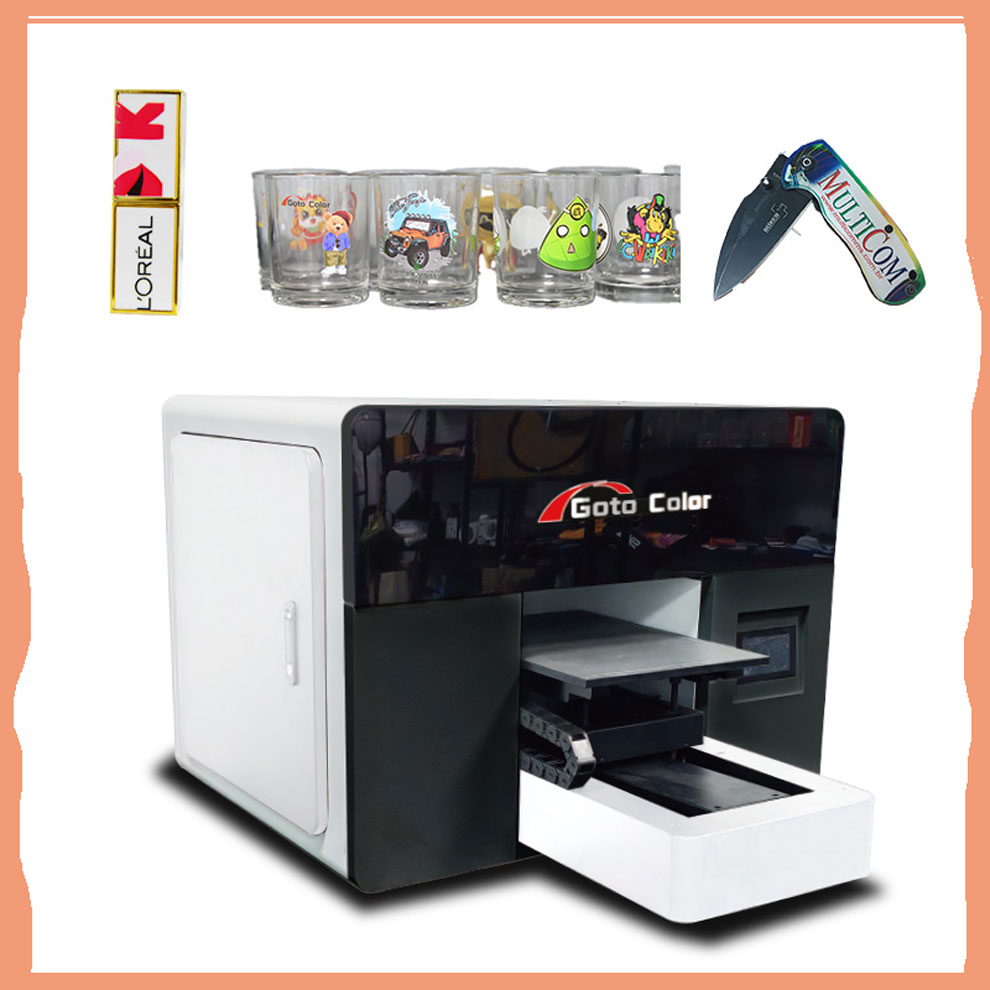
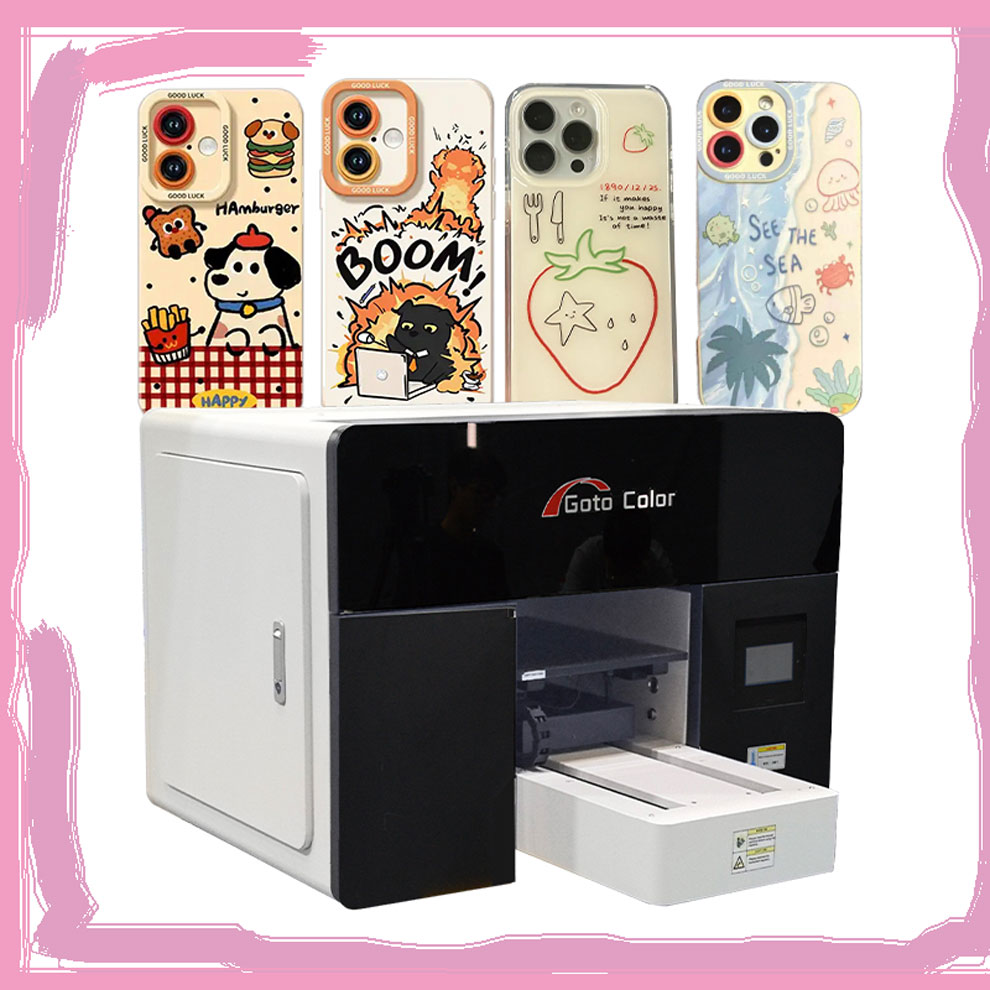
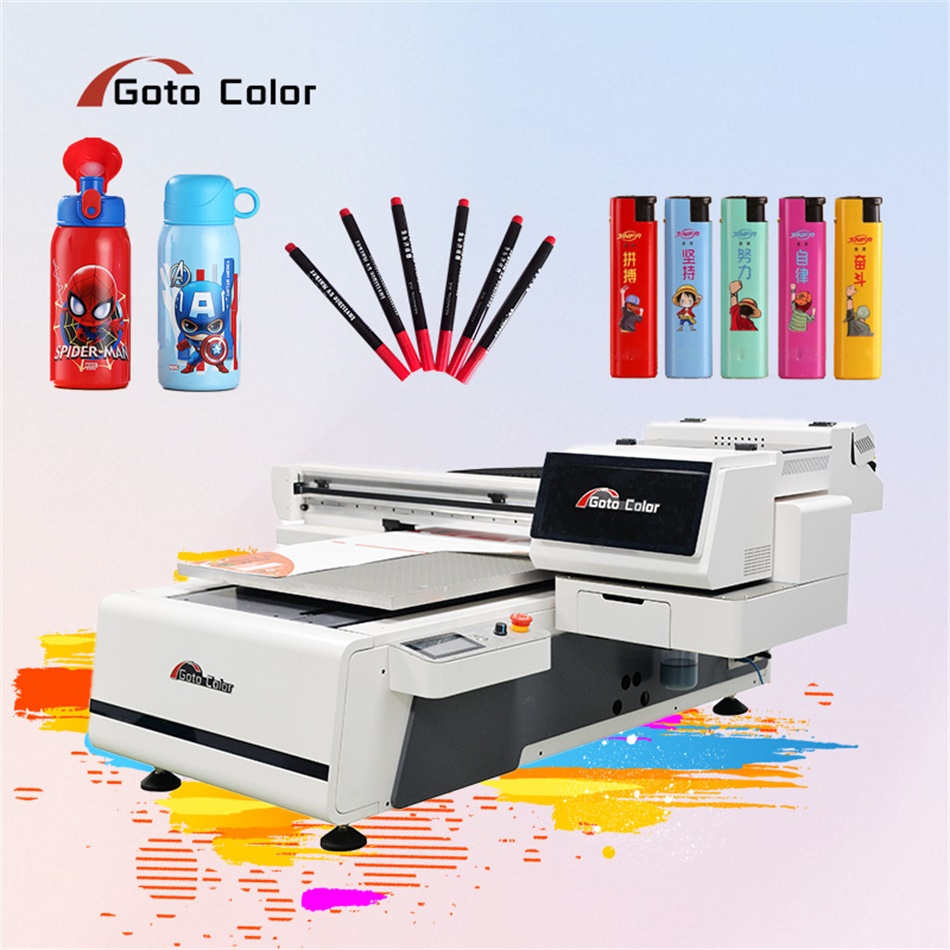
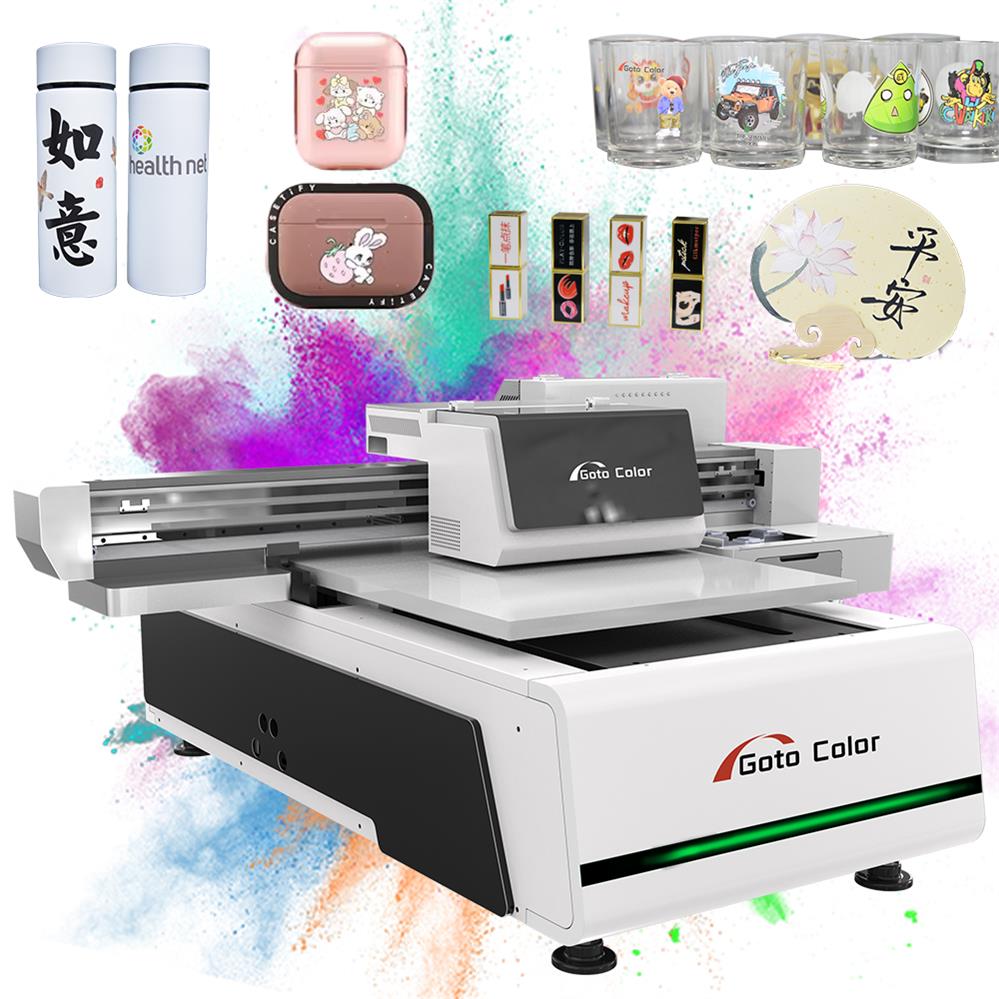
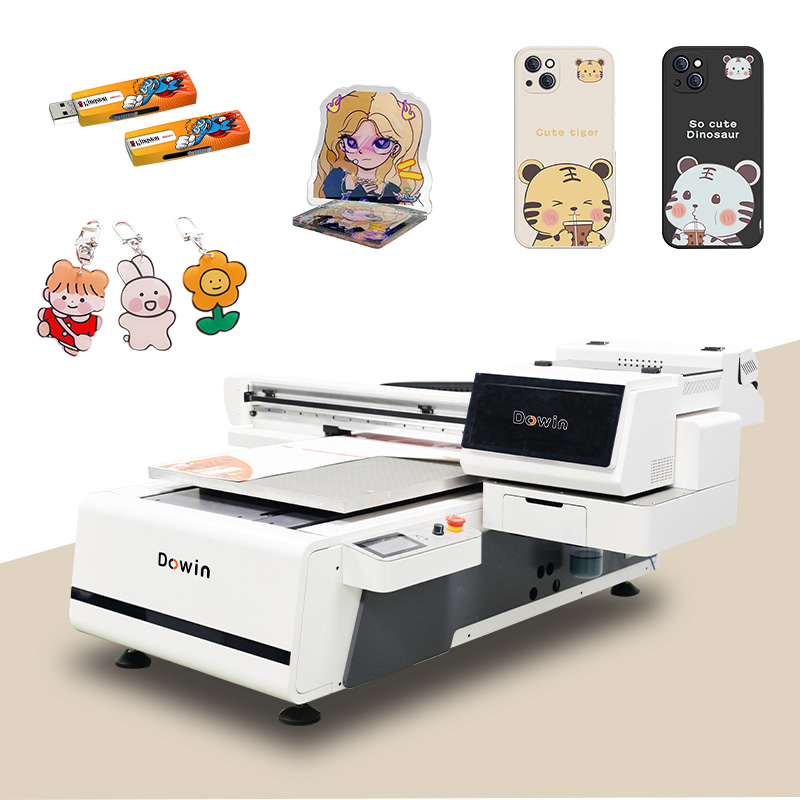
UV printers deposit UV-curable ink onto virtually any substrate, then instantly cure it with UV lamps or LEDs. The ink doesn’t penetrate the material but forms a durable layer on top.
Best Applications:
- Signage and displays
- Custom phone cases
- Promotional products (pens, mugs, keychains)
- Industrial labeling
- Personalized gifts
- Home decor items
- Electronic panels
Pros:
- ✅ Material versatility – Print on hundreds of materials
- ✅ No setup/pre-treatment – Print directly on most surfaces
- ✅ Instant drying – No waiting between prints
- ✅ 3D/textured effects possible with special inks
- ✅ Weather/scratch resistant prints
- ✅ White ink capability for dark materials
Cons:
- ❌ Higher initial investment for larger formats
- ❌ Learning curve for optimal material handling
- ❌ Limited fabric printing (can do some, but not ideal)
- ❌ Ink costs can be higher per ml
- ❌ Size limitations based on bed dimensions
DTG Printer: The Textile Specialist
How It Works:
DTG printers apply water-based inks directly onto specially pre-treated fabrics. The ink absorbs into the fibers, then is heat-cured to create a permanent bond.
Best Applications:
- T-shirts and apparel
- Tote bags
- Hoodies and sweatshirts
- Fabric banners
- Some home textiles
- Fashion and merchandise
Pros:
- ✅ Soft hand feel – Ink becomes part of the fabric
- ✅ Excellent for complex designs – Full color, photo-quality
- ✅ No minimum orders – Print one or one hundred
- ✅ Eco-friendly inks available
- ✅ Growing market with apparel customization trends
Cons:
- ❌ Pre-treatment required – Extra step for dark fabrics
- ❌ Slower production – Drying/curing time needed
- ❌ Material limitations – Primarily cotton/polyester blends
- ❌ Higher maintenance – Print heads prone to clogging
- ❌ Less durable on certain fabrics over many washes
Business-Focused Decision Matrix
Choose UV Printing If Your Business…
| Business Type | Why UV is Better |
|---|---|
| Sign & Display Shop | Print on rigid materials, outdoor durability needed |
| Promotional Products | Variety of hard surface items required |
| Manufacturing/Industrial | Part marking, labeling needs |
| Custom Gift Business | Print on diverse materials (wood, glass, acrylic) |
| Interior Decor | Custom tiles, panels, furniture printing |
| Startup needing versatility | One machine for multiple product lines |
Investment Example:
- Entry: $5,000-$8,000 (6090 flatbed)
- Growth: $15,000-$25,000 (hybrid/larger format)
- Ideal for businesses seeking to print on more than just fabrics
Choose DTG Printing If Your Business…
| Business Type | Why DTG is Better |
|---|---|
| Apparel & Merchandise | Focused on clothing and soft goods |
| Event/Band Merch | Small runs, complex designs |
- Photographic quality needed on fabrics
- Online t-shirt business – Personalization focus
- Screen printing alternative – For detailed, multi-color designs
Investment Example:
- Entry: $10,000-$15,000 (single-pallet DTG)
- Growth: $20,000-$30,000 (auto-pallet, higher volume)
- Ideal for businesses focused primarily on textiles
Hybrid Approach: When to Consider Both
Some successful businesses operate both technologies:
| Scenario | Recommended Setup |
|---|---|
| Full-Service Customization Shop | Both UV and DTG printers |
| Starting with apparel, expanding later | Start with DTG, add UV later |
| Large operation with diverse clients | Separate departments for each |
| Testing market demand | Start with one, outsource the other initially |
Cost Comparison: 5-Year Total Ownership
| Cost Factor | UV Printer | DTG Printer |
|---|---|---|
| Machine Cost | $8,000-$25,000 | $12,000-$25,000 |
| Ink Cost/Year | $2,000-$5,000 | $1,500-$4,000 |
| Maintenance/Year | $1,000-$3,000 | $1,500-$3,500 |
| Pre-treatment | $0-$500 | $1,000-$2,500/year |
| Substrate Cost | Medium-High | Low-Medium |
| Profit Margin | 50-80% typical | 40-70% typical |
Market Trends & Future Outlook
UV Printing Market (2025+)
- Growing demand for industrial applications
- Larger format capabilities expanding
- Faster speeds with improved print heads
- Special effect inks (texture, glow-in-dark) gaining popularity
DTG Printing Market (2025+)
- Sustainable inks driving innovation
- Faster curing/drying technologies emerging
- Automation increasing for higher volume shops
- Expanding fabric compatibility beyond cotton
Your Decision Checklist
Answer these questions to determine your best fit:
Go with UV Printing if you answer YES to most:
- Do you need to print on hard/rigid materials?
- Is outdoor durability important?
- Do you want one machine for multiple materials?
- Is instant production (no drying time) valuable?
- Are 3D/textured effects appealing for your products?
Go with DTG Printing if you answer YES to most:
- Is 90%+ of your work on fabrics/textiles?
- Do you need photographic quality on apparel?
- Are you focused on fashion/merchandise markets?
- Do you prefer the soft hand feel of integrated prints?
- Is wash durability on clothing your priority?
Consider Both if:
- You serve diverse markets (both apparel and promotional products)
- You have sufficient capital and space
- Your business volume justifies two specialized machines
Starting Small & Scaling
For New Businesses with Limited Budget:
- Start with one technology based on your primary market
- Outsource complementary work initially
- Track which services grow fastest
- Reinvest profits into second technology when demand justifies it
Example Growth Path:
Year 1: Start with DTG → Focus on apparel market
Year 2: Add UV printer → Expand to promotional products
Year 3: Specialize in both markets → Full-service shop
Final Recommendation
For Material Diversity → Choose UV
If you want to print on glass, wood, metal, plastic, AND some fabrics, UV offers unparalleled versatility. The learning curve is worth it for businesses serving multiple industries.
For Textile Specialization → Choose DTG
If your passion and market is primarily apparel, DTG delivers superior results on fabrics. The specialization leads to expertise and efficiency in your niche.
For Maximum Opportunity → Consider Both
The most successful customization shops often operate both technologies, allowing them to say “yes” to almost any client request.
Next Steps:
- Test both technologies with your specific products
- Calculate ROI based on your pricing and volume estimates
- Talk to existing users in each technology
- Consider your long-term business vision, not just immediate needs
Remember: The “better” technology depends entirely on your specific business needs, target market, and growth plans. Both are excellent investments when matched to the right applications.