Home › Forums › DTF Printer Hub › XP600 vs I3200: Which Printhead Fits Your 60 cm DTF Business
- This topic is empty.
-
AuthorPosts
-
16 March 2026 at 1:49 pm #990
Dowinsss
KeymasterThe Direct-to-Film (DTF) printing market has exploded in recent years as small apparel brands, print-on-demand services, and custom merchandise businesses continue to grow globally. Industry analysts estimate that the custom apparel decoration market will surpass $15 billion in the coming decade, driven largely by digital printing technologies that allow flexible, low-volume production.
Among the many equipment options available, 60 cm DTF printers have become one of the most popular configurations. They provide a balance between production capacity and space efficiency, making them suitable for both small studios and mid-size printing workshops.
However, one technical decision frequently confuses buyers:
Should you choose an XP600 printhead or an I3200 printhead?The choice is not simply about technology—it reflects the entire business strategy of a printing operation.
Why Printheads Define the Real Performance of a DTF Printer
In digital printing systems, the printhead acts as the heart of the machine. It controls ink droplet size, firing frequency, and image precision. These factors ultimately determine three critical aspects of production:
-
printing speed
-
image resolution
-
operational stability
For DTF printers, where white ink layers and complex graphics are common, printhead performance becomes even more important.
The two most commonly used options in mid-range DTF systems are XP600-class heads and industrial I3200-type heads. While both are capable of producing high-quality garment transfers, they target very different business scenarios.
Entry-Level Option: The XP600 Printhead
The XP600 printhead is widely regarded as a budget-friendly solution for startup businesses. Its relatively low purchase price and simple structure make it attractive for entrepreneurs entering the custom apparel industry.
Typical performance characteristics include:
-
printing speed around 10–12 m² per hour
-
resolution approximately 600 dpi
-
relatively low purchase and replacement cost (often a few hundred dollars)
These specifications are sufficient for many entry-level applications such as:
-
simple logo printing
-
text-based garment designs
-
small-batch custom orders
However, the affordability of this printhead comes with trade-offs. Because the system is more sensitive to ink sedimentation and clogging, it often requires frequent maintenance and cleaning. The operational lifespan may range from a few months to roughly a year depending on usage intensity.
For businesses printing moderate volumes, this compromise can still be acceptable.
Industrial-Grade Option: The I3200 Printhead
In contrast, the I3200 printhead belongs to a newer generation of industrial inkjet technology designed for high-speed commercial printing.
Typical specifications include:
-
printing speed 25–35 m² per hour
-
resolution up to 1440 dpi
-
finer ink droplet control around 3–4 pl
These improvements significantly enhance both production efficiency and print quality. High-resolution output allows smooth gradients, detailed graphics, and vibrant colors—features that are essential for complex apparel designs.
Another important advantage is durability. Under normal operating conditions, these printheads can last one to three years, reducing downtime and maintenance costs for busy production facilities.
For large-scale printing businesses handling bulk orders daily, this reliability can dramatically improve profitability.
Real-World Business Scenarios
The difference between these two technologies becomes clearer when looking at actual business models.
Case 1: Small Custom Apparel Startup
Imagine a home-based clothing studio focusing on personalized T-shirts and hoodies. Orders typically range from 5 to 50 pieces, with daily output below 100 garments.
In this situation:
-
production speed requirements are moderate
-
designs are relatively simple
-
startup capital is limited
For such a business, a printer equipped with an entry-level printhead often provides the best balance between affordability and functionality. It allows entrepreneurs to enter the market without committing large amounts of capital.
Case 2: Commercial Print Shop Handling Bulk Orders
Now consider a printing workshop producing merchandise for corporate promotions, sports teams, or events. Orders might exceed 200 garments per day, and designs frequently include gradients, photographic images, and complex artwork.
Here, productivity and quality become critical. A higher-performance printhead enables:
-
faster turnaround times
-
sharper image detail
-
improved color accuracy
In this context, the industrial-grade option becomes a strategic investment rather than an expense.
The Hidden Economics of Printhead Selection
Many buyers focus only on the initial cost of equipment, but this can be misleading.
A cheaper printhead may appear attractive during purchase, yet the long-term expenses—including maintenance, downtime, and replacement frequency—can eventually exceed the cost of a higher-end solution.
For example:
-
frequent cleaning cycles reduce production efficiency
-
nozzle clogs interrupt workflow
-
shorter lifespan increases replacement costs
Conversely, a more expensive industrial printhead may provide better long-term return on investment because it reduces maintenance and allows higher production output.
In digital manufacturing, productivity often matters more than purchase price.
Integrated Production Systems Matter Too
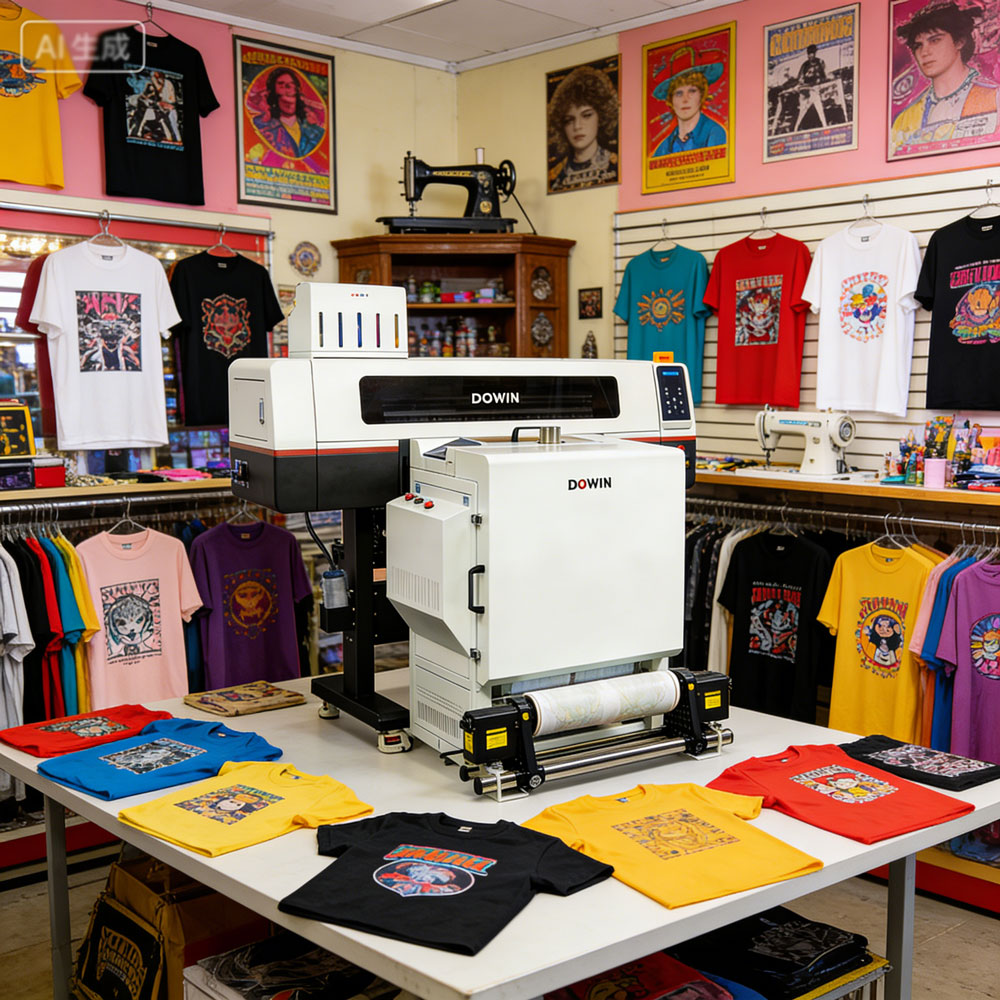
Another factor influencing printer performance is system integration. Many modern DTF printers combine multiple processes into a single workflow, including:
-
automatic powder application
-
powder shaking
-
curing or drying systems
These integrated solutions reduce manual labor and minimize operational errors, making them especially valuable for businesses scaling up production.
In other words, the printhead is important—but the entire printing ecosystem ultimately determines productivity.
A Strategic Perspective: Technology Should Match the Business Model
Choosing between these two printhead types is not simply a technical decision—it is a strategic one.
Startups focused on experimentation and small-volume production often benefit from affordable entry-level equipment. Meanwhile, established print shops handling commercial contracts require higher performance and long-term reliability.
This difference reflects a broader truth in manufacturing technology:
The best machine is not the most powerful one—it is the one aligned with your business model.
Conclusion
As the custom apparel industry continues to expand, DTF printing is becoming a cornerstone technology for digital garment decoration. Within this ecosystem, the choice of printhead significantly influences productivity, quality, and operational costs.
Entry-level printheads offer an affordable gateway for startups and small studios, while industrial-grade options provide the speed and reliability needed for large-scale commercial production.
Ultimately, the decision should not be based solely on specifications or price. It should reflect a clear understanding of production volume, business growth plans, and long-term operational strategy.
Because in modern printing, success is not determined only by the machine—it is determined by how well the technology matches the vision of the business behind it.
-
-
AuthorPosts
- You must be logged in to reply to this topic.