
Home › Forums › Digital UV Printing Hub › Why UV Flatbed Printing Tops the Industry’s Buying List
Tagged: UV Flatbed Printing
- This topic is empty.
-
AuthorPosts
-
3 February 2026 at 5:32 pm #948
Dowinsss
KeymasterIn recent years, UV flatbed printing has shifted from a niche capability to one of the most sought-after technologies across wide-format and industrial printing markets. Multiple industry polls and sales intent surveys show a significant portion of professionals planning purchases of UV flatbed systems, driven by fundamental changes in customer expectations, production economics, and application versatility.
1. Market Forces Redefining Printing Priorities
Demand for Immediate Turnaround
Today’s customers no longer accept long lead times. Where a three-day turnaround was once considered fast, expectations have shifted toward same-day or even one-hour delivery for many graphic and display applications. Traditional solvent and eco-solvent systems, while capable of high-speed output, still require extensive post-print processing such as outgassing, drying, cutting, and lamination. These steps can create bottlenecks that offset any gains from print speed alone. By comparison, UV flatbed printing cures ink instantly at the point of deposition, eliminating drying time and enabling prints to be finished, cut, and shipped almost immediately.
Personal Insight: In competitive environments such as event signage and retail displays, this instant output capability is no longer just an efficiency — it’s a market differentiator that can determine whether a business wins or loses a contract.
2. Expanded Substrate Flexibility That Drives New Business Models
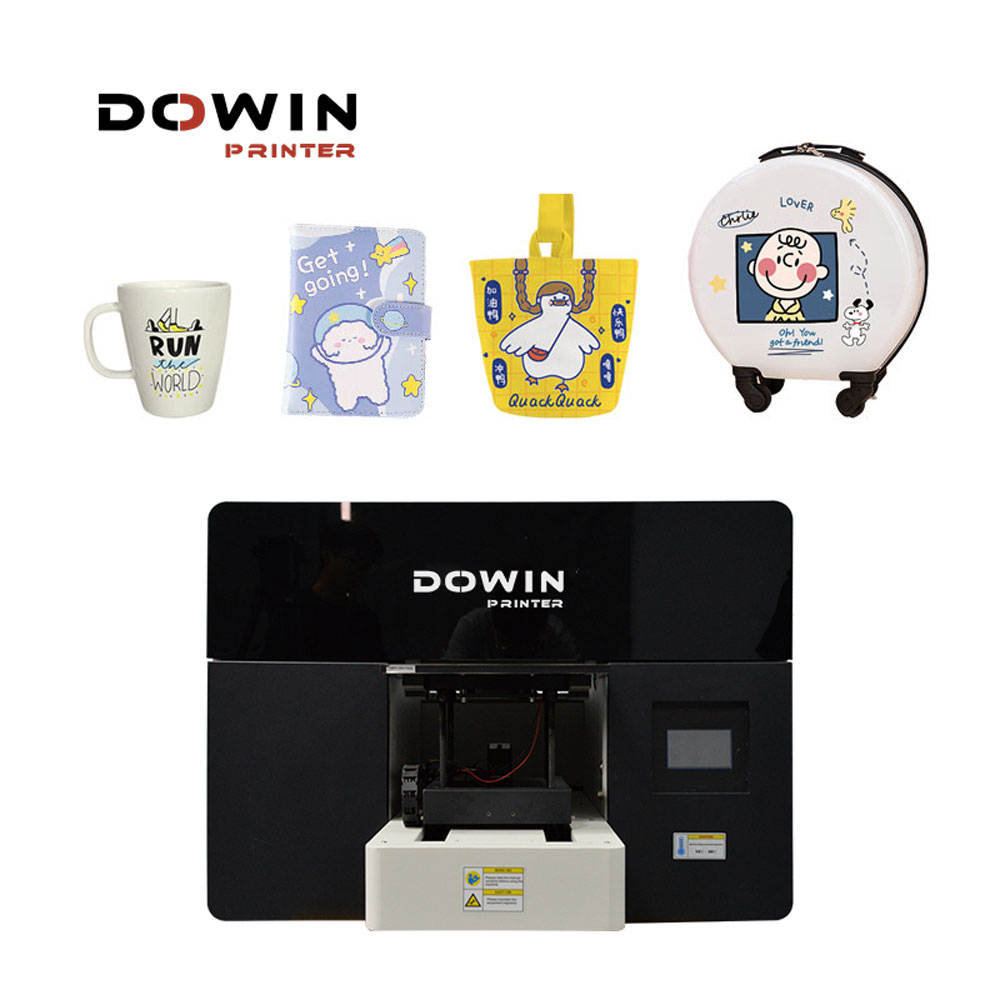
A core reason UV flatbed printers are topping industry shopping lists is their ability to print directly on rigid and semi-rigid materials without intermediary media or coatings. UV systems can handle a wide variety of substrates — including glass, wood, metal, acrylic, and composites — with excellent adhesion and durability.
This substrate independence translates into multiple commercial advantages:
-
Direct production of custom packaging and labels
-
Decorative and architectural panels
-
Industrial control panels and machine overlays
-
Promotional merchandise and personalized gifts
According to market data, this versatility enables businesses to serve a broader range of industries without investing in multiple specialized machines, fundamentally lowering the entry barrier for new service offerings.
3. High Print Quality and Durability
UV flatbed technology consistently delivers high-resolution, vibrant prints with strong adhesion because the ink is chemically cured on contact. This process yields:
-
Sharp details and accurate color reproduction
-
Resistance to fading, abrasion, moisture, and UV exposure
-
Minimal need for protective laminates
These quality attributes expand the use cases beyond simple signage to premium brand applications where aesthetics and longevity matter — including retail environments, interior design elements, and outdoor graphics.
4. Sustainability as a Competitive Requirement
Environmental concerns are not peripheral — they’re now core purchasing criteria for many businesses. UV flatbed printing inherently reduces environmental impact due to:
-
VOC-free inks, decreasing air pollution and regulatory risk
-
Instant curing that uses less energy than heat-based drying systems
-
Reduced waste from direct printing and elimination of disposable tooling
Industry surveys indicate that sustainability considerations are influencing vendor selection more heavily than in previous years, especially in packaging and consumer-facing sectors.
5. Operational Efficiency and Total Cost of Ownership
Although a UV flatbed printer may involve a higher up-front investment than some traditional printers, the total cost of ownership (TCO) is increasingly attractive:
-
Reduced labor requirements due to simpler workflow
-
Elimination of auxiliary equipment like dryers and laminators
-
Lower material costs through direct-to-substrate printing
-
Higher throughput and faster turnaround that enable more jobs per day
Data from industrial adopters shows that these factors often result in faster ROI compared to legacy technologies.
6. Strategic Impact and Competitive Advantage
From an industry strategy perspective, UV flatbed printing does more than improve current operations — it enables transformation. Companies that adopt this technology are able to:
-
Enter markets previously inaccessible due to substrate limitations
-
Offer customization and personalization at scale
-
Respond quickly to emerging trends or last-minute orders
-
Build higher-value service offerings with premium pricing
Personal Take: In digital printing’s competitive landscape, speed, flexibility, and sustainability are no longer optional features — they are central to survival and growth. UV flatbed printing intersects all three, which is why it continues to dominate purchasing plans across sectors.
Conclusion
The rise of UV flatbed printers reflects deeper structural shifts in the printing industry and broader manufacturing markets. Businesses are no longer evaluated simply on price or capacity — they are measured on responsiveness, versatility, quality, and environmental performance. UV flatbed technology addresses all these criteria by offering rapid, high-quality printing on virtually any rigid surface without traditional limitations. As markets continue to evolve toward customization, sustainability, and speed, investment in UV flatbed systems is not just justified — it is often strategically imperative.
FAQ: UV Flatbed Printing
Q1: What is UV flatbed printing?
UV flatbed printing is a digital printing technology that uses ultraviolet light to instantly cure ink while printing directly onto rigid or semi-rigid materials.Q2: What materials can a UV flatbed printer print on?
Common substrates include glass, acrylic, wood, metal, plastic, ceramic, leather, and composite panels.Q3: Why is UV flatbed printing considered more efficient?
Because the ink cures instantly, there is no drying time. Prints can be processed, cut, or shipped immediately, reducing overall production time.Q4: Is UV flatbed printing environmentally friendly?
Yes. UV inks are typically VOC-free, generate less waste, and consume less energy compared with heat-based drying systems.Q5: Is UV flatbed printing suitable for small businesses?
Yes. Although the initial investment is higher, the versatility, fast turnaround, and reduced labor costs often lead to a faster return on investment.Q6: What industries benefit most from UV flatbed printing?
Signage, advertising, packaging, interior décor, industrial labeling, promotional products, and customized manufacturing all benefit significantly.Q7: Does UV flatbed printing require lamination?
In most cases, no. UV prints are durable, scratch-resistant, and weather-resistant, reducing or eliminating the need for lamination. -
-
AuthorPosts
- You must be logged in to reply to this topic.