
Home › Forums › DTF Printer Hub › What Kind of Printer You Truly Need for DTF Film Printing
Tagged: DTF Printing
- This topic is empty.
-
AuthorPosts
-
29 January 2026 at 6:23 pm #929
Dowinsss
KeymasterWhat Kind of Printer You Truly Need for DTF Film Printing
Direct-to-Film (DTF) printing has emerged as one of the most versatile digital textile printing methods, enabling vibrant, durable transfers on a wide range of fabrics — from cotton to synthetics — without the material limitations of traditional techniques like direct-to-garment (DTG) or sublimation.
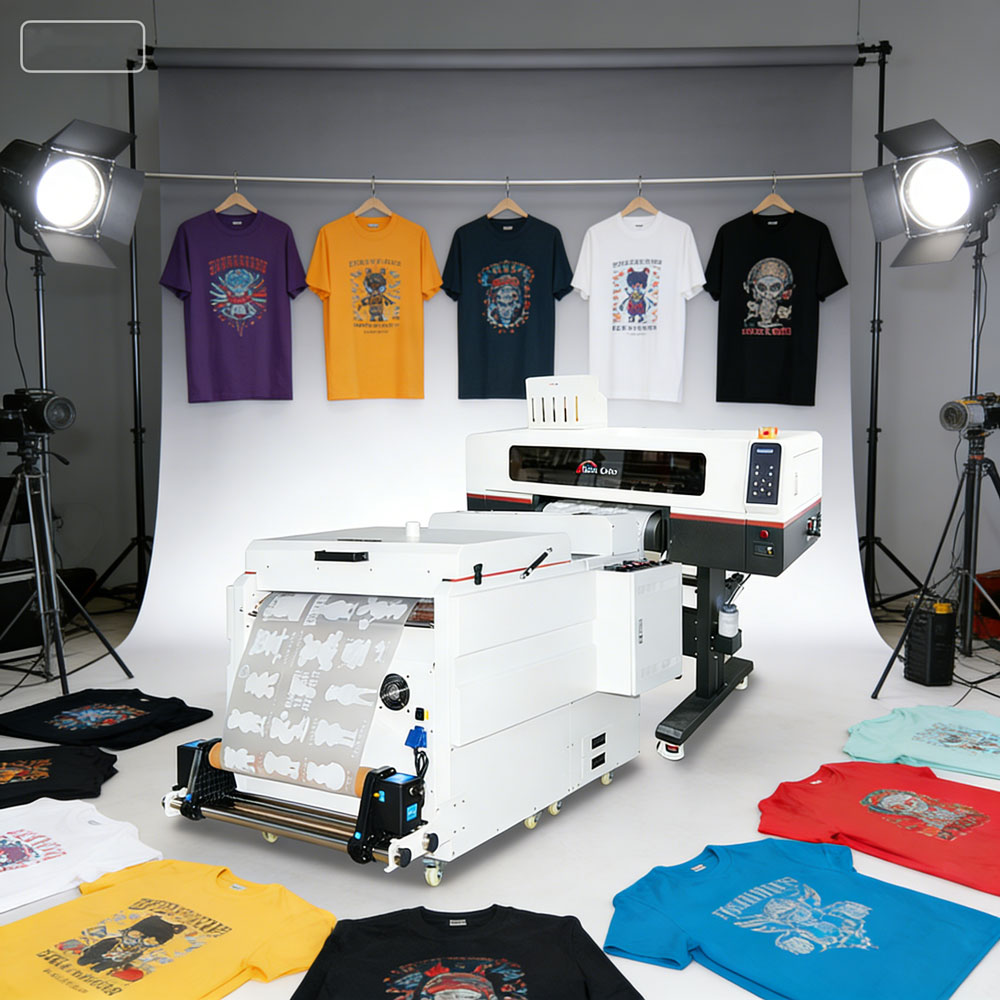
The core of any DTF workflow is the printer itself, but not just any printer will do. To achieve reliable, high-quality film prints that transfer well to garments, you must understand the technical requirements and industry best practices behind DTF technology.
1) Essential Printer Capabilities for DTF Film
At the foundation, a DTF printer must be capable of handling pigment-based inks including an opaque white layer. This white underbase is critical: it creates opacity and color fidelity on dark or colored garments. Printers designed or adapted for DTF ensure that white ink flows consistently without clogging — a big difference from generic office inkjets that lack circulation systems.
To function effectively with DTF pigment inks, the printer should include:
-
A stable delivery system that continuously circulates white ink to avoid sedimentation.
-
A printhead that can jett large pigment droplets and resist clogging.
-
A media feed system tailored for non-porous PET film, which can otherwise slip or misalign during printing.
Think of the printer not just as a device that deposits ink, but as a precision film handling and ink management system.
2) Printhead and Ink System Considerations
In DTF printing, printhead technology directly affects performance:
-
Piezoelectric printheads are generally suited to DTF ink viscosities and droplet control.
-
Thermal printheads common in many consumer printers are not designed for dense pigment inks and can be damaged by them.
This means printers built around piezoelectric engines — or desktop units professionally converted with appropriate ink channels and circulation — are the realistic starting point for quality DTF output.
White ink circulation is a non-negotiable feature for serious DTF work. Without a dedicated mechanism to keep white ink moving, prints will develop inconsistent underbases, jeopardizing transfer quality and durability on textiles.
3) Media Handling and Film Feed Design
DTF film is fundamentally different from paper or vinyl:
-
It is smooth and slippery, increasing the risk of slippage or misfeeds.
-
It can curl or build static charge without proper handling.
Printers intended for DTF use either incorporate or are adapted with accurate pinch rollers, vacuum platens, or film guides that secure the media during printing. Without these, chemistry and ink output might be acceptable, but film alignment and registration fail, leading to wasted materials and inconsistent transfers.
4) Software (RIP) and Workflow Integration
Selecting the right printer hardware is only half the equation. Raster Image Processor (RIP) software tailored to DTF workflows is essential. RIP tools allow precise control over:
-
White underbase placement and density
-
Ink limits and color profiles
-
Print order and layer alignment
A printer without reliable RIP support will struggle to produce consistent DTF prints with accurate colors and strong textile adhesion.
5) Printer Size, Speed, and Operational Context
DTF printers vary widely in size and speed:
-
Compact desktop units (small width formats) are suitable for hobbyists and startups focusing on small batches.
-
Mid-range systems balance throughput with flexibility for small business production.
-
Large format industrial printers support wide film rolls and high-volume workflows.
Your choice should reflect real production needs: throughput, print width, and how often the machine will be in daily use. Wider, faster printers typically offer better value at scale yet require more space and maintenance resources.
6) Industry Dynamics and Practical Advice
DTF printing has rapidly gained adoption due to its broad substrate compatibility, vibrant color output, and relative ease of integration compared with some legacy textile printing methods. Its adoption in small and mid-sized operations reflects a broader industry shift toward digital, on-demand production.
However, this flexibility comes with operational responsibilities:
-
The pigment inks and white underbase systems demand regular maintenance, including frequent head cleaning.
-
Film handling requires attention and sometimes added tools like powder shakers and curing ovens.
-
DTF setups can generate particulate and fumes during powder application and heat curing — proper ventilation and safe work practices are important.
Summary — What Printer Should You Choose?
In practical terms:
-
Beginners and small businesses benefit from compact DTF printers with robust white ink systems and RIP support.
-
Growing shops should opt for mid-size printers with wider media feeds and faster print engines.
-
High-volume commercial operations will find the best ROI in industrial-grade equipment with automation features for film feeding, powder application, and curing.
Ultimately, a DTF printer is not just a printing engine but a specialized toolset integrated with media handling and software. Choosing one without understanding these criteria will result in inconsistent results and higher costs over time.
-
-
AuthorPosts
- You must be logged in to reply to this topic.