
Home › Forums › Digital UV Printing Hub › What Is UV DTF Printing? A Deep Dive Into the Advanced Transfer Method
- This topic is empty.
-
AuthorPosts
-
25 December 2025 at 2:18 pm #653
Dowinsss
KeymasterIf you’re already familiar with standard Direct-to-Film (DTF) printing, you might have heard of UV DTF as its next evolution. Simply put, UV DTF stands for Ultraviolet Direct-to-Film printing — a method that uses UV-curable inks and UV light to instantly cure the print straight onto a transfer medium, creating vivid, highly durable designs that can be applied to many surfaces.
Unlike traditional DTF — where the printed film needs drying and then heat transfer to fabric — UV DTF inks dry immediately under UV light, which changes how the workflow works and what materials you can print on.
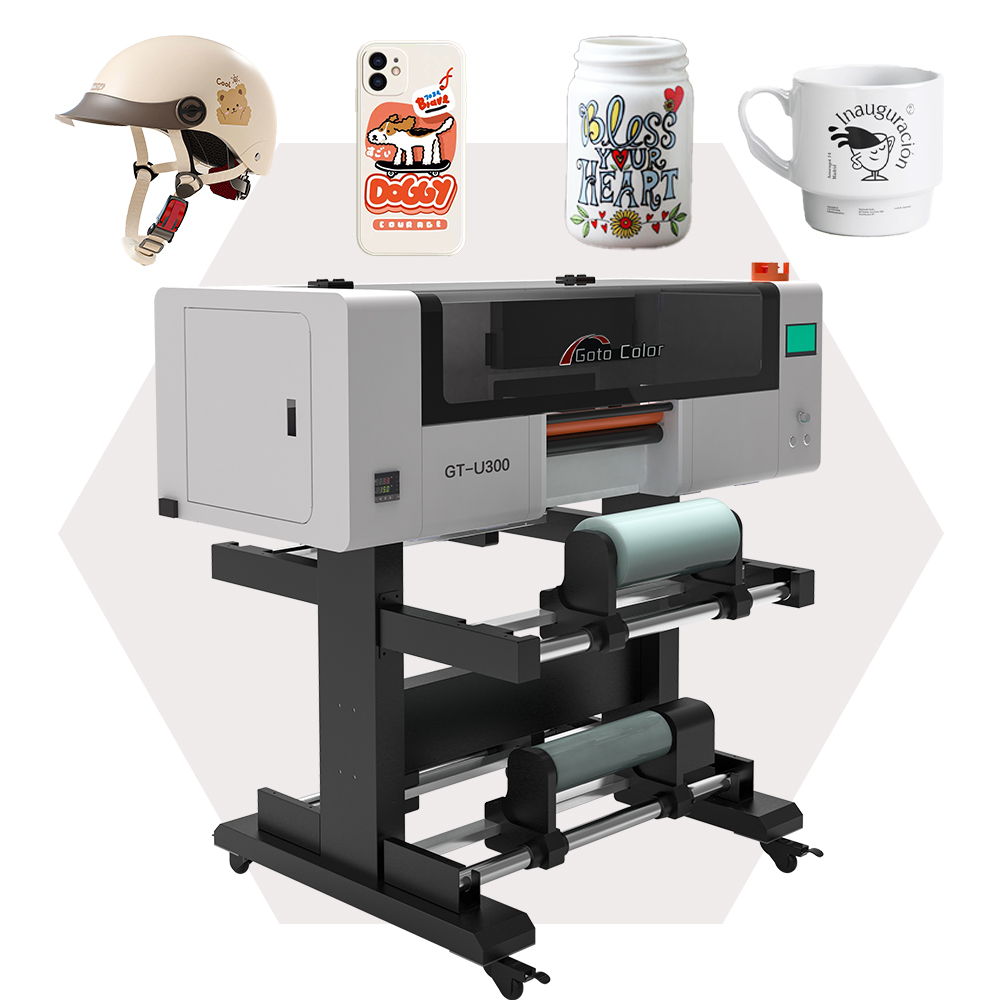
How the UV DTF Process Actually Works
The typical steps look like this:
-
Design creation
You prepare your artwork digitally, with transparency and resolution already set for crisp output. -
Printing on film with UV‐curable inks
The design is printed directly onto a special film using specialized inks that are cured on the spot by UV lamps integrated into the printer. This means the ink hardens immediately, avoiding any smeared or wet prints. -
Adhesive application (if required)
Some workflows add a clear adhesive layer so that the printed film sticks better to the target surface. -
Transfer to the surface
Depending on your setup, the film plus adhesive is applied to the final surface. In some cases you use heat or pressure; in others (especially hard surfaces) a simple peel-and-stick approach works. -
Final finish
Once on the substrate, the design becomes part of the surface with striking clarity and durability.
In my view, the biggest innovation here is the instant UV curing step — it eliminates drying time, reduces the risk of smudging, and allows very fine detail to stay sharp every time.
What Makes UV DTF Different from Regular Transfers?
The main difference between UV DTF and traditional transfer methods comes down to the ink and curing process:
-
Curing: UV inks harden instantly under UV light, while traditional transfers use water-based inks that must dry before being heat pressed.
-
Material compatibility: UV DTF isn’t just for fabrics — it can be used on glass, metal, wood, plastic, ceramics, and more, which dramatically expands how you can use it.
If you’ve struggled to print onto hard or heat-sensitive materials before, UV DTF feels like a breakthrough because the process avoids high temperatures altogether and produces a strong, colorful bond.
Key Advantages of UV DTF
Here are the benefits that make UV DTF appealing to creators and businesses alike:
-
Vibrant, high-resolution prints: UV-curable inks deliver rich colors and fine detail that rival more traditional techniques.
-
Fast turnaround: With instant curing, you skip long drying cycles and can work faster from design to finished piece.
-
Excellent durability: Prints are often moisture-resistant, scratch-resistant, and less prone to fading thanks to the nature of UV-cured inks.
-
Surface versatility: You’re no longer limited to garments — ceramics, glassware, signage, promotional products, and even textured surfaces become options.
From a practical standpoint, this makes UV DTF an attractive choice if you want to offer multiple types of printed products without investing in several specialized machines.
Where UV DTF Really Wins — and Where It Doesn’t
In my opinion, UV DTF is extremely compelling for items beyond traditional apparel — things like custom drinkware, decals, signage, and small home décor pieces become easier to produce. The process lets you put sharp art onto surfaces that traditional heat-based printing either mishandles or can’t handle at all.
However, it’s worth noting that the finished look and durability can vary widely depending on material and workflow. For example, UV DTF prints on hard, smooth surfaces are excellent and long-lasting, but they behave more like sticker or label transfers than textile bonds — which means if you try to apply them where heat and mechanical stress are involved (like garments in the washer), results may vary. This aligns with what many experienced printers now say about durability differences between UV DTF and traditional textile DTF.
Final Thoughts
UV DTF brings something genuinely useful to the printing table because it blends the precision and vibrancy of digital printing with broad material compatibility. If you’re looking to expand what you can make — especially onto objects and surfaces beyond simple fabric — UV DTF is worth exploring. It’s not universally better than every other method, but for many creative projects and custom jobs, it’s an exciting, practical tool to have in your arsenal.
-
-
AuthorPosts
- You must be logged in to reply to this topic.