
Home › Forums › DTF Printer Hub › What Is an Inkjet Printer and How Does It Work?
Tagged: Inkjet Printer
- This topic is empty.
-
AuthorPosts
-
27 January 2026 at 7:24 pm #908
Dowinsss
KeymasterWhat Is an Inkjet Printer and How Does It Work?
An inkjet printer is a type of digital printing device that creates images and text by propelling extremely fine droplets of liquid ink onto a substrate such as paper or specialty media. These printers are widely used in home, office, and professional settings due to their color accuracy, versatility, and relatively low cost per unit. In recent decades, inkjet technology has evolved to serve not only document and photo printing but also industrial and large-format applications.
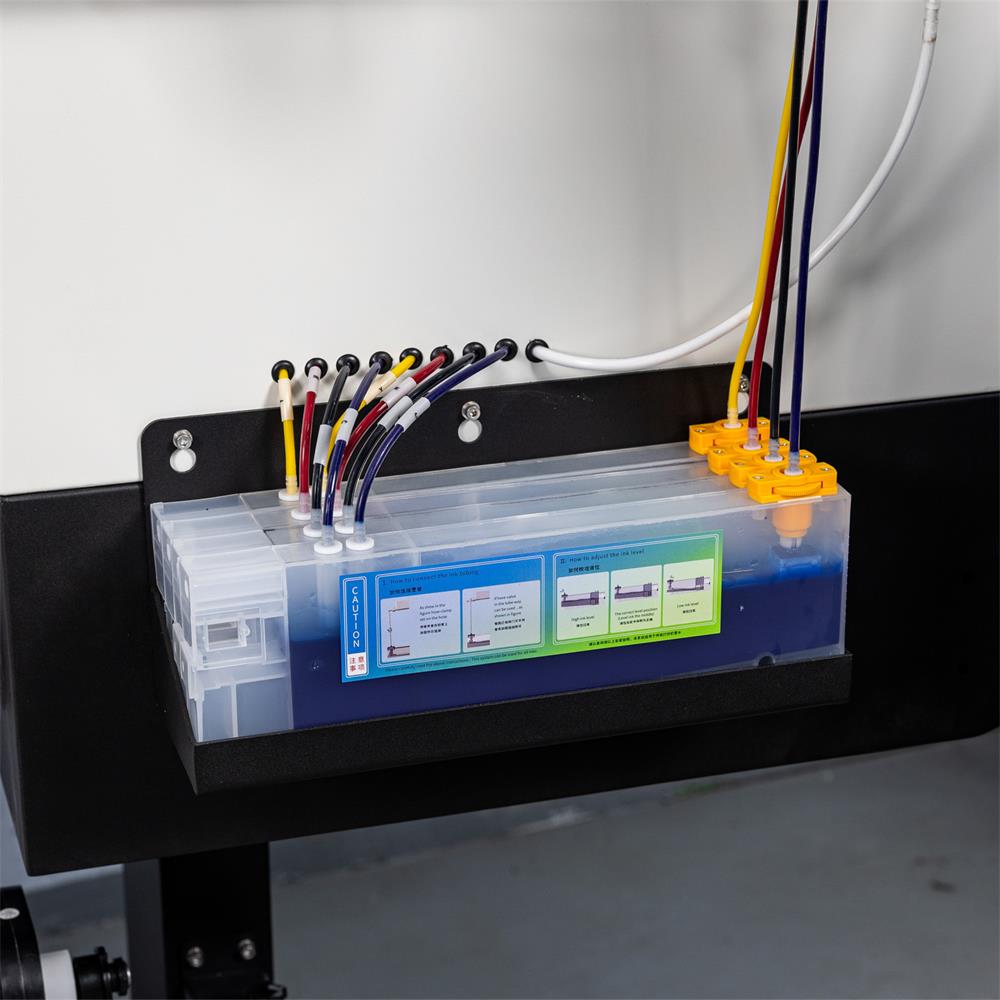
Core Printing Principle
At the heart of every inkjet printer is the print head, a component containing hundreds or even thousands of microscopic nozzles. As the paper or material moves through the device, the print head scans back and forth, shooting tiny droplets of ink to form an image. Each droplet is only a few picoliters in volume — so small that the dots blend into smooth tones to the human eye.
Inkjet devices use four basic ink colors — cyan, magenta, yellow, and black (CMYK) — to mix a wide range of tones and shades. By controlling the placement and volume of these droplets, the printer can reproduce detailed graphics and rich color gradients.
Two Key Inkjet Technologies
Thermal Bubble Inkjet
In many consumer printers, a heating element rapidly vaporizes a tiny volume of ink inside a chamber. This produces a microscopic bubble that expands and forces a droplet through the nozzle. When the bubble collapses, fresh ink is drawn into the chamber, ready for the next ejection. This cycle occurs thousands of times per second and enables smooth, continuous output.
Piezoelectric Inkjet
Other systems use piezoelectric crystals to generate pressure. An electric current causes the crystal to change shape, which pushes ink droplets out of the nozzle without heat. This method allows finer control over droplet size and ink types, which can be particularly advantageous in industrial or wide-format applications.
Print Resolution and Quality
Inkjet printers are rated by dots per inch (DPI), a measure of how many individual ink dots are printed per inch of media. Higher DPI generally translates to sharper images and finer detail, especially for photos or high-resolution graphics. Advanced print heads with dense nozzle arrays can achieve resolutions that rival professional photo labs.
Printers also rely on image processing software that interprets digital files and maps them into precise ink droplet patterns. This software ensures that the final output accurately reflects the original design with minimal color deviation.
Advantages of Inkjet Printing
Inkjet printers remain widely adopted due to several practical strengths:
-
Color Versatility: CMYK mixing allows a broad palette suitable for photos, graphics, and fine art prints.
-
Variable Data Printing: Each print in a batch can contain unique content without slowing production, ideal for mailers or personalized items.
-
Low Upfront Cost: Entry-level models are affordable, making them common in homes and small offices.
-
Compact Footprint: Many units combine printing with scanning and copying in a relatively small device.
Limitations and Considerations
Inkjet technology also has trade-offs that affect how and where it’s used:
-
Clogging: If unused for extended periods, the liquid ink can dry and block nozzles. Regular use or automated maintenance cycles help prevent this.
-
Print Speed: Inkjets are typically slower than laser printers for high-volume text jobs, making them less efficient in heavy office environments.
-
Smudging and Drying Time: Fresh ink may smudge if touched immediately after printing, especially on glossy or non-coated paper.
-
Environmental Sensitivity: Performance can vary with humidity and temperature, which impacts drying and media handling.
Industrial and Commercial Use Cases
While home and office printing remain dominant, inkjet technology has expanded into large-format signage, packaging, textile printing, and specialty media. High-end industrial inkjets combine advanced droplet control, fast drying inks, and high throughput to meet the demands of commercial production lines. This diversification reflects wider industry trends toward on-demand, personalized, and variable data printing.
From a business perspective, inkjet’s adaptability has ushered in new revenue streams for creative services, promotional product suppliers, and short-run publishers — sectors that value quality and customization over mere speed. Personal observation: In the next decade, inkjet’s role in industrial digital printing will likely eclipse traditional analog methods due to this flexibility and continuous innovation.
Frequently Asked Questions (FAQ)
What is the main principle of inkjet printing?
Inkjet printers work by spraying tiny droplets of liquid ink through nozzles onto paper or other media, forming text and images dot by dot.How does an inkjet printer differ from laser printing?
Inkjet uses liquid ink droplets, while laser printing uses toner particles fused with heat; inkjets generally offer better color photo output but slower text speed.What are the two main inkjet technologies?
Thermal bubble and piezoelectric technologies differ in how droplets are ejected — by heat-induced bubbles or piezoelectric crystal movement.Why do inkjet nozzles clog?
Infrequent use or evaporation of ink at the nozzle tips can cause blockages, requiring cleaning cycles to maintain performance.Can inkjet printers produce professional photos?
High-resolution inkjets with advanced color control can produce photo outputs that rival lab prints, making them suitable for photography and graphic arts.Is inkjet printing economical?
For low to moderate volume and color printing, inkjets remain economical, though costs per page may rise with frequent heavy use. -
-
AuthorPosts
- You must be logged in to reply to this topic.