
Home › Forums › DTF Printer Hub › Understanding DTF Printing: Guide for High-Demand Apparel Markets
Tagged: DTF Printing
- This topic is empty.
-
AuthorPosts
-
6 February 2026 at 5:29 pm #965
Dowinsss
KeymasterUnderstanding DTF Printing: A Strategic Guide for High-Demand Apparel Markets
Direct-to-Film (DTF) printing is transforming the way custom apparel and promotional products are produced — particularly in regions with intense demand for personalized textiles, such as Los Angeles and the broader Southern California market, where fashion, entertainment merch, and event apparel volumes are exceptionally high. Unlike traditional apparel printing techniques, DTF printing combines digital flexibility, material versatility, and production efficiency in a way that aligns with major industry trends. This guide reimagines the basic explanation into a forward-looking, data-informed narrative that speaks to today’s apparel decorators, print service providers, and commercial merchandisers.
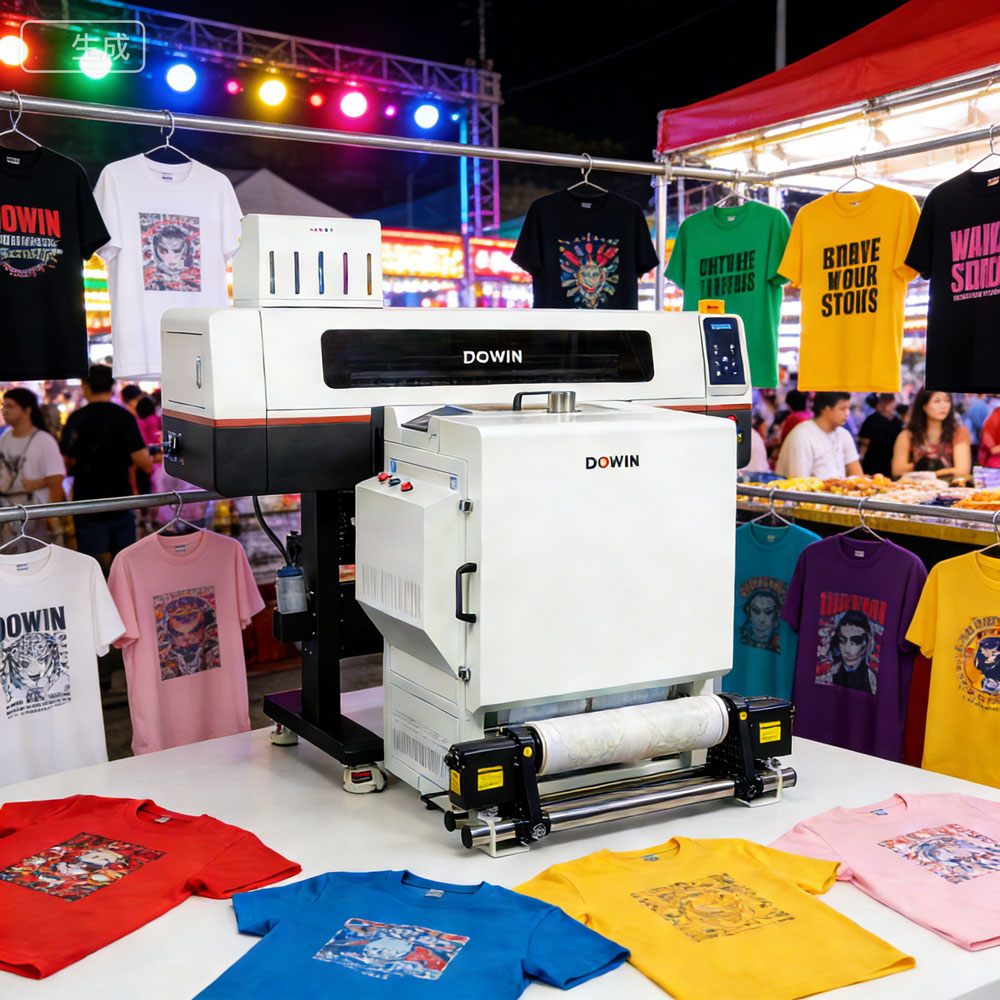
What DTF Printing Actually Is
DTF printing is a digital process that transfers full-color designs onto a specialized film, which is then heat-pressed onto fabric. The workflow can be summarized in these key steps:
-
A design is digitally printed onto a PET transfer film with specialized inks.
-
A layer of hot-melt adhesive powder is applied to the printed film.
-
The film is heat-pressed onto the target textile, bonding the design permanently.
This process creates prints that are vibrant, durable, and flexible, with strong wash resistance and excellent color fidelity — characteristics that matter most in high-turnover apparel markets.
Why DTF Printing Is Gaining Ground
Versatility Across Materials
One of the biggest advantages of DTF printing is its material compatibility. Unlike Direct-to-Garment (DTG) printing, which thrives mainly on cotton, DTF performs consistently on a broad spectrum — from cotton and polyester to blends, nylons, and performance fabrics. This makes it highly attractive for custom sportswear, promotional apparel, and high-fashion streetwear where fabric types vary widely.
Market data shows that this versatility is a major factor in adoption: apparel applications account for roughly 61 % of the global DTF printing demand, driven by the fashion industry’s move toward shorter production runs and greater design complexity.
Production Efficiency and Cost Dynamics
DTF printing dramatically reduces setup time compared to traditional screen printing. Screen printing, for example, requires separate physical screens for each color — a major overhead for multi-color designs or short runs. DTF’s digital workflow eliminates this barrier, enabling faster turnaround for on-demand production and high-mix, low-volume runs without prohibitive setup costs.
In markets where e-commerce and customized apparel sales are growing rapidly — such as Southern California, which is a nexus for both fashion startups and large event merchandise orders — this ability to turn around orders quickly and cost-effectively has become a strategic advantage.
Industry forecasts predict average per-unit printing costs for DTF will continue declining as automation, ink chemistry, and process controls improve — with some reports estimating cost reductions of up to 18 % by 2028.
Durability and Print Quality
DTF prints are lauded for durability, with prints typically resisting peeling, cracking, and fading even after multiple wash cycles. This is a key differentiator for both retailers and consumers, as it increases the lifespan of printed apparel — a major concern when customers are willing to pay a premium for items they intend to wear repeatedly.
Moreover, DTF’s ability to maintain vibrant, high-resolution details across fabric types makes it a preferred choice for intricate logos, photographic designs, and gradient effects that would be challenging for screen printing or vinyl transfer.
Growing Market Demand and Regional Trends
Global data shows that the DTF printing market is robust and expanding. The Asia-Pacific region dominates global volume due to its massive textile manufacturing base and export dynamics, but North America — led by the United States — is a significant driver of innovation and value-based demand for custom printing technology.
In the U.S., strong e-commerce apparel sales and a large creative economy have accelerated the adoption of DTF, particularly in coastal demand hubs like Southern California. Custom merch, direct-to-consumer brands, and event apparel providers increasingly rely on DTF to meet fast-changing design trends without the inventory burden or long lead times associated with traditional methods.
Application Scenarios That Define DTF’s Value
1. Fashion and Streetwear
In highly competitive fashion markets, brands use DTF printing to release capsule collections, seasonal lines, and limited-edition merchandise that require high detail and rapid turnaround.
2. Event and Promotional Gear
Trade shows, festivals, and corporate events often demand thousands of custom shirts, hoodies, and accessories. DTF’s ability to handle bulk orders with mixed sizes and designs makes it a go-to solution for event merchandisers.
3. On-Demand E-Commerce
The rise of print-on-demand platforms has expanded DTF’s appeal to online sellers who need to deliver unique designs with minimal inventory risk.
4. Sports and Team Apparel
DTF is well suited for sports jerseys and performance gear due to its flexibility and wash durability, appealing to leagues and teams seeking high-quality custom prints.
Practical Considerations Before Adoption
DTF printing isn’t without challenges. Print quality and wash performance are tied closely to process discipline, including film handling, curing times, and equipment calibration. Errors in heat-press settings or material selection can lead to adhesion problems or inconsistent results, slowing production and increasing rework.
Furthermore, print feel and texture differ from screen printing or DTG, and for some applications — especially where a softer hand feel is desired — alternative methods may still be preferred.
Understanding these trade-offs is crucial for large enterprises and print shops when integrating DTF into their production mix.
A Bold Industry View: DTF Is Not Just a Technology — It’s a Business Model Shift
DTF printing isn’t merely another printing technique; it represents a strategic pivot in how apparel decoration is delivered. By combining digital flexibility with operational efficiency, DTF enables businesses to respond to micro-trends, serve local and regional demand centers, and reduce inventory risks while maintaining quality and speed.
As automation advances and digital customization becomes the norm, DTF is set to become core infrastructure for apparel decorators and merchandisers who want to stay ahead of supply chain disruptions and customer expectations
-
-
AuthorPosts
- You must be logged in to reply to this topic.