
Home › Forums › Digital UV Printing Hub › Understanding DTF Printer Performance: A Deep Dive for Textile Makers
Tagged: DTF Printer, DTF Printing
- This topic is empty.
-
AuthorPosts
-
21 January 2026 at 7:12 pm #861
Dowinsss
KeymasterUnderstanding DTF Printer Performance: A Deep Dive for Textile Makers
In the rapidly evolving world of direct-to-film (DTF) printing, understanding what drives printer performance is essential — not only to get visually striking results, but also to ensure production efficiency and long-term durability. As DTF technology becomes a leading choice across small print shops and larger apparel houses, performance is shaped by more than just hardware specs. Industry data shows that ink formulation variability, consumables quality, environmental conditions, and workflow integration all play decisive roles in the outcome of printed garments.
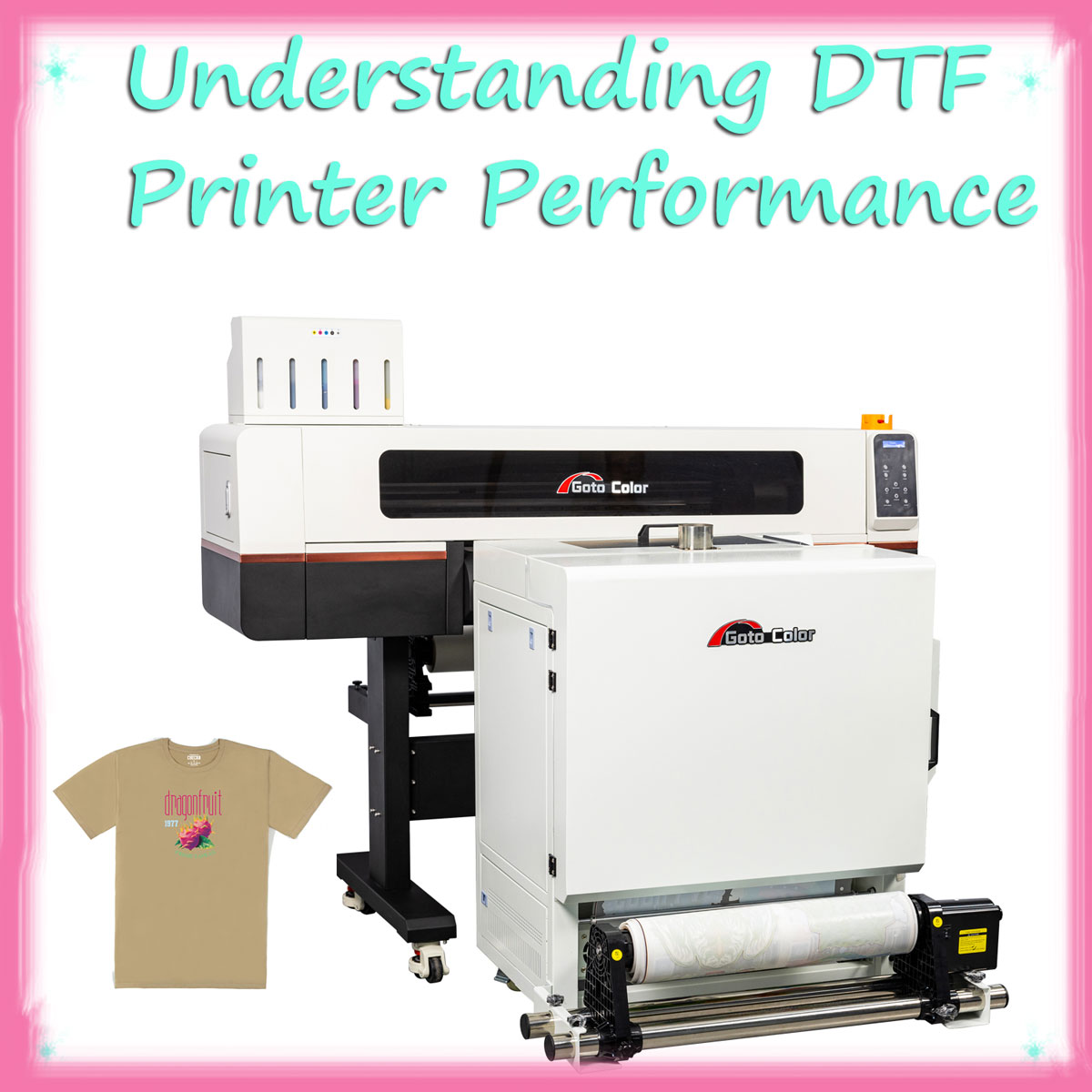
What “Performance” Really Means in DTF Printing
For most operators, performance breaks down into several interrelated dimensions:
Color Vibrancy and Accuracy – How true the printed colors are compared with the digital design.
Print Detail and Resolution – How sharp and clear the final output appears, especially on fine text or photograph-like designs.
Durability and Wash Performance – Whether prints maintain adhesion and appearance after repeated laundry cycles.
Throughput and Speed – How rapidly prints can be produced without sacrificing quality.
Operational Stability – The printer’s ability to run continuously with minimal maintenance.Core Factors That Shape DTF Printer Performance
1. Ink and Consumable Quality
The chemistry of DTF inks is more complex than in other print methods. Successful formulations must balance pigment saturation, fluidity, curing response, and bonding to adhesive powder and film. Ink batches with inconsistent pigment sizes or resin ratios often result in uneven color distribution, nozzle clogging, or poor wash resistance — a problem cited by the industry as one of the top challenges in maintaining consistent performance.
Likewise, transfer films and adhesive powder matter. Inferior films can lead to cracking or peeling after transfer, while poorly graded powder particles yield uneven adhesion and diminished durability.
2. Printhead and Hardware Parameters
Printer performance is strongly influenced by the mechanical and electronic design of the printhead system. Printhead droplet size, frequency, and nozzle count determine both resolution and speed. High nozzle count and refined droplet control allow more precise ink placement and smoother gradients, but only if the system can maintain consistent flow without clogging.
Industry practitioners often discover that printhead maintenance cycles and replacement intervals are critical; most printheads operate effectively for a typical life cycle before requiring servicing or replacement due to wear or ink residue buildup.
3. Software and Color Management
Behind every quality print is effective RIP software and color profiling. The software interprets digital images, controls how many passes the printhead makes, and adjusts droplet placement. Proper ICC profiles ensure the colors shown on a monitor are faithfully reproduced on fabric. Misconfigured software settings often lead to faded prints or inconsistent tones, even with premium hardware.
4. Environmental and Operational Conditions
Performance is not just about the printer itself. Temperature, humidity, and workspace conditions affect ink drying speed, nozzle behavior, and film handling. A stable environment minimizes smudges and dry-out issues, ensuring each pass of the printhead yields consistent results.
Without proper climate control — especially in large production runs — printers can underperform, showing banding or unexpected color shifts.
5. Workflow and Operator Skill
DTF printing demands careful coordination between printing, powder application, curing, and heat transfer stages. Even with top-tier equipment, inexperience in press timing, pressure calibration, or film orientation results in adhesion failures and poor wash durability. Community-reported issues from real-world users show that mismanagement of press parameters can ruin entire batches before problems become evident.
Balancing Speed and Quality
A frequent trade-off in DTF printing lies between production speed and print detail. High-resolution printing (e.g., 600 DPI or above) produces sharper, more detailed images, but at the cost of slower throughput. Lower DPI settings improve productivity but may lose fine text and subtle gradients. Finding the right balance depends on order type — high-end fashion items may justify slower, detailed prints, while bulk promotional garments might prioritize speed.
Industry Outlook: Challenges and Opportunities
Market research highlights that inconsistent print quality and adhesion failures continue to be among the most commonly reported issues across small and medium enterprises using DTF systems. Furthermore, the concentration of supply chains for films and inks creates vulnerability to raw material shortages and price volatility, which, in turn, affect overall performance and operational planning.
Because DTF occupies a niche between traditional screen printing and other digital textile technologies, operators must invest in ongoing training, quality control, and workflow optimization to realize the technology’s full potential.
Personal Perspective
From a practical standpoint, evaluating printer performance requires looking beyond headline specs like speed and resolution. True performance is a combination of material quality, environmental stability, software precision, and raw throughput — all integrated through disciplined operational workflows. A high-end printer with low quality consumables will never outperform a well-balanced system run by knowledgeable operators. Investing in staff training and quality materials often yields bigger improvements in performance than upgrading hardware alone.
In 2026, DTF printing remains a powerful tool for both custom apparel startups and larger decorating businesses — but mastering performance is less about hardware capability and more about holistic system integration and process control.
-
AuthorPosts
- You must be logged in to reply to this topic.