Home › Forums › Digital UV Printing Hub › Next-Generation UV DTF Printer: A New Step in High-Performance Printing
Tagged: UV DTF, UV DTF Printing
- This topic is empty.
-
AuthorPosts
-
28 January 2026 at 7:02 pm #922
Dowinsss
KeymasterNext-Generation UV DTF Printer: A New Step in High-Performance Printing
The textile and graphics printing industries are in the midst of rapid transformation as demand for customization, short-run production, and high-quality finish continues to grow. One of the most notable developments in this space is the introduction of new UV DTF (Ultra-Violet Direct-to-Film) printing technology. This hybrid approach combines the precision of UV inks with the flexibility of direct-to-film transfers, expanding the range of printable surfaces while improving workflow efficiency.
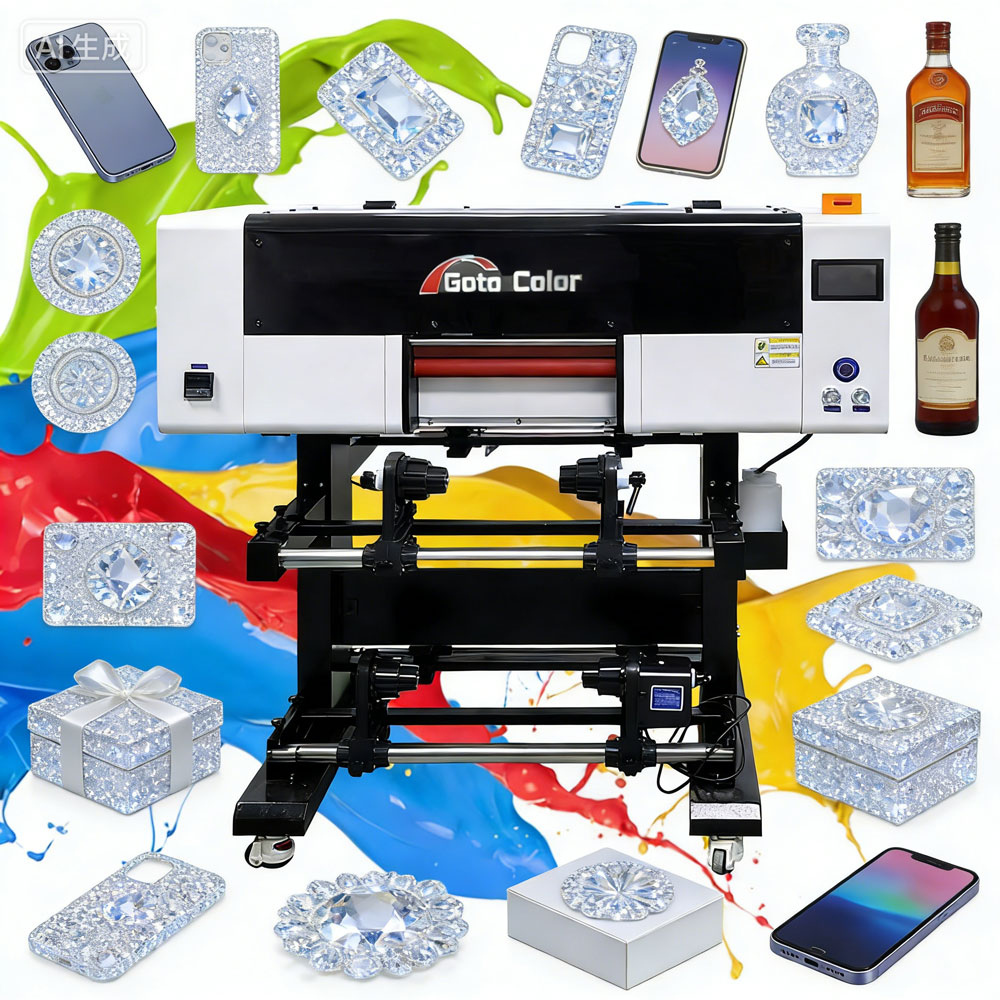
UV DTF printing fundamentally differs from conventional flatbed UV printing by printing onto a transfer film first, which can then be applied to complex and irregular surfaces. This innovation addresses one of the longstanding challenges in UV printing — maintaining quality on surfaces with height variations or curves — and opens the door to broader applications beyond flat objects.
Integrated Workflow: Printing and Laminating in One System
Traditional UV DTF workflows require a separate laminating step after printing, which adds time, labor, and floor space. The latest generation of systems integrates printing and laminating into a single device, streamlining the production process. This results in a significant efficiency improvement, with some setups yielding up to a 25 % increase in throughput compared to multi-machine workflows.
Automated film handling — including built-in roll feeding mechanisms — further reduces manual intervention, allowing operators to focus on quality control and design rather than repetitive tasks. This is particularly valuable for businesses scaling from prototyping to higher volume runs.
Dual Printhead Arrays for Higher Productivity and Quality
Adding more printheads is not simply about speed — it also improves print accuracy, color saturation, and overall image clarity. Dual printhead configurations increase coverage per pass, supporting both faster output and richer, more consistent color profiles. This is especially useful in high-demand environments where both throughput and visual impact matter, such as promotional product printing or custom décor production.
Enhanced Visual Effects: UV Varnish and Specialty Finishes
A distinctive advantage of advanced UV DTF systems is the ability to apply UV varnish coatings and hot-stamped finishes directly as part of the printing sequence. UV varnishing produces a glossy, reflective surface with enhanced depth and perceived value — a feature particularly attractive for luxury packaging, signage, and premium promotional items.
Hot stamping adds metallic gloss or textured accents that elevate visual aesthetics and tactile appeal, aligning printed products with trends in high-end design and experiential marketing. These finishes are no longer optional luxuries but differentiators in competitive markets.
Reducing Downtime: Automatic Cleaning and White Ink Circulation
One of the most persistent issues in inkjet and UV printing technologies is printhead clogging, especially with white inks that tend to settle quickly. Next-generation systems incorporate automatic cleaning units and continuous white ink circulation, which keep ink moving through the printheads even during idle periods.
This has two major benefits:
-
Reduced maintenance and downtime — less frequent manual cleaning extends production windows.
-
Longer printhead life — continuous circulation prevents sedimentation and blockages that degrade performance.
From a total cost of ownership perspective, these improvements can translate to significant savings over time in consumables and service interventions.
Personal insight: Many print operations underestimate maintenance costs when evaluating technology investments. Automated ink management features are a key factor in real-world productivity and should weigh heavily in purchase decisions.
Industry Context: Why UV DTF Is Gaining Traction
UV DTF printing is part of a broader shift toward versatile and adaptable digital printing technologies. Market analysts project strong growth for UV DTF solutions, driven by rising demand for customized products across sectors such as signage, promotional goods, packaging, and industrial applications.
Adoption patterns indicate that Western and Asia-Pacific markets are increasingly embracing hybrid print solutions that bridge the gap between textile DTF processes and rigid-substrate UV printing. Improvements in ink chemistry, automation, and workflow integration continue to expand the addressable use cases for UV DTF.
Practical Implications for Buyers and Businesses
For businesses evaluating next-generation UV DTF technology, several priorities emerge:
-
Workflow simplification: Integrated print-and-laminate systems reduce labor costs and errors.
-
Output diversity: Ability to transfer complex designs onto irregular surfaces expands service offerings.
-
Quality control: Enhanced finishes and advanced printhead arrays improve competitive positioning.
-
Sustainability: UV curing processes reduce VOC emissions and energy usage compared to solvent-based methods.
From a strategic standpoint, investing in hybrid UV DTF solutions can help mid-size studios and commercial printers differentiate their services without the overhead of multiple separate systems. The integrated approach also aligns well with modern on-demand and high-mix, low-volume production models that many custom print businesses are adopting.
Conclusion: A New Chapter in High-Versatility Printing
Next-generation UV DTF systems represent an important evolution in digital printing technology by combining efficiency, flexibility, and visual impact into a single, streamlined workflow. For businesses seeking to expand beyond flat or rigid printing surfaces into mixed material and irregular objet printing, these advancements offer practical, commercially relevant benefits.
Whether for signage, promotional products, bespoke interior elements, or industrial customization, the integration of auto-laminating, enhanced printheads, and advanced surface finishing capabilities positions UV DTF as a versatile tool in modern print production — not just a niche alternative.
FAQ – Next-Generation UV DTF Printers
Q1: How does UV DTF differ from traditional UV flatbed printing?
UV DTF prints onto a film first, then transfers the cured ink to various surfaces, enabling high-quality prints on curves and uneven shapes — a limitation in standard flatbed UV printing.Q2: Why is integrated laminating important?
Combining printing and laminating in one machine simplifies workflow, reduces space requirements, and raises productivity by eliminating manual laminator setup.Q3: What is the advantage of dual printheads?
Dual printheads improve both printing speed and color richness by distributing workload and increasing droplet accuracy.Q4: Do automatic cleaning systems matter?
Yes. They reduce downtime and extend printhead life by preventing ink drying and clogs, especially with white ink.Q5: What markets benefit most from UV DTF technology?
Customized promotional products, signage, packaging, and interior décor sectors benefit most due to versatility across materials and shapes. -
-
AuthorPosts
- You must be logged in to reply to this topic.