
Home › Forums › Digital UV Printing Hub › Methods of Printing on Shirts: A Complete Overview
- This topic is empty.
-
AuthorPosts
-
19 December 2025 at 7:24 pm #512
Dowinsss
KeymasterWhen it comes to putting designs on shirts, there are several established printing methods — and choosing the right one depends entirely on what you’re trying to achieve. For huge bulk runs, traditional screen printing still makes sense. If you need super detailed, full-color artwork on a few garments, digital options like direct-to-garment lead the way. Then there are flexible hybrid techniques that work on a wide range of fabrics and provide vibrant results without complex setup.
Understanding the strengths and limitations of each method is the first step toward getting great results that match your design, fabric, and budget.
Choosing the Right Shirt Printing Method
Think of picking a printing method like selecting a tool in your workshop — each tool excels at certain jobs and struggles with others. You wouldn’t use a hammer to tighten a screw, right? The same idea applies here: the right technique for 300 matching staff tees is very different from the best choice for a single, highly detailed photo shirt.
Every printing method produces a different look, texture, longevity, and cost per shirt. To figure out which one fits your project, ask yourself a few key questions:
-
How many shirts are you making? Some methods get cheaper per unit with larger runs, while others are ideal for one-off prints.
-
How complex is your design? Simple, bold graphics print well with screen techniques, but detailed photos benefit from digital methods.
-
What is your shirt made of? Natural fibers like cotton behave differently from polyester or blends, and each technique has its best match.
In short, there’s no single “best” way to print shirts. The right approach depends on your specific needs.
Quick Comparison of Printing Methods
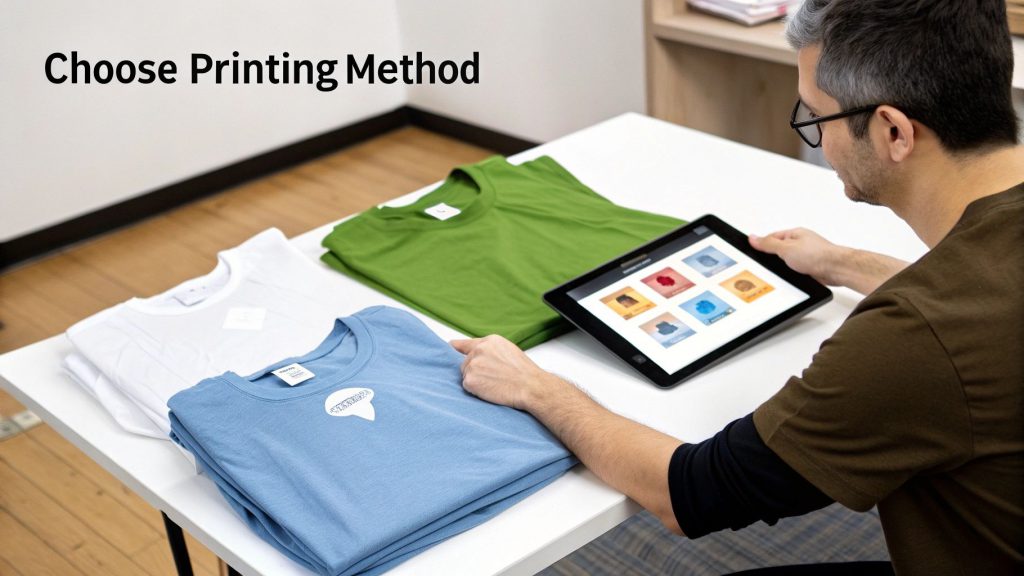
Printing Method Best For Feel & Durability Cost Efficiency Screen Printing Large bulk orders with simple designs Vibrant and very durable, slightly heavy feel Highly cost-effective at scale Direct-to-Garment (DTG) Detailed, full-color prints on cotton Soft and breathable, slightly prone to fading Great for small runs Direct-to-Film (DTF) Full-color prints on many fabrics Stretchy, durable with a smooth feel Good balance for small–medium runs Use this comparison to narrow down your options before diving into the details.
Screen Printing: Classic and Durable
When most people imagine a printed t-shirt — especially for big events or merch — they picture screen printing. This long-standing method is loved for its bold colors and impressive durability.
Screen printing works by forcing ink through a mesh screen onto the fabric, with each color needing its own stencil. Because of this, setup takes time and effort. But once it’s ready, printing hundreds or thousands of shirts becomes fast and cost-efficient.
Why Screen Printing Still Matters
Screen printing really shines in high-volume production. The upfront cost of creating screens gets spread across the entire order, making the per-shirt cost drop dramatically as quantities grow. For large events, uniforms, or school gear, this economy of scale is unbeatable.
Benefits include:
-
Outstanding durability: Thick ink layers stand up to countless washes without degrading easily.
-
Vibrant colors: Solid, opaque prints look fantastic even on dark fabrics.
-
Cost-effective in bulk: Once screens are set, each shirt prints quickly and inexpensively.
However, screen printing isn’t ideal for small orders — creating screens for every colour in a design makes it expensive for one-offs. It also struggles with highly detailed or photographic imagery because each shade would require its own screen.
Direct-to-Garment (DTG): Detailed and Digital
Direct-to-garment printing works much like an inkjet printer: the printhead sprays specialised inks directly onto the shirt. This makes DTG excellent for complex, full-color designs with subtle gradients or photographic detail.
Because DTG doesn’t require screens or plates, it’s perfect for small batches or one-off prints. Artists, online stores, and custom projects that prioritise colour detail often choose this method.
DTG Strengths and Limitations
Advantages:
-
Superior detail: DTG captures millions of colours and very fine lines.
-
Soft feel: Inks soak into the fibers, giving a breathable texture.
-
No setup cost per colour: Complex designs don’t become more expensive.
Limitations:
-
DTG performs best on 100% cotton fabrics. The more polyester you mix in, the less vibrant and durable the print becomes.
-
Dark fabrics often require pre-treatment to make colours pop, adding to time and cost.
-
Not as cost-efficient as screen printing for very large quantities.
Direct-to-Film (DTF): Flexible and Full-Color
Direct-to-film is a newer technique that combines digital colour flexibility with impressive fabric compatibility. Instead of printing directly on the garment, the design is printed onto a film, coated with adhesive powder, and then applied to the shirt with heat and pressure.
The big benefit here is how many fabrics it can handle. Because the design uses an adhesive to bond with the fabric, DTF works on cotton, polyester, blends, and many synthetic materials without problems.
Why DTF Is So Adaptable
DTF doesn’t rely on ink soaking into fibres. The heat-activated adhesive lets it stick well to fabrics that might challenge other methods — including denim, performance knits, and even leather.
DTF prints:
-
Deliver vibrant full colour and good wash durability
-
Have a smooth hand feel and some stretch
-
Avoid pre-treatment steps and work on dark or light garments equally well
This versatility makes DTF a reliable choice for small to medium orders that need bright, long-lasting designs across many fabric types.
Specialised and Alternative Printing Methods
Beyond the main three techniques, there are niche methods that serve certain design goals very well:
Heat Transfer Vinyl (HTV)
HTV uses coloured vinyl cut into shapes or text, then heat-pressed onto the shirt. It’s excellent for simple logos, numbers, or text, especially on athletic wear. This method produces bold results and is easy to execute for small runs, but it’s not suited for complex multi-colour graphics because each colour is an additional cut and press step.
Dye Sublimation
Sublimation uses heat to turn ink into gas, which then permanently embeds into polyester fibres. The result is a seamless, breathable print that never peels or fades. However, it only works on light-coloured polyester or specially coated items.
How to Choose the Right Method
Making the best decision doesn’t mean finding the “ultimate” printing technique — it means finding the one that fits your project’s needs. Four key factors help narrow it down:
-
Order Size: For large batches, screen printing is usually most cost-effective. For smaller or variable designs, digital methods like DTG or DTF keep costs down.
-
Design Complexity: Detailed colour work and photographic images are best suited to DTG or DTF. Bold, graphic work fits screen printing or HTV.
-
Fabric Type: Cotton favours DTG and screen printing, polyester is ideal for sublimation, and mixed fabrics benefit most from DTF.
-
Budget & Timing: Setup time and cost matter — screen printing needs more prep, while digital methods are faster for short runs.
In practical terms: a run of hundreds of matching tees with a simple logo will almost always be cheaper and more durable with screen printing, while custom shops and on-demand stores favour digital methods for flexibility and creative freedom.
Common Questions Answered
Which printing lasts longest?
Traditional screen printing has long been regarded as the most durable method for heavy wash cycles, but modern film-based techniques now offer wash performance that rivals it, especially when flexibility and stretch are important.What’s best for small businesses?
For startups or print-on-demand ventures, film-based and digital printing methods are often more cost-effective because they don’t require expensive setup or minimum quantities.Can I print a photo on a shirt?
Yes — digital methods like DTG and DTF excel at photographic detail. DTG is especially smooth on cotton, while film-based techniques let you apply photo-quality prints on a wider range of fabrics.
Conclusion
Every printing method has its own sweet spot — from the economy of screen printing to the versatility of film-based digital techniques and the specialised power of sublimation or vinyl. Understanding what each does best helps you choose wisely for cost, performance, longevity, and overall visual impact.
-
-
AuthorPosts
- You must be logged in to reply to this topic.