
Home › Forums › Digital UV Printing Hub › How Flatbed UV Printing Transforms Production Efficiency in a Growing Market
Tagged: Flatbed UV Printing
- This topic is empty.
Viewing 1 post (of 1 total)
-
AuthorPosts
-
3 February 2026 at 6:23 pm #951
Dowinsss
KeymasterIn today’s fast-paced business environment, the printing industry is undergoing a significant transformation. With the global wide-format printing market projected to reach $12.39 billion by 2029 at a CAGR of 6.0%, according to The Business Research Company, print professionals are constantly seeking ways to enhance productivity and stay competitive.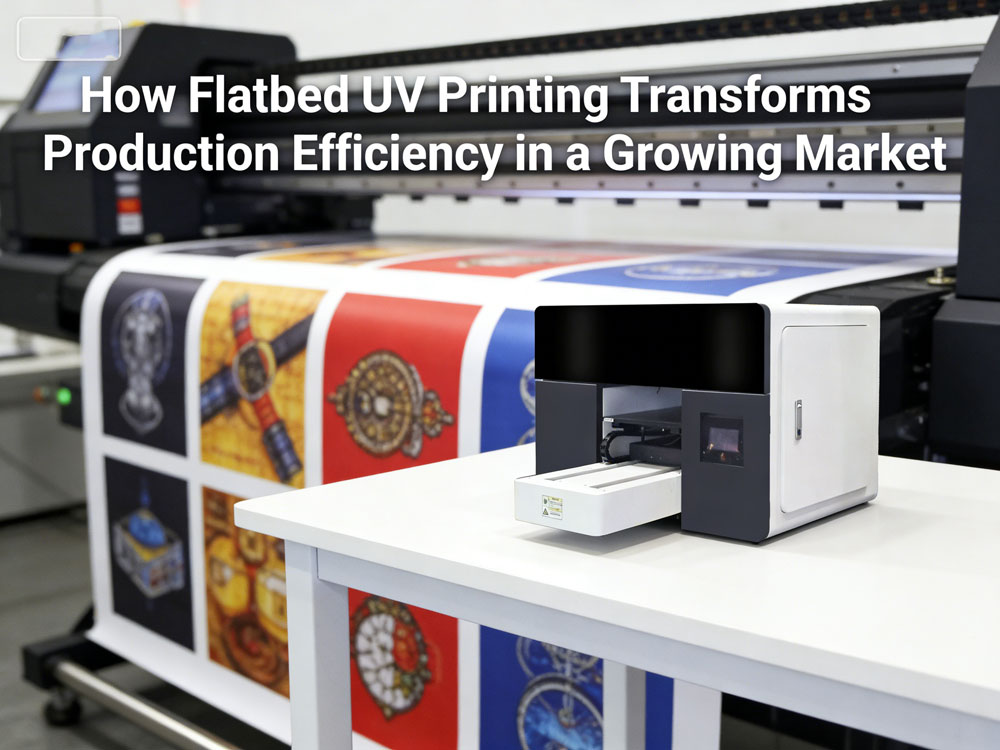
The Limitations of Traditional Roll-to-Roll Printing
For decades, roll-to-roll wide-format printers have been the go-to choice for many small-to-medium print businesses. However, when it comes to printing on rigid boards for applications like building site hoardings or event spaces, this traditional method involves a time-consuming three-step process.Step 1: Printing the Adhesive Media
While the printing process itself can be relatively fast with the right equipment, operators often have to wait for the ink to dry before moving on to the next step. This waiting period can significantly slow down production, especially when dealing with large volumes of work.Step 2: Laminating the Output
For outdoor applications or permanent fixtures, laminating the print with a protective film is essential. This requires a special laminating bench with a full-width heated roller, and even with this equipment, bubbles and creases are still a common issue. The laminating process adds another layer of complexity and time to the production workflow.Step 3: Applying to the Board
Once the media is laminated, it needs to be applied to the rigid board. This step also requires careful handling to avoid costly mistakes, and it can take a skilled operator or two a significant amount of time to produce just 3-4 boards per hour.As businesses grow, they often find themselves limited by the constraints of this traditional production method. Increasing output typically means investing in more of the same equipment, hiring additional operators, and expanding into larger premises, all of which can have a significant impact on the bottom line.The Game-Changing Potential of Flatbed UV Printing
In contrast to the traditional roll-to-roll method, flatbed UV printing offers a much more efficient and streamlined production process. With this technology, operators can place a board on the bed, hit “print” on their RIP software, and within a few minutes, remove the finished board and repeat the process.Unmatched Speed and Productivity
One of the most significant advantages of flatbed UV printing is its speed. With this method, businesses can produce up to 4 times as many boards as they would with the traditional roll-to-roll process. This massive increase in productivity not only allows businesses to take on more work but also frees up operators to focus on other tasks, such as customer service or business development.Instant Curing and Durability
Another key benefit of flatbed UV printing is the instant curing of the ink. UV-curable inks are cured instantly with low-temperature lamps, which means that the printed boards can be handled and stacked immediately after printing. This eliminates the need for drying time and reduces the risk of smudging or damage to the print. Additionally, the UV curing process creates a durable, scratch-resistant finish that is ideal for outdoor applications.Versatility and Flexibility
Flatbed UV printers are also highly versatile, capable of printing on a wide range of substrates, including glass, wood, metal, and acrylic. This allows businesses to expand their service offerings and take on new types of projects, such as printing on promotional products or custom furniture. The ability to print directly on rigid substrates also eliminates the need for additional materials, such as adhesive media and laminating film, which can further reduce costs and improve efficiency.The Growing Market for Flatbed UV Printing
The demand for flatbed UV printing is on the rise, driven by a number of factors, including the growing need for personalized and customized printing solutions, the increasing emphasis on sustainability, and the rapid technological advancements in the printing industry.Market Size and Growth Projections
According to a report by Verified Market Reports, the global flatbed UV printers market size stood at USD 1.2 billion in 2024 and is forecast to achieve USD 2.5 billion by 2033, registering a 9.5% CAGR from 2026 to 2033. In China alone, the flatbed UV printer market is expected to grow from 62.3 billion yuan in 2024 to over 180 billion yuan by 2030, with a CAGR of 11.5% to 13.2%.Key Market Drivers
One of the primary drivers of the flatbed UV printing market is the growing demand for personalized and customized printing solutions. Consumers are increasingly looking for unique, one-of-a-kind products, and businesses are turning to flatbed UV printing to meet this demand. The ability to print directly on a wide range of substrates allows businesses to create customized products, such as promotional items, signage, and packaging, that stand out from the competition.Another key driver is the increasing emphasis on sustainability in the printing industry. Flatbed UV printers use UV-curable inks, which are more environmentally friendly than traditional solvent-based inks, as they emit fewer volatile organic compounds (VOCs). This makes flatbed UV printing a more sustainable option for businesses looking to reduce their environmental impact.Technological advancements are also playing a significant role in the growth of the flatbed UV printing market. Newer models of flatbed UV printers are equipped with advanced features, such as vacuum bed technology, positioning pins, and on-bed guides, which help to speed up the set-up process and reduce errors. Additionally, the development of more efficient UV lamps and ink formulations has further improved the performance and quality of flatbed UV printing.My Personal Perspective on the Future of Flatbed UV Printing
Having worked in the printing industry for many years, I have seen firsthand the transformative impact that flatbed UV printing can have on businesses. In my opinion, this technology is not just a passing trend but a game-changer that will continue to shape the future of the printing industry.The Need for Businesses to Adapt
As the market for flatbed UV printing continues to grow, businesses that fail to adapt risk being left behind. The traditional roll-to-roll printing method is becoming increasingly outdated, and businesses that rely on it will struggle to compete with those that have invested in flatbed UV technology. To stay competitive, businesses need to embrace this new technology and invest in the equipment and training necessary to implement it effectively.The Role of Innovation and Collaboration
Innovation will be key to the continued growth and success of the flatbed UV printing market. Printer manufacturers need to continue to invest in research and development to improve the performance, quality, and efficiency of their products. Additionally, businesses need to collaborate with their suppliers and customers to identify new applications and opportunities for flatbed UV printing.The Importance of Sustainability
Sustainability will also play an increasingly important role in the future of the printing industry. As consumers become more environmentally conscious, businesses need to find ways to reduce their environmental impact. Flatbed UV printing offers a more sustainable alternative to traditional printing methods, and businesses that embrace this technology will be well-positioned to meet the growing demand for eco-friendly printing solutions.Conclusion
In conclusion, flatbed UV printing is a revolutionary technology that offers significant advantages over traditional roll-to-roll printing methods. With its unmatched speed, productivity, versatility, and durability, flatbed UV printing is transforming the way businesses produce printed materials. As the market for flatbed UV printing continues to grow, businesses that invest in this technology will be able to stay competitive, expand their service offerings, and improve their bottom line.If you’re a print professional looking to enhance your productivity and take your business to the next level, I highly recommend considering flatbed UV printing. With the right equipment and training, this technology can help you achieve your business goals and stay ahead of the competition in today’s fast-paced market. -
AuthorPosts
Viewing 1 post (of 1 total)
- You must be logged in to reply to this topic.