
Home › Forums › DTF Printer Hub › DTF Transfers vs Screen Printing: The Apparel Printing Revolution
Tagged: DTF Transfers, Screen Printing
- This topic is empty.
-
AuthorPosts
-
6 February 2026 at 6:05 pm #968
Dowinsss
KeymasterDTF Transfers vs Screen Printing: The Apparel Printing Revolution
Fashion, sportwear, merch, uniforms — whatever the use case, garment decoration is undergoing a fundamental shift. Traditional screen printing once reigned unchallenged, but digital alternatives like Direct-to-Film (DTF) transfers have surged in prominence. Both approaches still have viable roles in the market today, but the reasons behind choosing one over the other are increasingly strategic, not just technical.
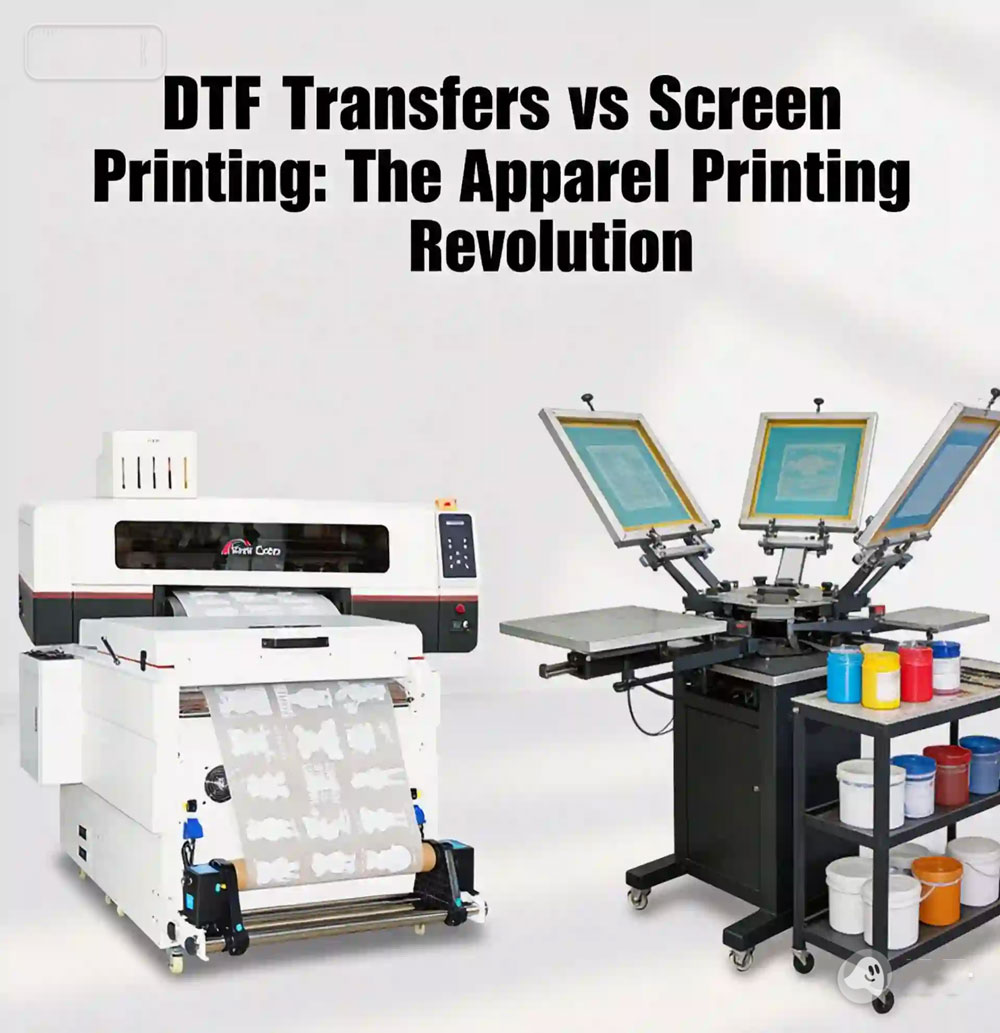
The Roots: Analog Meets Digital
Screen Printing is an analog art rooted in centuries-old stencil techniques. Each color in a design is associated with a physical screen; ink is mechanically pressed through fine mesh onto the garment. When executed at scale, this process delivers consistency, vibrancy, and durability — the reason it persists in industrial and promotional printing.
DTF Transfers, by contrast, are part of the digital printing wave. A design is printed onto a special film using digital printheads, bonded with an adhesive powder, cured, and then heat-pressed onto the fabric. This workflow removes the need for screens altogether, allowing color complexity and design flexibility that legacy methods struggle to match.
Material Compatibility: Every Cloth, Every Surface
DTF’s capacity to adhere to a diverse set of materials — cotton, polyester, nylon, leather, spandex — highlights one of its biggest breakthroughs. Classic screen printing likes flat, smooth fabrics; textured, stretchy, or performance materials can be problematic.
This evolution matters because apparel collections today span everything from breathable performance jerseys to fashion pieces with mixed fabrics. Brands that want to diversify their product lines without managing multiple printing technologies increasingly lean on the versatility of DTF workflows.
Design Complexity: The Rise of Color Intelligence
DTF excels with intricate graphics, gradients, photographic elements, and multicolor art — all of which are prohibitive or impossible via traditional screen printing without disproportionately high setup costs. Screen printing’s strength remains bold, solid colors where each new shade means another screen, another setup step.
In an era populated by streetwear, detailed illustrations, and micro-branding elements, this design flexibility isn’t just a convenience — it’s a competitive advantage.
Order Volume Economics: When Scale Changes the Math
Screen printing’s economics are classic economies of scale: initial setup costs (screens, emulsions, press time) are high, but the cost per unit collapses as volume increases. For large bulk runs — think hundreds to thousands of identical garments — this remains extremely competitive.
DTF, on the other hand, is optimized for short runs, on-demand production, and rapid iteration. Since there are no screens to burn and align, setup time is minimal. Producing a single item with full-color graphics can be cheaper and faster than screen printing, making DTF ideal for personalized orders, e-commerce print-on-demand, and agile fashion drops.
Durability & Wear-Through: Long-Term Performance
Durability discussions often polarize professionals. Well-done screen prints bond with fibers and can endure extensive wash cycles. DTF prints are highly durable when cured properly, but because the transfer sits on top of fabric rather than saturating fibers, some high-wear scenarios may show cracking or peeling earlier than classic screen work.
From a technical standpoint, both can be acceptable — but the type of garment, intended use, and wearer expectations should guide the choice. Premium, high-tactile garments (e.g., thick hoodies or athletic wear) reveal those differences more than lightweight tees.
Environmental Footprint: Hidden Costs
DTF processes reduce waste associated with screen emulsions and cleaning chemicals. They also leverage digital workflows that can be tuned to minimize material usage. Screen printing, while allowing eco-friendly ink choices, still generates solvent and water waste through wash-out steps, and the screens themselves add to environmental load if not recycled.
Sustainability isn’t a buzzword here — brands are making sourcing and production impacts core to their value propositions, and printing technology choices factor into that calculus now more than ever.
Synthesis: Strategy, Not Dogma
The industry consensus from printers, brand founders, and supply chain professionals is clear: There is no one “best” printing technology anymore. There is the right solution for the right context. Screen printing thrives when you need uniformity, scale, and value on simple designs across large quantities. DTF thrives when you need agility, rich visuals, fabric diversity, and small batches.
From an operational perspective, printers that master both — deploying screen for catalog staples and DTF for niche, personalized lines — are outcompeting those who rigidly commit to one side. This hybrid approach mirrors broader manufacturing shifts: modular, software-enabled, and responsive to consumer demand.
Breaking the Binary: Practical Decision Framework
When choosing between DTF and screen printing, assess:
-
Order size & frequency: One big batch or many micro-runs?
-
Design complexity: Bold, simple graphics or detailed, photo-like images?
-
Fabric range: Cotton only, or polyester, nylon, blends?
-
Brand positioning: Durability and heritage or vibrancy and customization?
-
Cost tolerance: Higher upfront for long runs or scalable digital margins?
By tying the printing choice to business strategy rather than nostalgia or trend alone, brands and printers can better navigate cost, quality, and time-to-market pressures in 2026.
-
-
AuthorPosts
- You must be logged in to reply to this topic.