
Home › Forums › DTF Printer Hub › DTF Printing for Children’s Apparel: Where Safety Meets Creativity
- This topic is empty.
-
AuthorPosts
-
20 March 2026 at 7:00 pm #1019
Dowinsss
KeymasterIn the children’s clothing market, design alone is no longer enough. Parents today demand three things simultaneously: safety, durability, and individuality.
This shift is forcing the apparel industry to rethink how children’s garments are produced. Among emerging solutions, Direct-to-Film (DTF) printing is gaining traction—not because it is new, but because it aligns with these evolving expectations.
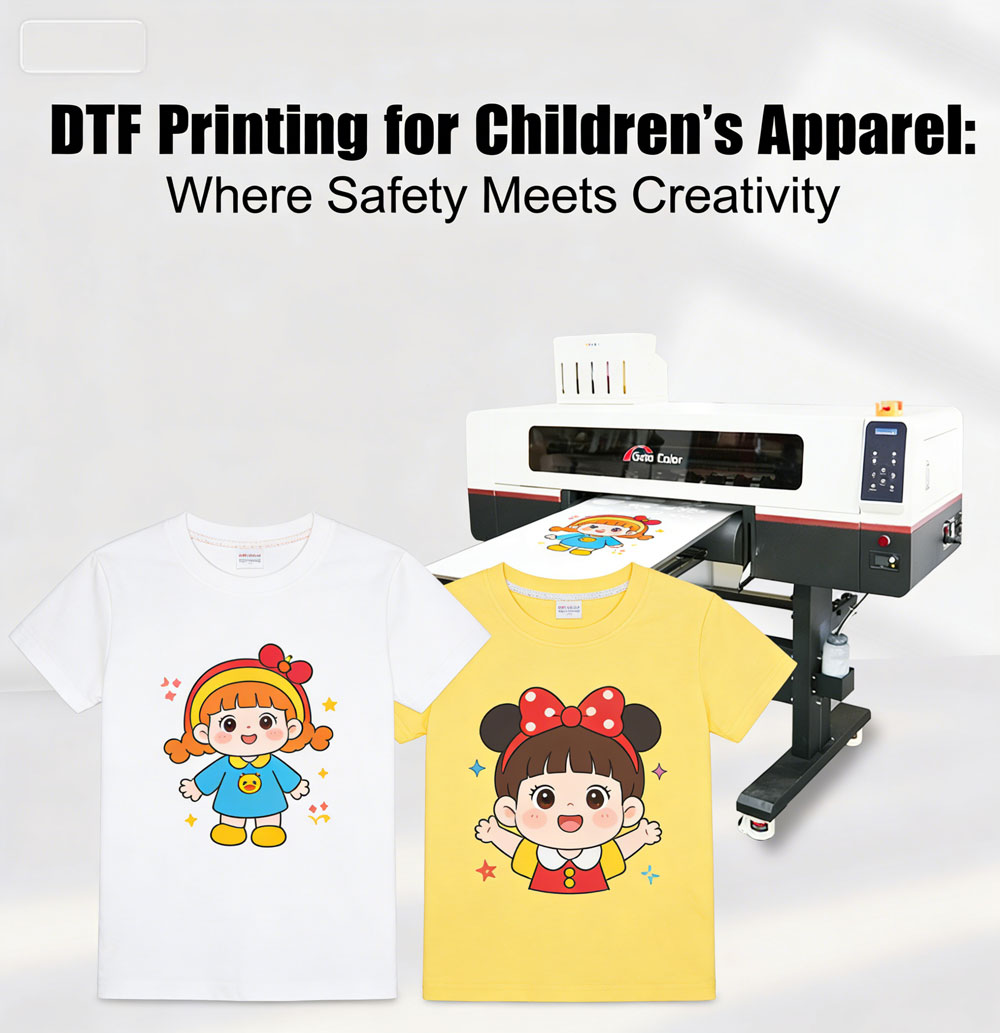
1. A Market Driven by Two Opposing Forces
Children’s apparel sits at a unique intersection:
-
Kids want bold, playful, ever-changing designs
-
Parents demand safety, comfort, and reliability
Traditionally, meeting both was difficult. Many printing methods either:
-
compromised fabric softness
-
used chemical-heavy processes
-
or lacked design flexibility
DTF changes this equation by separating printing from fabric application, allowing high creativity without sacrificing wearability.
2. The Technology Behind the Shift
DTF works through a structured process:
-
Print the design onto a special film
-
Apply adhesive powder
-
Transfer onto fabric using heat
This enables:
-
high-detail graphics
-
consistent results across materials
-
strong adhesion to fabrics like cotton, polyester, and blends
Key insight:
DTF is not just a printing method—it is a modular production system that separates design from material limitations.
3. Safety Is No Longer Optional—It’s the Entry Ticket
Children’s clothing is one of the most regulated segments in textiles.
Modern DTF consumables are designed to meet strict safety expectations:
-
water-based pigment inks
-
absence of harmful solvents
-
compliance with certifications like OEKO-TEX
These inks are typically free from:
-
formaldehyde
-
heavy metals
-
toxic dyes
Additionally:
-
adhesive powders used in transfer processes are engineered to leave no harmful residue on fabrics
Industry reality:
Safety is no longer a competitive advantage—it is a baseline requirement.
4. Comfort Matters More Than You Think
Children are more sensitive to:
-
fabric stiffness
-
breathability
-
skin irritation
DTF prints, when properly applied:
-
remain flexible with the fabric
-
avoid heavy or rigid layers
-
maintain comfort during daily wear
New perspective:
In kidswear, the “feel” of a print is just as important as how it looks.
5. Creativity Without Limits
DTF enables:
-
full-color gradients
-
cartoon characters
-
personalized names and patterns
-
small-batch customization
This is especially valuable in children’s fashion, where:
-
trends change quickly
-
personalization drives emotional value
Beyond clothing, the same technology extends to:
-
backpacks
-
shoes
-
home textiles like pillows and bedding
Shift in thinking:
Children’s products are no longer mass-produced—they are becoming emotionally customized items.
6. Built for Real Life: Durability and Repetition
Children’s clothing faces extreme usage:
-
frequent washing
-
stretching
-
rough activity
DTF prints are designed to:
-
resist cracking and peeling
-
maintain color vibrancy
-
withstand repeated laundering
Reality check:
Durability is not a feature—it is a survival requirement in kidswear.
7. Environmental Pressure Is Reshaping the Industry
Traditional textile printing often involves:
-
high water consumption
-
chemical discharge
-
complex waste management
DTF offers a cleaner alternative:
-
minimal water usage
-
reduced chemical waste
-
fewer pollutants during production
As sustainability becomes a regulatory and consumer demand, this advantage becomes critical.
8. The Business Impact: Small Runs, Big Opportunities
DTF enables:
-
on-demand production
-
low setup costs
-
rapid design iteration
This opens new opportunities:
-
custom children’s brands
-
niche markets (school uniforms, themed apparel)
-
fast-response fashion cycles
Key shift:
The children’s apparel market is moving from inventory-driven to demand-driven production.
Final Insight: The Industry Is Underestimating the Real Change
Most people think DTF is about better printing.
That’s too shallow.
The real transformation is this:
children’s clothing is evolving from product to experience.-
Safe materials → parental trust
-
Creative designs → emotional connection
-
Customization → individuality
DTF happens to sit at the intersection of all three.
Conclusion
DTF printing is redefining children’s apparel by delivering:
-
certified safety for sensitive skin
-
high-level creative freedom
-
durable, wash-resistant results
-
environmentally responsible production
But the deeper shift is strategic:
The future of children’s clothing is not mass production.
It is safe, personalized, and data-driven design at scale.And DTF is one of the technologies making that future possible.
-
-
AuthorPosts
- You must be logged in to reply to this topic.