
Home › Forums › DTF Printer Hub › Does DTF Last as Long as DTG? The Truth About Print Durability
- This topic is empty.
-
AuthorPosts
-
18 March 2026 at 6:17 pm #1007
Dowinsss
KeymasterDoes DTF Last as Long as DTG? The Truth About Print Durability
In the fast-moving world of custom apparel, durability is no longer a secondary concern—it is a core purchasing factor. Whether you are building a clothing brand, running a print-on-demand store, or scaling a production line, one question keeps surfacing:
Does DTF printing actually last as long as DTG?
The short answer: not only does it last as long—it often lasts longer.
But that answer alone is too simple. The real story lies in why.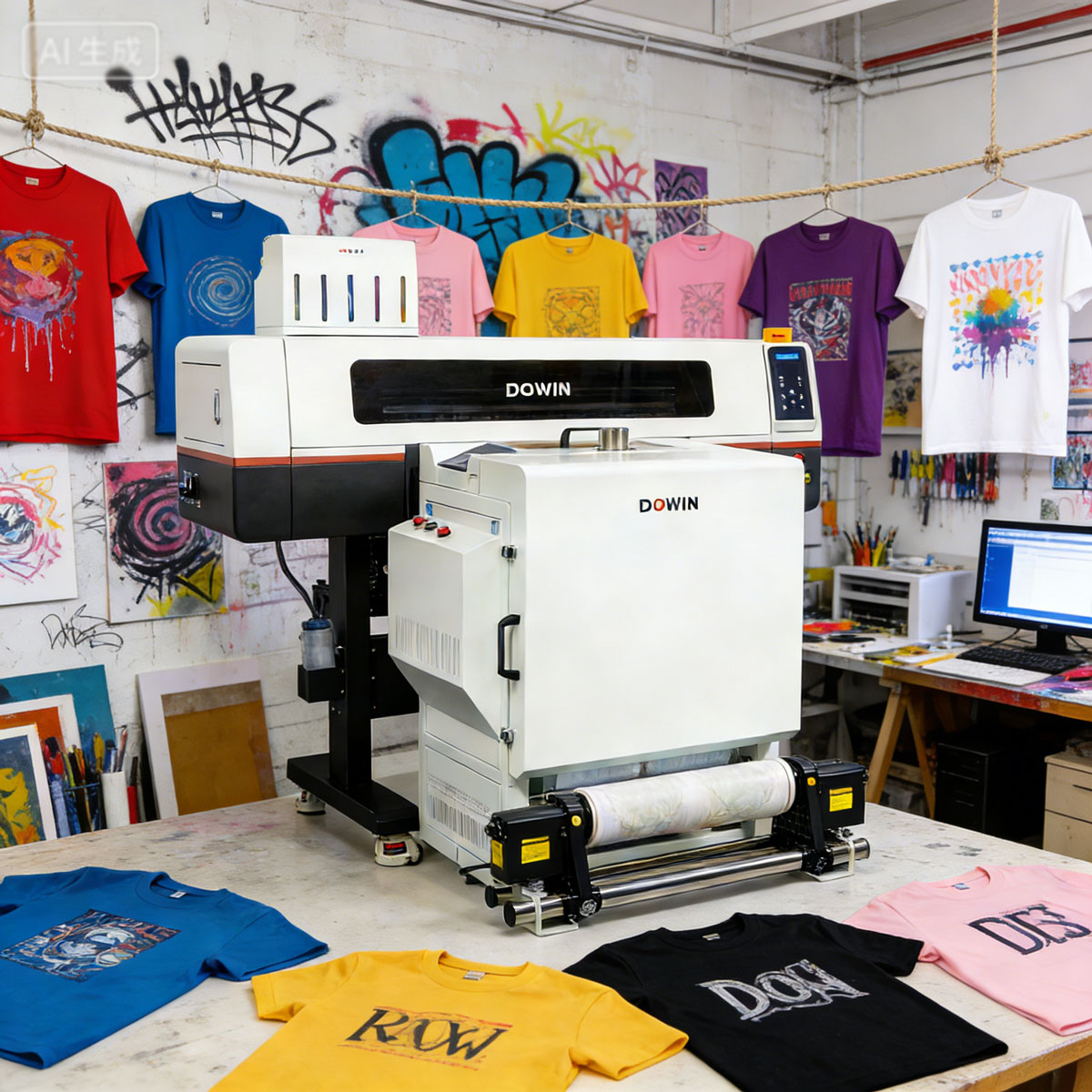
Two Technologies, Two Philosophies
DTF (Direct-to-Film) and DTG (Direct-to-Garment) are often compared as competing technologies. In reality, they represent two fundamentally different approaches to printing.
-
DTG injects water-based ink directly into fabric fibers
-
DTF transfers a layered ink film bonded with adhesive onto fabric
This difference defines everything: feel, versatility—and most importantly—durability.
DTG becomes part of the fabric.
DTF becomes a reinforced layer on top of it.
Durability: The Data Doesn’t Lie
Across industry testing and real-world usage, a consistent pattern emerges:
-
DTF prints: typically withstand 50–100 wash cycles
-
DTG prints: often begin fading after 30–40 washes (or even earlier)
In some cases, DTG degradation can appear after just 6–10 washes under non-ideal conditions
This gap is not marginal—it is structural.
DTF performance can even rival traditional screen printing in longevity, which has long been considered the durability benchmark in apparel production .
Why DTF Lasts Longer
1. A Stronger Bonding Mechanism
DTF uses heat-activated adhesive powder, creating a mechanical bond between the design and fabric. This bond resists:
-
stretching
-
friction
-
repeated washing
In contrast, DTG relies on ink absorption. Once fibers degrade, the print fades with them.
2. Protective Ink Structure
DTF inks are typically pigment-based polymers, forming a protective layer that shields color from external damage
DTG inks, while softer, are more exposed to:
-
detergent chemicals
-
UV exposure
-
fiber wear
3. Fabric Versatility = Durability Stability
DTF works consistently across:
-
cotton
-
polyester
-
blends
-
synthetic fabrics
DTG performs best on cotton but struggles on synthetics, where adhesion is weaker. This limitation directly impacts long-term durability.
The Hidden Variable: Process Quality
Here is where most people misunderstand the industry:
Durability is not determined by technology alone—it is determined by execution.
A high-quality DTF print can last 100+ washes.
A poorly produced one may fail within 20 washes.Key factors include:
-
curing temperature and time
-
adhesive powder quality
-
film coating consistency
-
heat press pressure
Even washing habits matter:
-
cold water vs hot water
-
air dry vs high heat drying
DTF is powerful—but unforgiving.
The Industry Myth You Should Ignore
There is a common narrative:
“DTG is premium, DTF is cheap.”
This is outdated.
DTG feels softer—but softness is not durability.
DTF feels heavier—but that layer is exactly what protects it.In modern apparel manufacturing, especially for:
-
workwear
-
sportswear
-
fast fashion
-
high-frequency-use garments
Durability beats softness every time.
A More Honest Comparison
Factor DTF DTG Wash durability 50–100+ washes 30–40 washes (avg) Fabric support All fabrics Mainly cotton Print feel Slightly raised Very soft Failure mode Gradual fade or edge wear Fading with fiber breakdown DTF doesn’t replace DTG.
It outperforms it in different scenarios.
The Bigger Shift: Durability as a Business Model
Here is the deeper insight most suppliers miss:
Durability is no longer just a technical metric—it is a brand strategy.
A print that lasts:
-
reduces returns
-
increases customer trust
-
builds repeat purchase behavior
In the era of e-commerce and global competition, this is not optional—it is survival.
Final Verdict
So, does DTF last as long as DTG?
No. It lasts longer—when done right.
But the real takeaway is this:
DTF is not just a printing method.
It is a durability-first manufacturing logic.And in a market flooded with disposable products,
durability is no longer a feature—it is the product.
-
-
AuthorPosts
- You must be logged in to reply to this topic.