
Home › Forums › Digital UV Printing Hub › A Practical Guide to Materials You Can Use with DTF, UV, and UV-DTF Printing
- This topic is empty.
-
AuthorPosts
-
26 January 2026 at 5:20 pm #895
Dowinsss
KeymasterWhen you’re exploring digital printing technologies today, one of the first questions isn’t “Which machine should I buy?” — it’s “What materials can I realistically print on?” That’s especially true as technologies like Direct-to-Film (DTF), Ultraviolet (UV) printing, and UV-DTF grow deeper into creative, industrial, and commercial workflows. These are not just buzzwords; they represent distinct chemistry and physics that dictate where and how ink adheres to a surface. Understanding substrate compatibility can save you costly mistakes and open up exciting product opportunities.
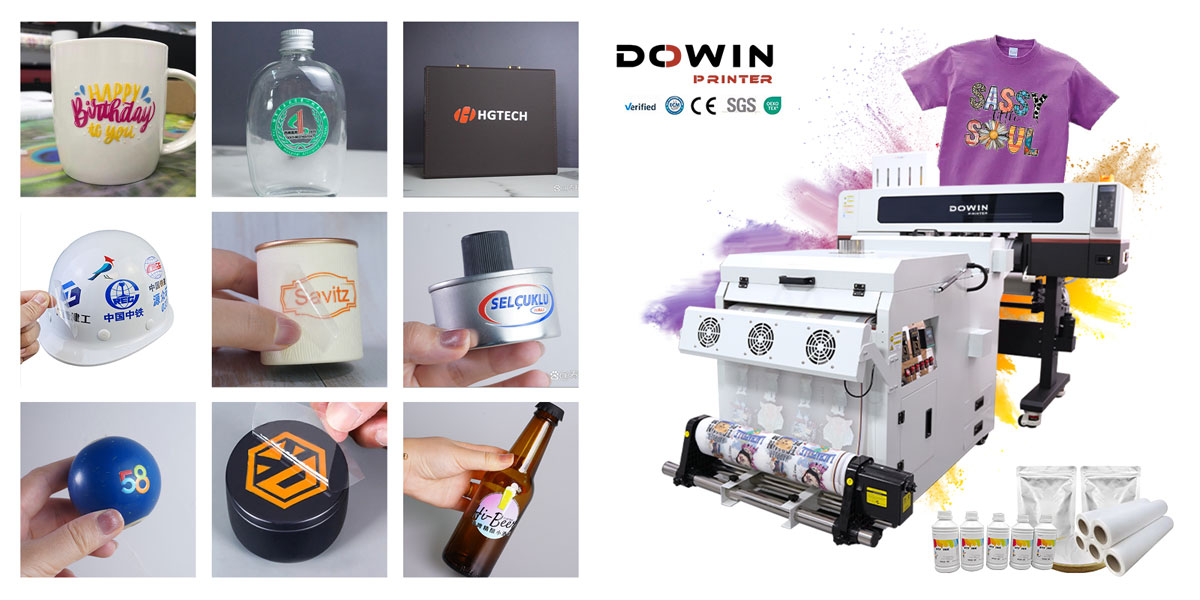
DTF: Flexible Fabric and Beyond
Traditional DTF printing excels on textiles because it involves printing onto a transfer film first and then using heat and pressure to attach the design to the material. This makes it highly adaptable for both natural fibers like cotton and synthetics like polyester, without the need for pre-coating. It’s a go-to method for T-shirts, hoodies, bags, caps, and even shoes — essentially anything with a textile surface that can tolerate heat during transfer.
Why This Matters
DTF is attractive because it doesn’t rely on intimately bonding ink into fibers (as in some other methods). Rather, the film and powder system allows consistent color saturation and wash durability across a wide range of fabric types. This makes it popular for apparel, promotional products, and personalized items.
UV Printing: Hard Surfaces and Instant Curing
UV printing uses inks that cure instantly under ultraviolet light, which makes it ideal for non-porous, rigid surfaces. UV-curable inks quickly cross-link into a solid film on the surface, creating vibrant, abrasion-resistant graphics without the need for drying time. Common compatible substrates include:
-
Glass — from drinkware to decorative panels, smooth glass gets crisp, clear prints.
-
Metal — aluminum, stainless steel, and other metals take UV prints well, useful for signage, plaques, and industrial labels.
-
Plastics (acrylic, PVC, polycarbonate) — print quality and durability on plastics is excellent because of their non-porous nature.
-
Ceramics — mugs, tiles, and decorative ceramics take UV prints that hold up through regular handling.
-
Wood — sealed or treated wood gives a warm, textured backdrop for UV graphics.
In all cases, surface preparation (cleaning and degreasing) helps ensure that batches of prints stick reliably and look professional.
UV-DTF: A Hybrid That Expands Your Options
UV-DTF printing combines elements of both worlds by printing a UV-curable ink on film first and then transferring it. The result is a sticker-like graphic that can be applied to a variety of hard and soft substrates. This method does not rely on heat to cure — the inks are already solidified — making it highly flexible for production workflows where heat might distort the object.
What UV-DTF Can Stick To
Because it essentially creates a dry, cured graphic on film, UV-DTF works well on both classic UV substrates and some soft materials. Examples include:
-
Glass and ceramics — excellent for drinkware, decorative tiles, and signage.
-
Metals — strong adhesion on smooth, clean metal surfaces improves longevity and durability.
-
Acrylic and plastics — ideal for promotional items, displays, and custom gifts.
-
Wood boards and MDF — UV-DTF brings fine details and vibrant colors to wooden décor.
-
Cardboard and paper — packaging and print signage benefit from crisp, high-resolution graphics.
-
Some fabrics and soft goods — depending on fiber type and finish, UV-DTF can work on textiles, though adhesion and flexibility vary.
Importantly, UV-DTF stickers are generally not ideal for fabrics intended for frequent washing or stretching because the cured ink on film doesn’t integrate with fibers the way heat-activated DTF does.
Substrate Science: Why Materials Behave Differently
The compatibility of a material with DTF or UV technologies boils down to surface energy, porosity, and thermal or UV response. Smooth, high-energy surfaces like glass and metal allow UV-cured inks to adhere more readily because the ink molecules can form strong intermolecular bonds upon curing. In contrast, porous textiles benefit more from techniques that embed the ink into the fiber network through heat and pressure, as in traditional DTF.
Selecting the right substrates is not arbitrary — it influences color vibrancy, durability, and long-term performance of the graphics. Substrates with low surface energy (some untreated plastics, heavily textured wood) may not accept inks evenly without surface prep or primers.
Personal Perspective: Choose Based on Output, Not Hype
In the print ecosystem, there’s a lot of buzz around “universal” solutions. But the reality — backed by production data and real-world workflows — is that no single printing technology is optimal for all materials. DTF remains fantastic for textiles because it bonds into fibers with robust washfastness. UV printing shines on rigid goods because of instant cure and durability. UV-DTF bridges these approaches for hard surfaces, offering speed and flexibility with minimal setup.
If I had to emphasize one thing for creators and small businesses: choose substrates with an eye on the end use. Ask yourself where your printed objects will live — outdoor signage, wearables, drinkware, or decorative art — and match your technology to that need. It’s far better to master the right substrate workflows than to chase the latest gadget without understanding how it interacts with real materials.
Summary: Material Compatibility at a Glance
Material Type Best with DTF Best with UV Best with UV-DTF Cotton & Natural Textiles ✔ ❌ ⚠️ (limited) Polyester & Synthetics ✔ ❌ ⚠️ Glass ❌ ✔ ✔ Metal ❌ ✔ ✔ Acrylic/Plastic ⚠️ ✔ ✔ Wood ⚠️ ✔ ✔ Cardboard/Paper ⚠️ ✔ ✔ Legend:
✔ = Strong compatibility
⚠️ = Possible depending on surface prep
❌ = Not recommendedUnderstanding what materials work with each technology lets you design with confidence and avoid costly trial-and-error. After all, in printing as in design, the substrate is half the equation — the other half is your creative intent.
-
-
AuthorPosts
- You must be logged in to reply to this topic.