
Home › Forums › Digital UV Printing Hub › A Beginner’s Guide to Moving from DTG Printing to DTF
Tagged: DTF Printing, DTG Printing
- This topic has 1 reply, 1 voice, and was last updated 2 months ago by
Gotocolor.
-
AuthorPosts
-
22 January 2026 at 5:13 pm #868
Dowinsss
KeymasterA Beginner’s Guide to Moving from DTG Printing to DTF
If you’re just starting in the custom apparel world, the number of printing terms and technologies can feel overwhelming. Two of the most talked-about digital printing methods today are DTG (Direct-to-Garment) and DTF (Direct-to-Film). Both are powerful in their own ways, but understanding how they differ — and where each shines — can save you time, money, and frustration as you build your business.
What Are DTG and DTF, Really?
At a basic level, both DTG and DTF are digital printing techniques used to apply graphics to fabric. They avoid the complex setup of traditional screen printing and rely on inkjet technology to reproduce rich, full-color images.
-
DTG applies ink directly onto the garment. The printhead jets ink straight onto the fabric fibers, similar to how a desktop inkjet printer works on paper.
-
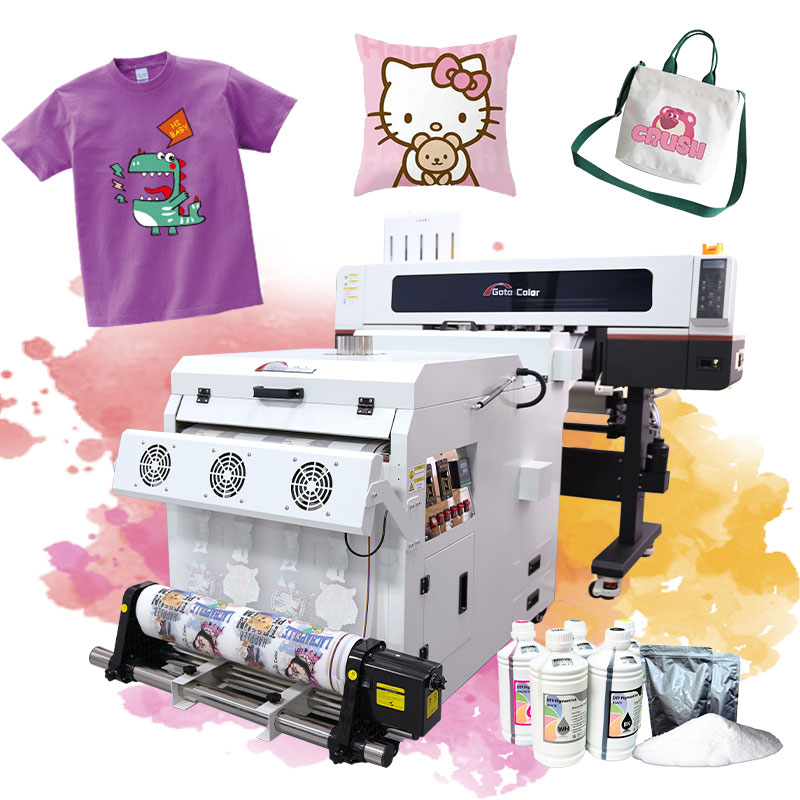
DTF prints the graphic onto a special film first, then transfers that design with heat and adhesive powder onto the garment.
Both approaches are part of the digital printing wave that’s reshaping the industry by making high-quality custom apparel easier and more cost-effective.
What They Have in Common
It’s easy to think these technologies are worlds apart, but they share a few key traits:
-
Digital Workflow: Both methods work from digital files, so you can send a design from your computer to the printer without screens, plates, or films — unlike older print technologies.
-
Heat Press Use: Whether you’re doing DTG or DTF, a heat press is typically part of the finishing process. In DTG the ink usually needs to be cured after printing, and in DTF the design is adhered to the fabric with heat.
-
Vivid Results: Both can deliver vibrant prints, especially compared with traditional methods, though exactly how they achieve this and the feel of the ink on fabric differs.
How They Differ
Beyond surface similarities, the practical differences between DTG and DTF are significant and will influence your workflow:
1. Fabric Compatibility & Pretreatment
DTG generally performs best on cotton or high-cotton blends, because the water-based inks bond directly to natural fibers. Dark garments require pretreatment chemical sprayed before printing to help the pigment show up clearly.
DTF doesn’t require pretreatment, and its film-based process works across more materials — cotton, polyester, blends, and even trickier fabrics like nylon or performance textiles.
In practice: if you expect to offer apparel on a wide range of fabrics, DTF’s versatility can simplify operations.
2. Cost and Scaling
On a per-print basis, DTF tends to be more cost-stable and lower at scale. Industry cost comparisons show that while both methods are similar on very small runs, DTF’s per-piece cost drops more sharply as order quantities increase.
Also, DTF lets you print many transfers at once (called gang sheet printing), then apply them later. This means you can prepare designs in bulk and press them as orders come in — a workflow that fits print-on-demand models especially well.
3. Hand Feel and Print Quality
DTG prints ink directly into the fabric, often resulting in a softer hand feel — the print feels like it’s part of the shirt. DTF prints sit slightly on top of the fabric because of the transfer layer, which some people describe as a thin “patch” feel, particularly on large prints.
However, DTF prints are usually very vibrant and durable, often surviving 50+ washes without significant degradation, making them appealing for colorful designs on diverse fabrics.
Which Should You Choose?
There’s no single answer — the best choice depends on your goals, product mix, and workflow preferences.
Go with DTG if:
-
You want the softest, most integrated print feel.
-
You primarily print on cotton garments.
-
Your business model focuses on one-off, highly detailed custom pieces.
DTF might be the better fit if:
-
You need versatility across fabric types.
-
You want a workflow that allows batching and inventorying printed transfers.
-
Your business handles mixed orders or wants to scale efficiently.
Many shops eventually adopt both technologies to cover every use case — DTG for premium, soft-feel prints and DTF for vibrant, flexible, and scalable production.
My Take: Balancing Choice with Strategy
From experience in the apparel world, the decision between DTG and DTF isn’t just technical — it’s strategic. Too often, beginners pick a method based on hype or what’s cheapest upfront, then get stuck with high operating costs or limited product flexibility.
22 January 2026 at 5:16 pm #874Gotocolor
ParticipantThink about your customer base first: Do they care most about feel? Or color vibrancy and turnaround time? Are they ordering hoodies and technical wear, or soft-cotton tees? The answers to those questions will matter far more than any one spec sheet.
Ultimately, it’s not about which technology is “better” in isolation — it’s about which method best supports your creative vision and your business model.
-
-
AuthorPosts
- You must be logged in to reply to this topic.