Home › Forums › Digital UV Printing Hub › Future of UV Printing Technology: Trends, Opportunities, and Industry Evolution
- This topic is empty.
-
AuthorPosts
-
9 January 2026 at 1:56 pm #794
Dowinsss
KeymasterFuture of UV Printing Technology: Trends, Opportunities, and Industry Evolution
Ultraviolet (UV) printing technology has moved well beyond a niche digital printing method. As industries increasingly demand faster production, broader material versatility, higher image quality, and sustainable workflows, UV printing is emerging as a strategic cornerstone of modern digital manufacturing. Its trajectory reflects both market expansion and deeper technological integration.
1. Market Growth and Adoption Trends
The UV printing market continues to post strong growth projections, with industry reports estimating a significant year-on-year expansion through the remainder of the decade. Global market size estimates suggest steady growth in installed units and revenue, supported by demand from packaging, signage, industrial, and textile segments. By the early 2030s, the total UV printing equipment market is forecast to increase substantially relative to its 2025 benchmark.
This adoption reflects broader shifts in print production: service providers are moving away from slower, solvent-based systems and toward UV solutions that offer shorter turnaround times, broader substrate support, and lower lifecycle costs. Growth is also geographically uneven, with rapid expansion in Asia-Pacific industrial hubs complemented by sustained interest in North America and Europe.
2. Technological Advancements and Capabilities
Rapid Curing and Print Quality
At its core, UV printing uses ultraviolet light to cure inks instantly upon deposition. This provides multiple advantages over traditional drying methods: minimal ink migration, reduced production bottlenecks, and enhanced image sharpness. Developments in printhead design and curing systems have enabled higher resolution output and finer detail levels that rival other premium digital processes.
Automation and Smart Production
2025–2030 will likely be marked by continued integration of automation, artificial intelligence (AI), and Internet of Things (IoT) features into UV printing machines and workflows. Automated calibration, inline finishing, predictive maintenance, and real-time performance analytics are increasingly embedded into modern printers. These advancements reduce manual labor, improve uptime, and enable leaner production footprints.
Expanded Material Versatility
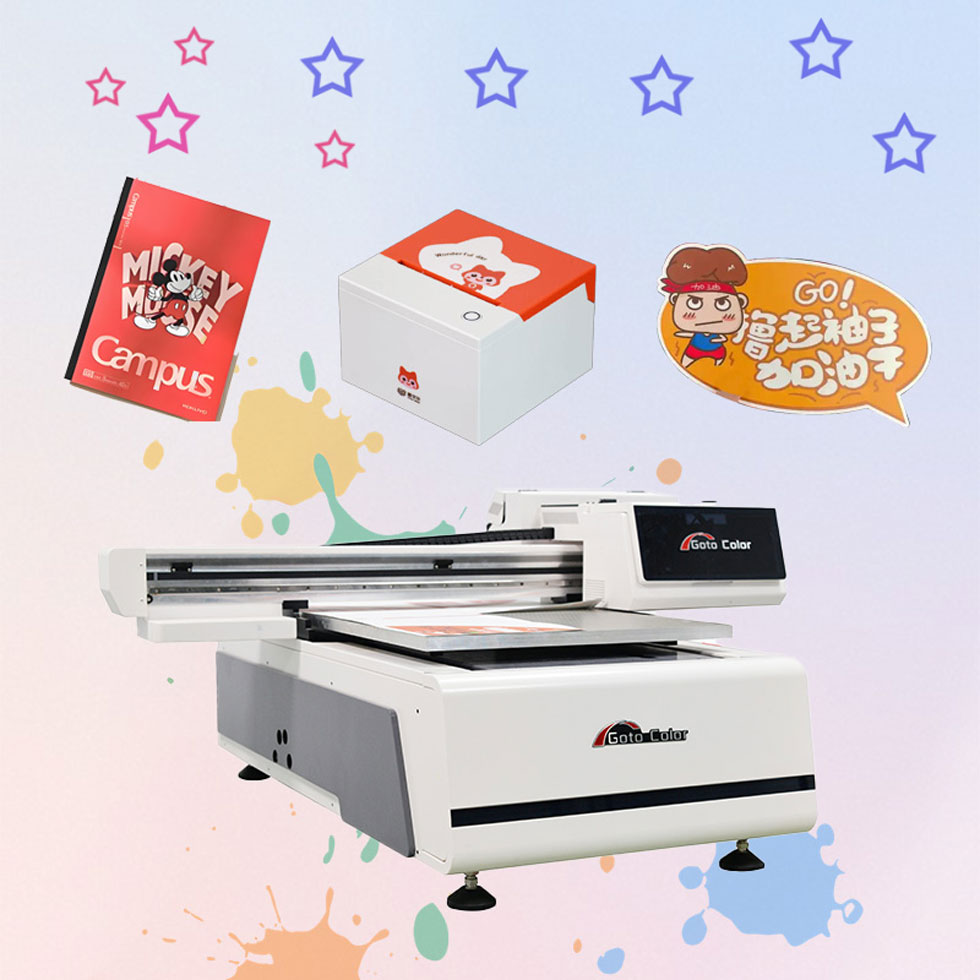
One of the key competitive strengths of UV printing is its ability to print directly on diverse substrates — including rigid, flexible, transparent, and textured materials. Recent enhancements extend this to textiles, metals, ceramics, composites, and more, opening high-value opportunities in fashion, décor, industrial labeling, and specialty applications.
Further innovations are expanding color gamut and surface effects, allowing for embossed textures, tactile finishes, and nuanced visual effects previously difficult to achieve in digital print workflows.
3. Sustainability and Eco-Conscious Design
Environmental performance is no longer optional: sustainability concerns are shaping product roadmaps, regulatory expectations, and customer requirements. UV printing technologies — especially those leveraging UV-LED curing and low-VOC (volatile organic compound) inks — are significantly cleaner than solvent-based or thermal drying systems. These innovations reduce energy consumption, minimize harmful emissions, and support greener manufacturing practices.
As industry pressure mounts, newer ink chemistries and curing techniques are emerging that are not only more eco-friendly but also meet stringent food-contact and packaging safety standards.
4. Personalization, Customization, and Market Demand
Market trends consistently point toward greater demand for customized, short-run, on-demand print solutions. UV printing’s short setup times and ability to handle varied materials make it well-suited for customized packaging, point-of-sale displays, promotional items, and personalized décor products.
Small-to-medium enterprises (SMEs) and creative businesses are increasingly investing in UV systems to capture niche demand, broadening the traditional user base beyond large commercial printers.
5. Challenges and Areas of Caution
Despite robust growth, barriers remain. Initial equipment costs for high-end industrial UV printers are significant, and consumables like specialty inks and advanced substrates can contribute to ongoing operational expenses. Adoption also varies by region and segment, and converting legacy workflows to fully digital UV systems requires investment in training, software, and production change management. Financing options and consumables-linked service packages are helping to ease these barriers but do not eliminate them entirely.
6. Strategic Industry Outlook
Overall, the UV printing industry is moving toward a future defined by greater integration, adaptability, and sustainability. Businesses that embrace automation, expand their material capabilities, and align with eco-conscious production models will be better positioned to capitalize on both premium markets and emerging opportunities.
Personal Perspective: UV printing’s evolution represents a broader industrial transformation — one in which digital processes are becoming deeply interconnected with smart manufacturing, sustainability imperatives, and mass customization. Companies that see UV printing not merely as a printing technology but as a foundation for diversified digital production are likely to achieve the most compelling growth and resilience in the decade ahead.
-
AuthorPosts
- You must be logged in to reply to this topic.